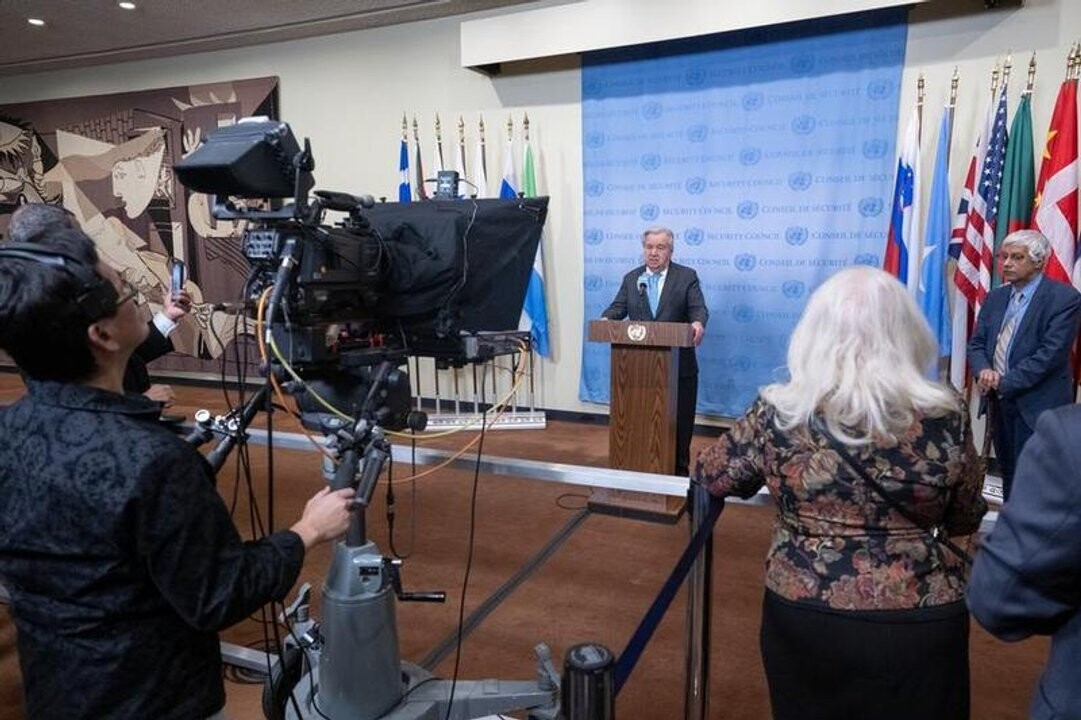
In a world marked by instability, the Secretary-General of the United Nations, António Guterres, has issued an urgent call to global leaders to make 2026 a definitive turning point. In his year-end message, the diplomat urged governments to 'determine priorities' and invest in people's well-being instead of fueling the war machine. 'I urge leaders in 2026 to choose people and the planet over war and destruction,' the Secretary-General concluded. According to the UN, even a fraction of the money spent on war could solve the planet's structural problems. For example, less than 4% of current military spending would be enough to eradicate hunger by 2030. A little over 10% would allow vaccinating all children in the world. And by reallocating 15%, the annual costs of climate adaptation in developing countries could be covered. With more than 120 million forcibly displaced people due to conflicts and disasters, and a quarter of humanity living in war zones, Guterres was firm: 'The world has the resources to improve lives and heal the planet.' 'Chaos and uncertainty surround us,' Guterres noted, reflecting the sentiment of millions of citizens who, in his words, wonder if those in power are truly willing to act in the face of human suffering. Guterres focused on a contradiction he deemed unsustainable: while the scale of global suffering worsens, global military spending has surged by 10%, reaching a record $2.7 trillion. To put the severity of the data into perspective, the UN chief emphasized: Budgetary inequality: Military spending is thirteen times higher than total global development aid. Economic comparison: The figure is almost equal to the entire Gross Domestic Product (GDP) of the African continent. Grim projection: If the current trend continues, military spending could double to $6.6 trillion by 2035. The message highlighted data from a UN report from September 2025, revealing the 'opportunity cost' of the arms race.