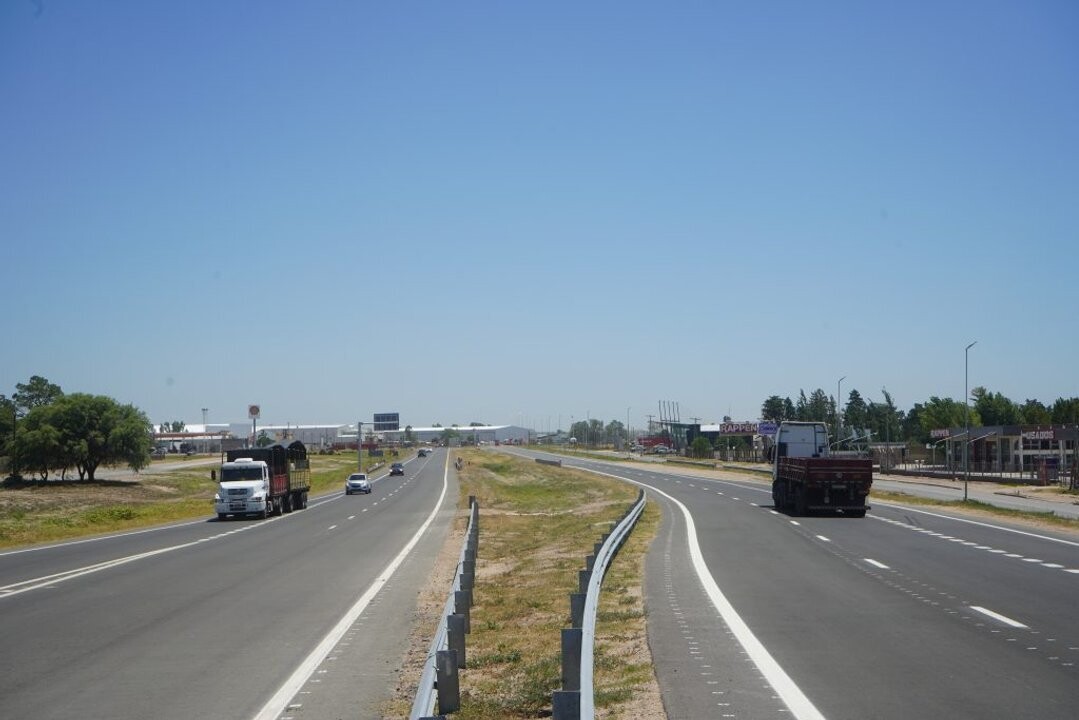
Córdoba province is advancing with various construction projects in different parts of its territory with the clear objective of improving road safety. Work is being done on the duplication of the Islas Malvinas bridge, which will help increase traffic flow and safety. This project allows thousands of users to travel more safely, providing accessibility, mobility, and road safety. It improves the logistics of industries, the exit of agricultural production, the mobility of commerce, and the safety of those who travel there. In this context, the governor of Córdoba stated: "Roads are synonymous with security and development. In this case, it is about the opening of the first section of the Río Cuarto bypass." "I decided to immediately enable this first stage of one of the most important road works underway in the country," said Governor Martín Llaryora in a post on his social network X, calling the work "a historical fact in terms of road infrastructure for the interior of the province." This first two-kilometer section extends between National Route 8 and Molina Street, improving the flow of thousands of private vehicles, public transport, and freight transport, as well as benefiting the producers in the area. The Río Cuarto – Santa Catalina Holmberg Highway, completed by Vialidad Nacional, led to the opening of this new section, which connects with the previously executed lane duplication on Route A-005, creating a major connection in the region with the city. The bypass will have a total extension of 42 kilometers, essential for the mobility of thousands of vehicles that travel through the Río Cuarto area, visiting different industries and businesses, and serving as a route for tourism and agricultural production from the entire region. Carried out by the Córdoba government through Vialidad Provincial, the work will have a cost of over 300 million dollars.