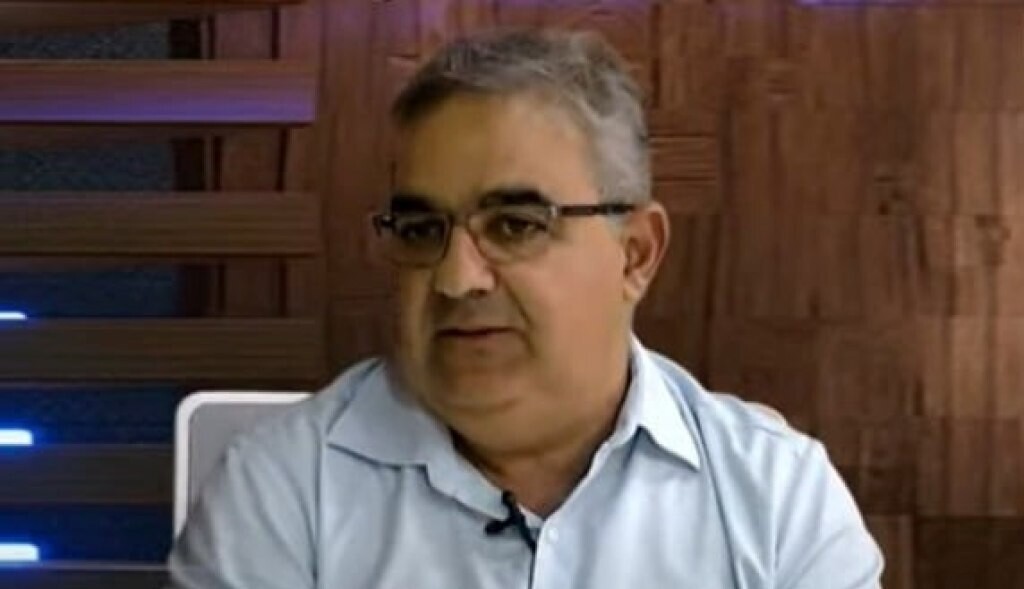
Dialogist governors from Catamarca and Santiago del Estero, Raúl Jalil and Gerardo Zamora, will act as arbiters in the Chamber of Deputies to determine if the ruling party, La Libertad Avanza (LLA), will become the first minority or if Peronism will continue to hold its supremacy, fighting to prevent further defections. For La Libertad Avanza, becoming the first minority could ensure it holds the first vice-presidency of the body, presidencies of committees, and a majority in those advisory bodies 'to be able to issue the opinions that are then discussed in the session hall.' La Libertad Avanza had hoped to form an inter-block with the PRO party to secure its position as the largest force in the Chamber of Deputies, but this illusion crumbled when Mauricio Macri began to show his differences with Javier Milei after followers of Patricia Bullrich defected to the LLA. So far, the LLA has 88 deputies and could be joined by two more: former PRO member Verónica Razzini, who leads the Future and Freedom block, and Alejandro Bongiovanni, a leader close to Bullrich but who remains in the macrist bloc led by Cristian Ritondo, according to sources confided to the Argentine News Agency. In this context, the position that Jalil and Zamora will take is key, as the governor of Catamarca has 4 legislators and 7 answer to the Santiago del Estero governor, because if they join the Union for the Homeland bloc, it will go from 96 to 85 deputies. Gerardo Zamora, governor of Santiago del Estero. Argentine News Agency. Jalil has not yet made any decision but has been talking with his counterpart in Tucumán, Osvaldo Jaldo, to form an inter-block of governors together with the legislators who answer to Gustavo Sáenz in Misiones and Hugo Passalacqua, as learned by Argentine News Agency. If only Jalil were to leave, Peronism would be left with 92 deputies, making it easier for the ruling bloc to form an inter-block with some allies to reach that first minority status for the distribution of power in the Chamber of Deputies. LLA La Libertad Avanza has 88 deputies and hopes to add Razzini and Bongiovanni to reach 90 and trusts in maintaining the inter-block with the Interior League, which includes the 'peluca' radicals Mariano Campero, Luis Picat, and José Tounier. Its main allies are the PRO, which today has 16 deputies, the UCR, which will have 6 legislators, and one deputy from Entre Ríos, Francisco Morchio, who answers to Rogelio Frigerio. PERONISM The Fuerza Patria (UXP) bloc will have 96 legislators in December since it was confirmed in recent days that the Tucumán deputy Javier Noguera will join the Independence block, led by Jaldo, and that the San Luis deputy, Jorge 'Gato' Fernández, has already stated that he will not join that block when he takes office on December 10. In this context, the main challenge for the leadership, in charge of Martínez, is to achieve coexistence between Juan Grabois and the hard Kirchnerists, with the legislators of dialogist governors like Raúl Jalil (Catamarca) and Gerardo Zamora, and from the Front of the Renovator. One of the alternatives is to form an inter-block so that all sub-blocks can maintain their autonomy, but that option is not liked by Martínez, La Cámpora, and the hardest Kirchnerists. In Peronism, they believe that Zamora will stay within the Fuerza Patria bloc, but there are more doubts about Jalil's position. Parliamentary sources told Argentine News Agency that no one benefits from a fracture and losing the status of first minority, and even less so before the committees are formed. PROVINCIALS The Innovation bloc will have 7 legislators from December 10, but if it forms an inter-block with Neuquén, Tucumán—which has the Independence block—and Catamarca, they could reach 15 deputies. Innovation Federal will have 3 Salta deputies and 4 Misioneros; Independence 3, the Neuquén 1, and Catamarca 4. UNITED PROVINCES The governors of Córdoba Martín Llayorda, Chubut Ignacio Torres, Santa Fe Maximiliano Pullaro, Jujuy Carlos Sadir, and Santa Cruz, Claudio Vidal, have decided to form United Provinces together with two porteño radicals and the Buenos Aires legislators who are part of the Federal Encounter. This provincial force could have 6 Córdoba deputies, 3 Santa Fe, two Jujuy, 1 Chubut, 1 Santa Cruz, the radicals Martín Lousteau and Mariela Coletta, and the Buenos Aires ex-JXC, Miguel Ángel Pichetto, and Nicolás Massot. Initially, they would have 17 deputies guaranteed since there was doubt about the position that the Corrientes deputy, Diógenes González, would take, since the governor of Corrientes, Gustavo Valdés, aspires to hold a relevant position in the future national leadership of the UCR and in that case should add his representative to the radical bloc.