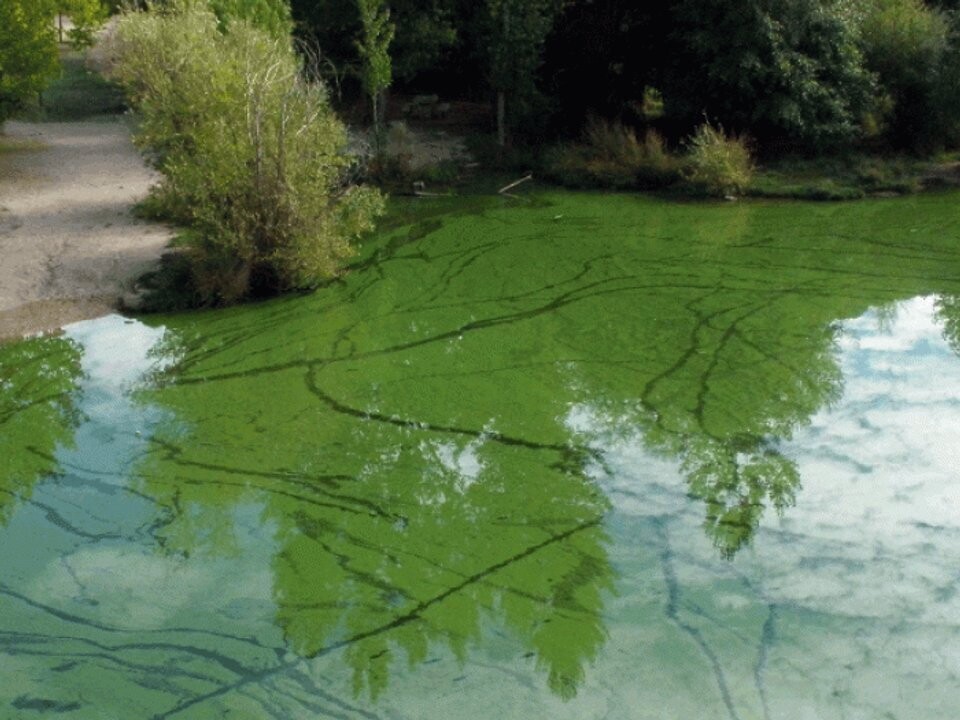
Cyanobacteria are present in fresh, salt, brackish water, and estuarine mixing zones. Many species of cyanobacteria produce toxins, which are contained within the cell or exuded into the environment, so they can appear dissolved in the water, constituting a significant problem for human and environmental health. Their appearance is related to the increased presence of nutrients such as nitrogen and phosphorus in bodies of water, high temperatures, days without wind or waves, and sufficient sunlight. This process, called eutrophication, is natural; it is currently accelerated by anthropogenic and climatic factors. In the province of Buenos Aires, cyanobacteria have once again made headlines after the provincial government's interactive map showed an increase in sectors under alert due to the presence of these microscopic organisms in the water. Under orange alert are the Sauce Grande lagoons in Monte Hermoso, Cuero de Zorro in Rivadavia, Cañadón in Pehuajó, Rocha in Chacabuco, Lobos, Monte, Chis Chis in Lezama, Las Barrancas, Tablillas, La Saladita, and the Río de La Plata in Avellaneda. While the only zone under red alert, with a high risk, is La Salada in Pehuajó. Authorities explain that in the lagoons, the water is observed to be a uniform, intense green color, so it is recommended not to enter the water, nor to consume food, and to keep children and pets away until the bloom disappears. For both colors, as confirmed by the Noticias Argentinas news agency, a sanitary flag must be placed that warns of a potential health risk. According to medical specifications, the adverse effects of this bacterium on a person are: vomiting, diarrhea, headache, muscle weakness, and skin allergies. The Subsecretariat of Water Resources and the Water Authority of the province of Buenos Aires indicate that an evaluation and monitoring of the presence of the bacteria in the province's waters is carried out every day, and there are four levels of health risk that are divided by color. Green: you can bathe without risk as the appearance of cyanobacteria has not been reported. Yellow: there are small green spots on the surface, and if someone bathes, they must then rinse with cold, clean water. Orange: the water looks a bright green on the surface and on the sand. Red: a dark green, brownish mass, with the appearance of thick cream, is seen, and bathing is prohibited. What is a Cyanobacterium? According to the Ministry of Health, they are microscopic organisms, Gram-negative bacteria that contain chlorophyll, which allows them to perform photosynthesis. For this reason, they have historically been identified as blue-green algae.