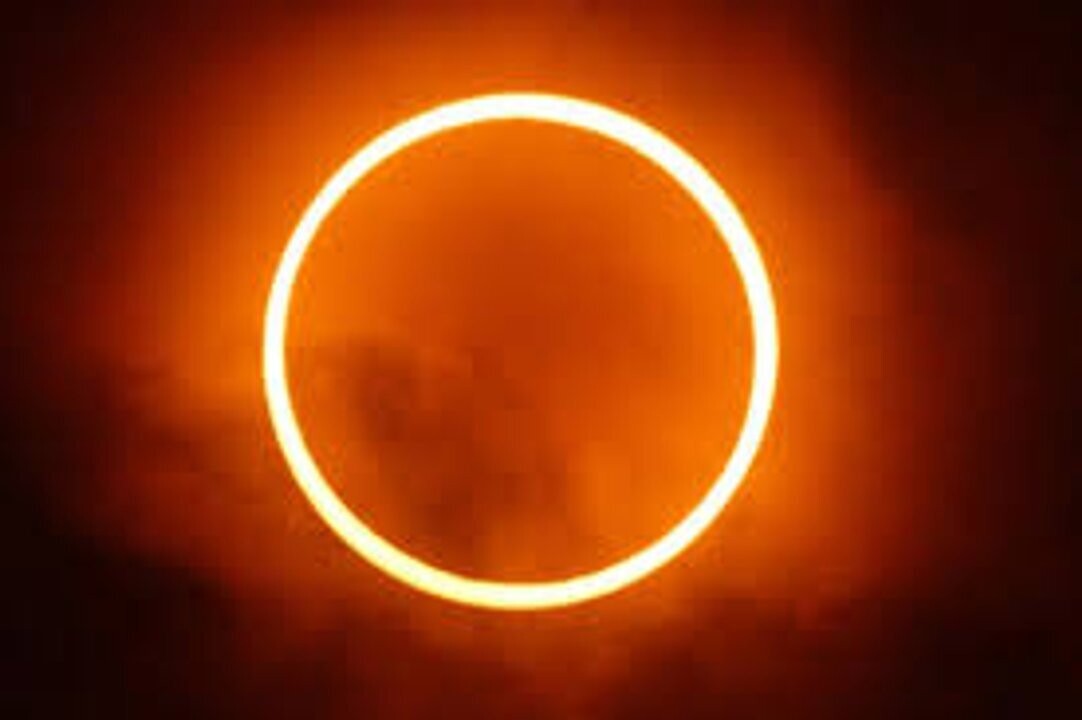
A total solar eclipse will be visible on August 12, starting at 15:34 UTC and concluding at 19:58 UTC. This event is also known as a "ring of fire" due to the optical effect that occurs when the Moon covers almost the entire solar disk, leaving only a luminous ring visible around its edge. According to the Naval Hydrography Service (SHN), the eclipse begins at 09:56 UTC and ends at 14:27 UTC. The annular phase will be at 11:42 UTC and will conclude at 12:41 UTC, as reported by the Argentine News Agency.
Regarding the visibility of this natural phenomenon, authorities detailed that it will be partially visible from southern Argentina, Chile, and southern Africa, while the annular phase (the moment when the complete ring can be observed) will be in Antarctica. Experts and from the National Aeronautics and Space Administration (NASA) reported that, unlike a total solar eclipse, this event is known for leaving a luminous ring on its contour due to the distance between the Moon, Earth, and the Sun, which prevents it from covering it completely.
Therefore, it is recommended to observe this phenomenon with eye protection, as it can cause serious and irreversible eye injuries.
Eclipse Schedule for 2026 March 3 - Total Lunar Eclipse: will begin at 09:49 UTC and end at 13:17 UTC. On this occasion, it can be partially seen in the northern United States, western Africa, and Europe, while the total phase will be visible in the Arctic, Greenland, Iceland, and Spain. August 28 - Partial Lunar Eclipse: will start at 02:33 UTC and end at 05:51 UTC.