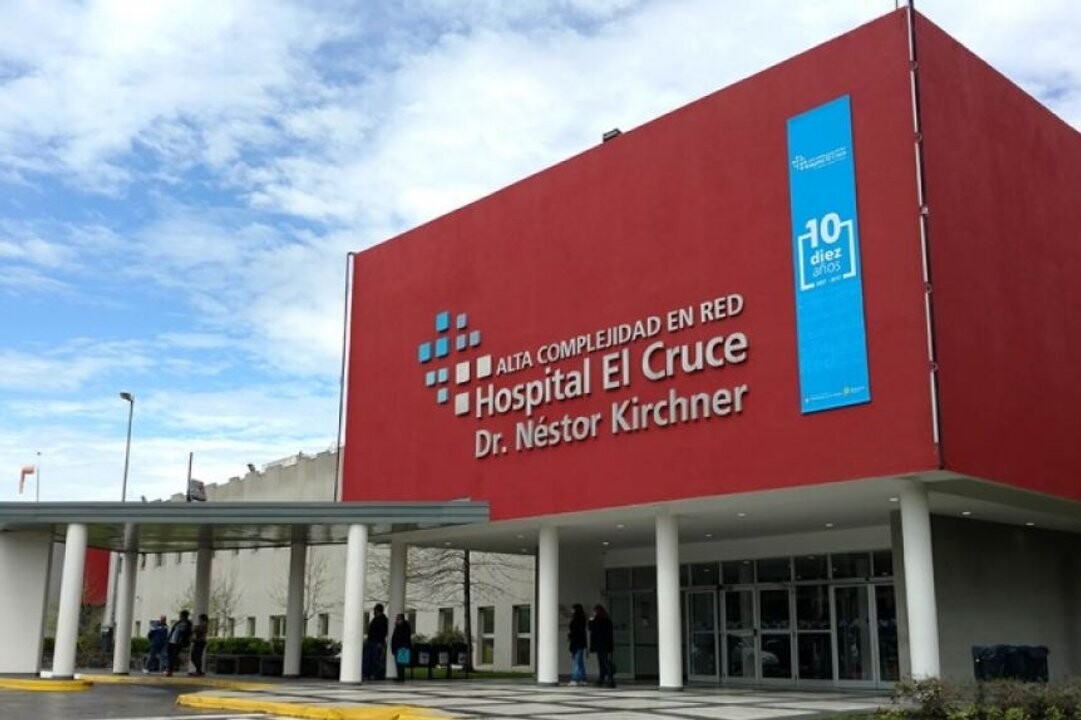
The government of Javier Milei is studying the application of a private management system in five large hospitals located in the Buenos Aires territory—four in the conurbation and one in the interior—three of which bear the name of former President Néstor Kirchner. These are the “Néstor Kirchner” in Cañuelas; the “René Favaloro” in La Matanza, the “President Néstor Kirchner” in the same district, the “Bicentenario” located in Esteban Echeverría, and “El Cruce Dr. Néstor Kirchner” in Florencio Varela, as enumerated by the Noticias Argentinas agency. The argument is the multimillion-dollar debt that the Executive attributes to the province of Buenos Aires to cover the operation of these hospitals. The Federation of Health Workers rejected the initiative and declared a state of alert and mobilization. They alleged that it would put universal access to the system at risk because users would have to pay a fee to access care. Among the options being considered for managing these hospitals, the one with the highest probability is the application of the so-called “Spanish system.” It consists of concession to a private party, with the application of a capitation system that, in theory, ensures access for the most vulnerable sectors to the services provided in them. Although Milei's Health Minister, Mario Lugones, does not rule out other alternatives, such as transferring them to the province, for some time now, members of his team have been commenting that it would be possible to finance them with contributions from private medicine and social work organizations. They believe that the private management scheme guarantees care for the vulnerable population through capitation, a model that involves granting quotas with a maximum cap. Privatization Advance On the union side, they respond that “the SAMIC hospitals play a strategic role within the national and provincial health network, guaranteeing access to health for millions of people and, in many territories, becoming centers of high-complexity reference. “Any attempt at privatization or private management, even under the argument of guaranteeing care for the vulnerable population, implies a paradigm shift that subordinates health to profit, fragments the system, and puts at risk both the working conditions of workers and the continuity and quality of care,” they expressed. They also considered that “this privatization offensive is part of a sustained policy of defunding and emptying public hospitals, which in the case of SAMIC is particularly serious due to its high dependence on national financing.” They added that “the impact of these policies is already being cruelly expressed in the daily operation of these institutions.” But that would force the government into an unpopular debate in Congress, with the precedent of the fight for the financing of the Garrahan Hospital. Buenos Aires, January 8, 2026 (NA) – The Government of Javier Milei is studying the application of a private management system in five large hospitals located in the Buenos Aires territory—four in the conurbation and one in the interior—three of which bear the name of former President Néstor Kirchner. The logic indicates that it should be done by law, because the hospitals were created that way. For this reason, no one rules out that Milei could resort to a decree. Currently, the five hospitals are managed by a management team designated by the Nation, but at the same time they have an administration council with members appointed by the Province, although in the minority. Lugones demands that Nicolás Kreplak pay a debt that, according to Manuel Adorni, is around $500 billion, but that Kicillof's Health Minister denies, beyond admitting that he can make some adjustment of unpaid items. The national minister would also have evaluated the possibility of provincializing the five hospitals, so that they are managed directly by Kicillof's government, which has remained silent on this issue. “Any attempt at privatization or private management, even under the argument of guaranteeing care for the vulnerable population, implies a paradigm shift that subordinates health to profit, fragments the system, and puts at risk both the working conditions of workers and the continuity and quality of care,” they expressed. They also considered that “this privatization offensive is part of a sustained policy of defunding and emptying public hospitals, which in the case of SAMIC is particularly serious due to its high dependence on national financing.” They added that “the impact of these policies is already being cruelly expressed in the daily operation of these institutions.” But that would force the government into an unpopular debate in Congress, with the precedent of the fight for the financing of the Garrahan Hospital. Buenos Aires, January 8, 2026 (NA) – The Government of Javier Milei is studying the application of a private management system in five large hospitals located in the Buenos Aires territory—four in the conurbation and one in the interior—three of which bear the name of former President Néstor Kirchner. They are the “Néstor Kirchner”, in Cañuelas; the “René Favaloro”, in La Matanza, the “President Néstor Kirchner”, in the same district, the “Bicentenario”, located in Esteban Echeverría, and “El Cruce Dr. Néstor Kirchner”, located in Florencio Varela, as enumerated by the Noticias Argentinas agency. The argument is the multimillion-dollar debt that the Executive attributes to the province of Buenos Aires to cover the operation of these hospitals. The Federation of Health Workers rejected the initiative and declared a state of alert and mobilization. They alleged that it would put universal access to the system at risk because users would have to pay a fee to access care. Among the options being considered for managing these hospitals, the one with the highest probability is the application of the so-called “Spanish system.” It consists of concession to a private party, with the application of a capitation system that, in theory, ensures access for the most vulnerable sectors to the services provided in them. Although Milei's Health Minister, Mario Lugones, does not rule out other alternatives, such as transferring them to the province, for some time now, members of his team have been commenting that it would be possible to finance them with contributions from private medicine and social work organizations. They believe that the private management scheme guarantees care for the vulnerable population through capitation, a model that involves granting quotas with a maximum cap. Privatization Advance On the union side, they respond that “the SAMIC hospitals play a strategic role within the national and provincial health network, guaranteeing access to health for millions of people and, in many territories, becoming centers of high-complexity reference. “Any attempt at privatization or private management, even under the argument of guaranteeing care for the vulnerable population, implies a paradigm shift that subordinates health to profit, fragments the system, and puts at risk both the working conditions of workers and the continuity and quality of care,” they expressed. They also considered that “this privatization offensive is part of a sustained policy of defunding and emptying public hospitals, which in the case of SAMIC is particularly serious due to its high dependence on national financing.” They added that “the impact of these policies is already being cruelly expressed in the daily operation of these institutions.” But that would force the government into an unpopular debate in Congress, with the precedent of the fight for the financing of the Garrahan Hospital. Buenos Aires, January 8, 2026 (NA) – The Government of Javier Milei is studying the application of a private management system in five large hospitals located in the Buenos Aires territory—four in the conurbation and one in the interior—three of which bear the name of former President Néstor Kirchner. They are the “Néstor Kirchner”, in Cañuelas; the “René Favaloro”, in La Matanza, the “President Néstor Kirchner”, in the same district, the “Bicentenario”, located in Esteban Echeverría, and “El Cruce Dr. Néstor Kirchner”, located in Florencio Varela, as enumerated by the Noticias Argentinas agency. The argument is the multimillion-dollar debt that the Executive attributes to the province of Buenos Aires to cover the operation of these hospitals. The Federation of Health Workers rejected the initiative and declared a state of alert and mobilization. They alleged that it would put universal access to the system at risk because users would have to pay a fee to access care. Among the options being considered for managing these hospitals, the one with the highest probability is the application of the so-called “Spanish system.” It consists of concession to a private party, with the application of a capitation system that, in theory, ensures access for the most vulnerable sectors to the services provided in them. Although Milei's Health Minister, Mario Lugones, does not rule out other alternatives, such as transferring them to the province, for some time now, members of his team have been commenting that it would be possible to finance them with contributions from private medicine and social work organizations. They believe that the private management scheme guarantees care for the vulnerable population through capitation, a model that involves granting quotas with a maximum cap. Privatization Advance On the union side, they respond that “the SAMIC hospitals play a strategic role within the national and provincial health network, guaranteeing access to health for millions of people and, in many territories, becoming centers of high-complexity reference. “Any attempt at privatization or private management, even under the argument of guaranteeing care for the vulnerable population, implies a paradigm shift that subordinates health to profit, fragments the system, and puts at risk both the working conditions of workers and the continuity and quality of care,” they expressed. They also considered that “this privatization offensive is part of a sustained policy of defunding and emptying public hospitals, which in the case of SAMIC is particularly serious due to its high dependence on national financing.” They added that “the impact of these policies is already being cruelly expressed in the daily operation of these institutions.” But that would force the government into an unpopular debate in Congress, with the precedent of the fight for the financing of the Garrahan Hospital. Buenos Aires, January 8, 2026 (NA) – The Government of Javier Milei is studying the application of a private management system in five large hospitals located in the Buenos Aires territory—four in the conurbation and one in the interior—three of which bear the name of former President Néstor Kirchner. They are the “Néstor Kirchner”, in Cañuelas; the “René Favaloro”, in La Matanza, the “President Néstor Kirchner”, in the same district, the “Bicentenario”, located in Esteban Echeverría, and “El Cruce Dr. Néstor Kirchner”, located in Florencio Varela, as enumerated by the Noticias Argentinas agency. The argument is the multimillion-dollar debt that the Executive attributes to the province of Buenos Aires to cover the operation of these hospitals. The Federation of Health Workers rejected the initiative and declared a state of alert and mobilization. They alleged that it would put universal access to the system at risk because users would have to pay a fee to access care. Among the options being considered for managing these hospitals, the one with the highest probability is the application of the so-called “Spanish system.” It consists of concession to a private party, with the application of a capitation system that, in theory, ensures access for the most vulnerable sectors to the services provided in them. Although Milei's Health Minister, Mario Lugones, does not rule out other alternatives, such as transferring them to the province, for some time now, members of his team have been commenting that it would be possible to finance them with contributions from private medicine and social work organizations. They believe that the private management scheme guarantees care for the vulnerable population through capitation, a model that involves granting quotas with a maximum cap. Privatization Advance On the union side, they respond that “the SAMIC hospitals play a strategic role within the national and provincial health network, guaranteeing access to health for millions of people and, in many territories, becoming centers of high-complexity reference.