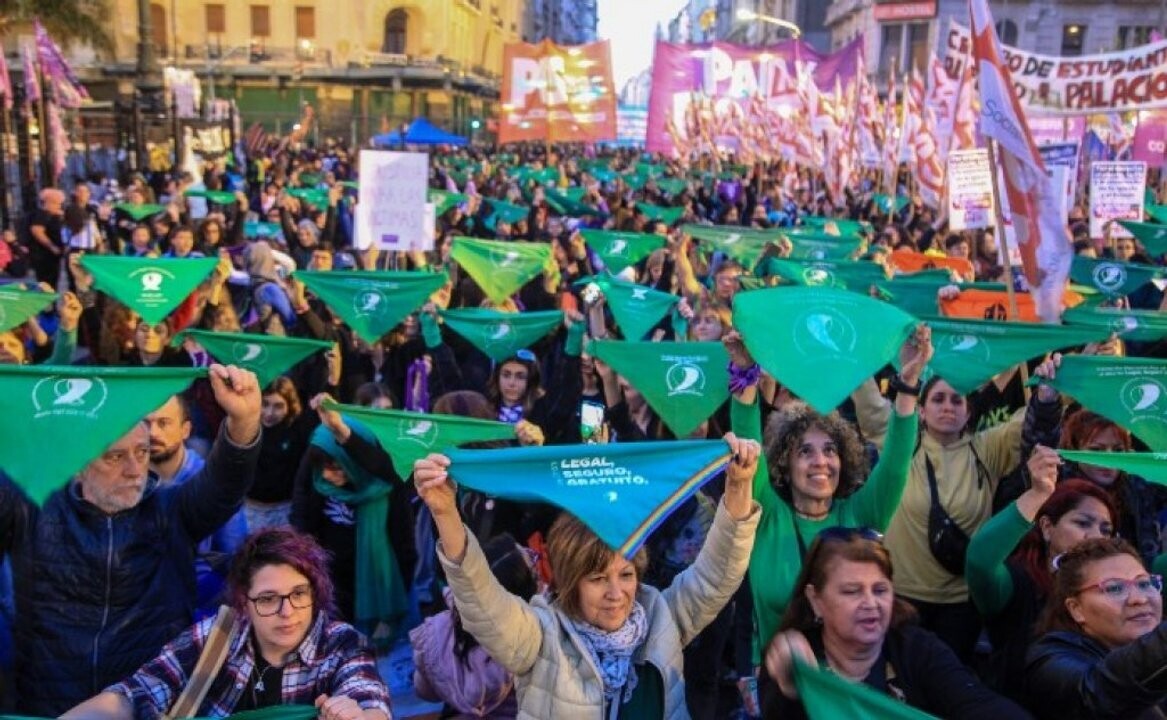
The Voluntary Interruption of Pregnancy (IVE/ILE) Law 27.610 was enacted on December 30, 2020. However, amidst the healthcare system's deficit and the advancement of certain political discourses, several pillars that supported the ordinance have been affected and even dismantled. According to the Noticias Argentina news agency, five years after the appointment driven by the 'green wave,' feminist movements, seeking to back the acquired right, have denounced that the far right has reached various aspects with its 'chainsaw.' Among the cuts promoted during the Javier Milei administration, the procurement and distribution of misoprostol and mifepristone—drugs that enable a non-invasive abortion process—have been impacted. With shortages of these medications in a total of 20 provinces across the country, the Latin American Team of Justice and Gender reported that as of last May, 'The National State does not acquire or distribute supplies for IVE/ILE to the provinces,' a decision confirmed by the Ministry of Health in February 2025. The slogan that has accompanied the campaigns for this law since its inception states: 'Sexual education to decide. Contraceptives to not abort.' Conversely, it has been shown that in recent years, there has been a decrease in the provision of contraceptives or pregnancy tests among the shortages of basic supplies. In April 2024, the Ministry of Health modified the National Plan for the Prevention of Unintended Adolescent Pregnancy (ENIA Program), which had been presented as a model to follow in the Latin American region as it increased a 22% reduction in such conceptions. This 'modification' was part of state dismantlements, and as published from official sources, 'it was decided to terminate 619 consultant contracts for 1.150 million pesos corresponding to the Plan,' justified by the claim that 'the delegation of responsibilities was never concretized' in the provinces, when the public policy was considered emblematic. Meanwhile, Amnesty International shared an extensive document denouncing: 'The national government has incorporated the fight against the so-called 'gender ideology' as a central axis of its political and institutional agenda.' Likewise, the supposed plan 'Accompaniment of the Pregnant Woman in a Vulnerable Situation' was put on the table, which, as the organization indicated, are 'spaces that present themselves as places of containment, accompaniment, and advice for pregnant women, but in reality, operate as devices of disinformation and dissuasion for those who want to abort.' 'They provide false or incomplete information, exaggerate supposed medical risks, and deploy coercive and invasive practices of the users' privacy.' Amnesty International pointed out: 'A deliberate strategy that undermines the role of the State as a guarantor of rights.'