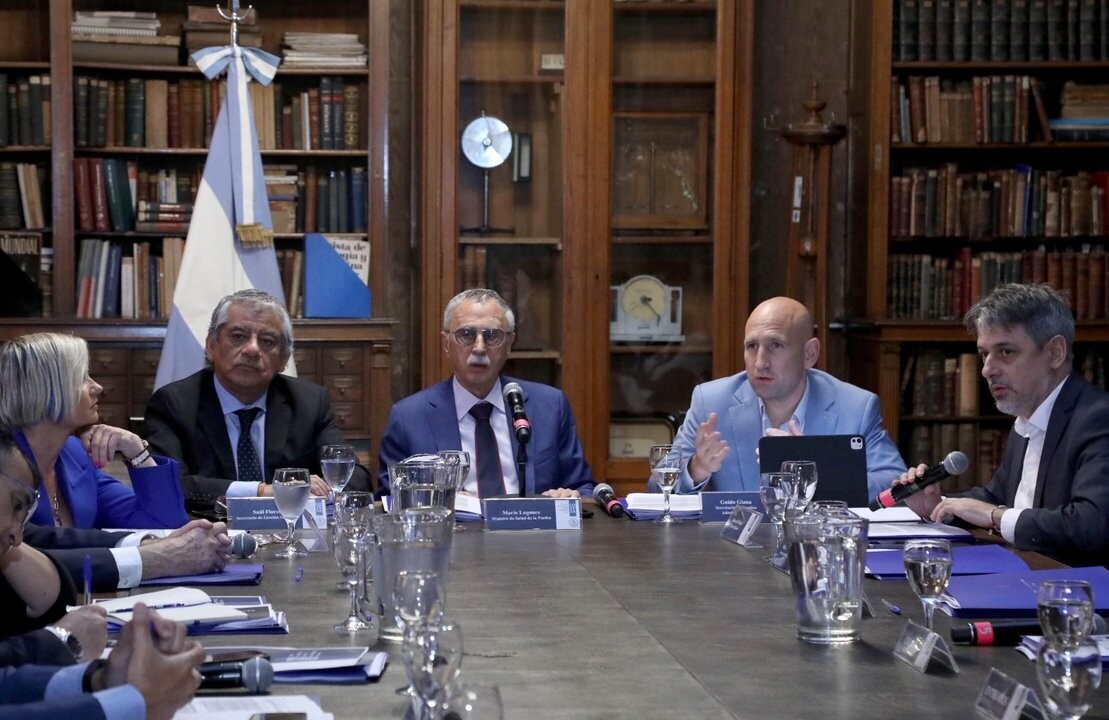
In 2025, Argentina reached a historical record in organ and tissue donations, surpassing the figures recorded before the pandemic. This year, 906 organ donation procedures were carried out, compared to 883 in 2019. This was announced during a meeting led by the Minister of Health of the Nation, Mario Lugones, with the heads of the provincial health ministries, within the framework of the last Federal Health Council (COFESA) of 2025. According to the Argentine News Agency (NA), during the meeting, the results of the prioritized policies for this year were shared, and the objectives of the joint agenda for the coming year were outlined. Regarding tissue donation, 1,242 procedures were completed this year, exceeding the 1,156 donations made in 2024. Likewise, a historical record of transplants performed was also reached: so far this year, 4,497 people received a transplant that allowed them to save their lives or improve their quality of life. Of the total procedures, 2,349 were organ transplants (1,674 were kidney, 463 liver, 124 heart, 36 kidney-pancreas, 22 lung, 24 liver-kidney, 3 heart-kidney, 2 pancreas, and 1 heart-lung) and 2,148 were cornea transplants. It should also be considered that 291 transplants were performed on pediatric patients and that 2,096 came from deceased donors and 253 from living donors. Next, the head of the National Unique Central Coordinator of Ablation and Implant (INCUCAI), Carlos Soratti, presented the Federal Strategic Plan in Donation and Transplant 2026-2028, which seeks to continue strengthening the health system's response to the need for transplants. This strategy proposes to improve the times for registration on the waiting list and the participation of the health system in the procurement of organs. In turn, the head of INCUCAI announced his retirement from public office and received a plaque from the Ministry of Health of the Nation in recognition of his career and work at the head of the Institute. All COFESA members present expressed their agreement regarding the continuity of his management through the team currently leading that body. Another topic addressed during the day was the importance of improving the coverage of the schemes in the National Vaccination Calendar. The General Director of Logistics and Processes, Juan Pablo Saulle, presented a new development of the National Vaccination Calendar Monitoring Dashboard, which shows the usage rate of each dose by jurisdiction and will allow monitoring the stock of vaccines sent to the provinces and improving the distribution and logistics system. Regarding the appearance of a new flu clade in Europe, national authorities highlighted that it has not been confirmed that the variant presents greater clinical severity and that, for now, it is not circulating in the country or the region. In this sense, it was emphasized that the 2026 influenza vaccination will begin next March and will reduce hospitalizations and severe cases. Other topics of the day included the director of Patient Quality and Safety, Luciana Valenti, sharing the guidelines of the National Quality Plan 2025-2030; the head of the United Nations Population Fund (UNFPA) in Argentina, Mariana Isasi, and the Data, Monitoring and Evaluation Officer of UNFPA, Anabel Fernández Prieto, presenting the report 'Demographic dynamics and implications for the health sector'; and the head of the Antimicrobials Service of the National Institute of Infectious Diseases (INEI) of ANLIS Malbrán, Alejandra Corso, sharing with the ministers the WHONET-Argentina Antimicrobial Resistance Analysis Dashboard. This is the first national interactive platform that allows for the rapid and dynamic analysis of various bacterial information criteria, which will be key to facing the treatment of infectious diseases by resistant pathogens, one of the current major health challenges.