Argentina is facing a widespread and silent water quality crisis affecting over 14 provinces. The problem is not isolated to Buenos Aires but represents a major public health threat, impacting respiratory, renal, bone, and neurological health, as well as increasing cancer incidence.
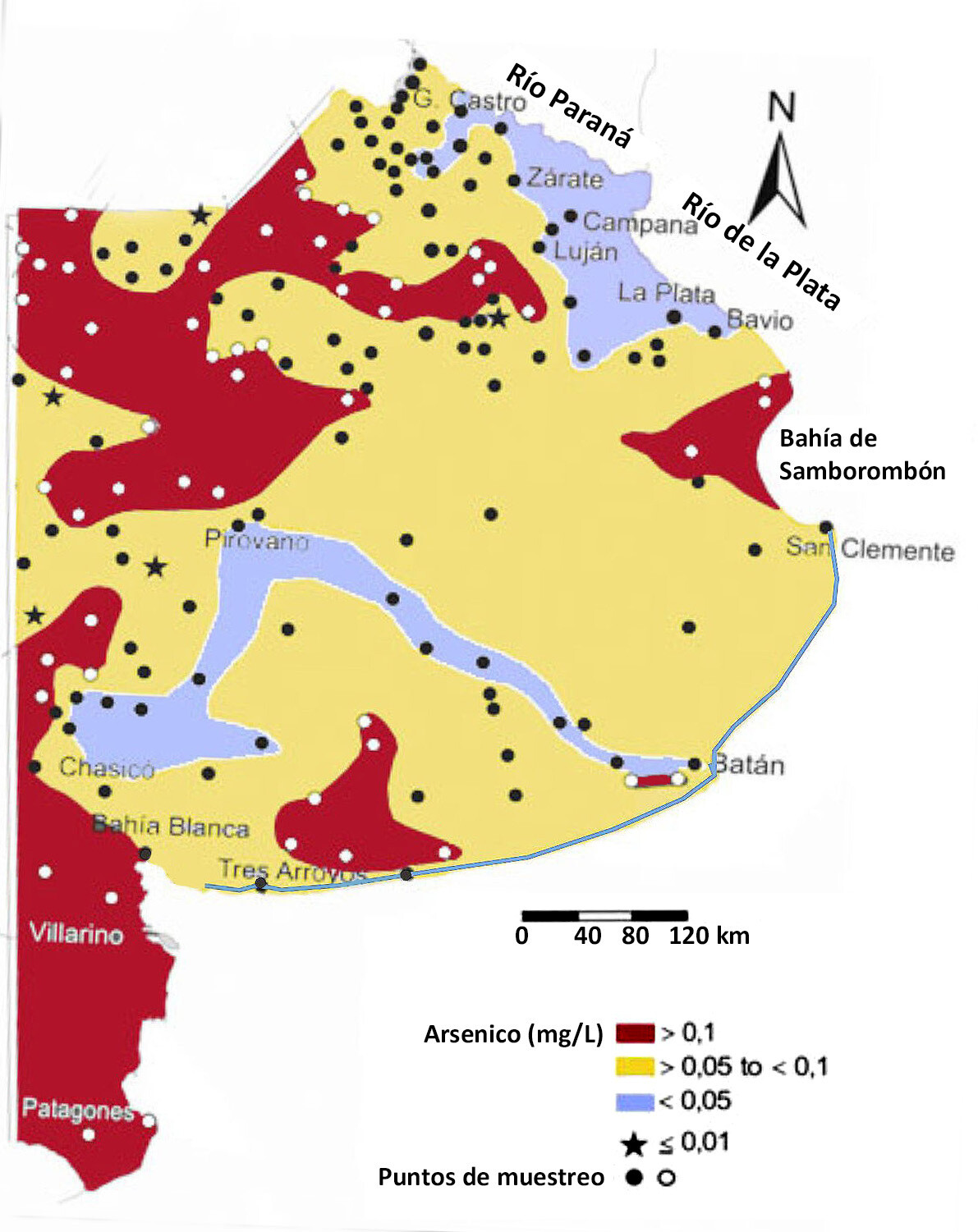
The primary contaminant is arsenic, with levels exceeding WHO recommendations in over 14 provinces. The most critical situation is in Buenos Aires province, where approximately 70% of its territory has arsenic concentrations above the safe limit. Areas particularly affected include the Route 5 corridor (9 de Julio, Bragado, Casares, Pehuajó, Trenque Lauquen) and the southern Greater Buenos Aires area (Almirante Brown, Ezeiza, San Vicente).
In addition to arsenic, water in various provinces is contaminated with nitrates (linked to agricultural activity and shallow wells), fluoride, and heavy metals (lead, chromium, mercury). Provinces like Córdoba, Santa Fe, Mendoza, Tucumán, and Santiago del Estero also face combined risks from these pollutants.
Specialists from ITBA and CONICET warn that current national regulations are outdated and do not align with WHO standards. While the provincial water company, ABSA, claims the supplied water meets national parameters, experts point to insufficient infrastructure and a lack of continuous monitoring.
The prolonged consumption of contaminated water is linked to severe health issues such as Chronic Regional Endemic Hydroarsenicism (HACRE), lung and larynx cancer, pulmonary fibrosis, and other respiratory disorders. For nitrates, there is an additional risk to children's health, causing methemoglobinemia.
In response, CONICET researchers are developing low-cost technologies to remove arsenic and nitrates using treated activated charcoal. Authorities are urged to update regulations, accelerate water purification programs, and provide transparent public information about water quality.