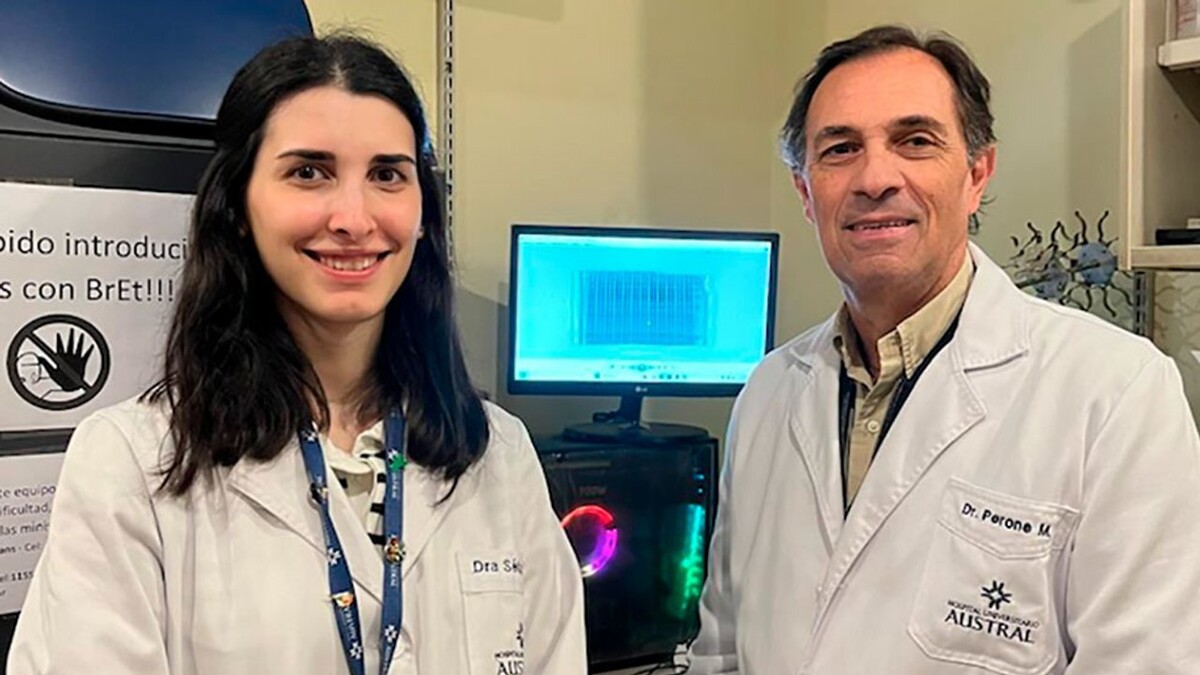
A team of researchers from the National Council for Scientific and Technical Research (CONICET) led by scientist Marcelo J. Perone has discovered that the cells that produce insulin can become resistant to damage. The finding, published in the scientific journal Cell Death & Disease, could contribute to the development of new therapies for diabetes, a metabolic disease with a major health and socio-economic impact. According to the Argentine News Agency, the study reveals that pancreatic insulin-producing cells — 'beta cells' — can take advantage of moderate stress situations to adapt and resist subsequent attacks that could otherwise cause their death and trigger the lack of insulin that leads to diabetes. CONICET explains that diabetes can present in various clinical forms: the most prevalent are type 1 diabetes mellitus — historically known as juvenile or insulin-dependent diabetes — and type 2 diabetes mellitus, which affects about ten to twelve percent of the world's population. This means that, according to estimates, diabetes affects more than five hundred million people worldwide. Diabetes Research Currently, many researchers are working to decipher what happens to insulin-producing cells when mechanisms leading to their death or dysfunction are activated. Understanding in detail the molecules involved in intracellular processes that increase the resilience of beta cells will help to prevent or treat metabolic diseases such as diabetes mellitus. Our finding opens the door to designing new therapies for diabetes, Perone states. After twenty years of diabetes research, Perone's group obtained this finding from biochemical experiments by CONICET fellow Carolina Sétula, which allowed for a further step towards understanding the biology of the insulin-producing cell. Perone details that 'the strategy used was to use an inflammatory cytokine, interleukin-1 beta (IL-1β), traditionally known for its detrimental effects on beta cells, as in high concentrations it can induce their dysfunction or even their death, thus favoring the development of diabetes.' Perone added: 'However, the study revealed that when applied in very low concentrations — similar to those that normally circulate in the blood under physiological conditions, and much lower than those observed during inflammatory processes — IL-1β can activate adaptation mechanisms that make beta cells more resistant to future attacks.' This means that what was previously believed to be harmful could be protective, since very low doses of an inflammatory molecule, IL-1β, help the cells that produce insulin to strengthen against future damage, a phenomenon known as hormesis.