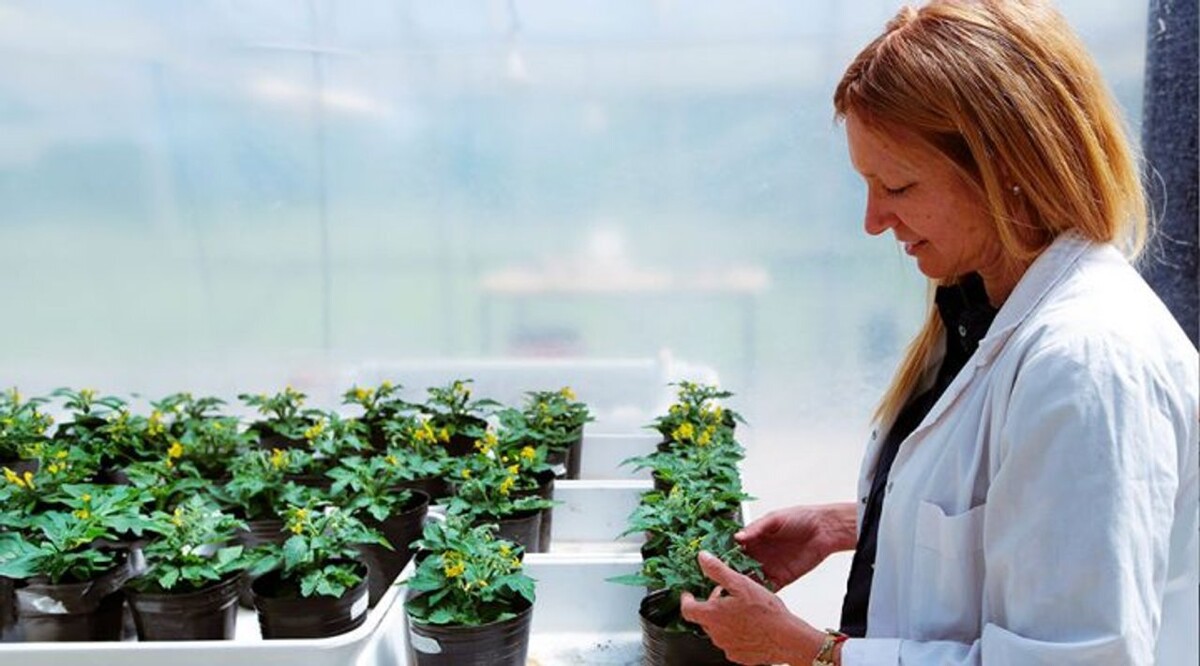
CONICET researcher at the Institute of Biological Research (IIB), Gabriela Pagnussat, has been awarded for her innovative work aimed at developing a method to help plants withstand heatwaves. Pagnussat received the L'Oréal-UNESCO National Award "For Women in Science", which has been presented in Argentina for 19 years. This recognition will allow her to advance her research on a biotechnological solution to the growing problem of heat stress in crops.
Heatwaves pose a significant challenge for agriculture, as for every degree of increase in the global average temperature, an estimated 3% to 10% of agricultural production is lost, leading to millions of dollars in related costs.
The scientist explained that her project is titled "Towards heatwave-resistant crops: Activation of the SWAP splicing factor via CRISPR-dCAS9 technology" and aims to develop plant lines that can tolerate stress from high temperatures.
"In the world, more than 40 billion dollars are lost annually directly due to this phenomenon," stated Pagnussat, noting that her research focuses on the genetic modification of plants to give them a 'memory of heat stress', which would allow them to acclimate to high temperatures from birth.
"This award opens a huge door for us to corroborate the scope of this very promising new technology," said the scientist, who also expressed that this advance not only has implications for agriculture but could be replicated in various plant species.