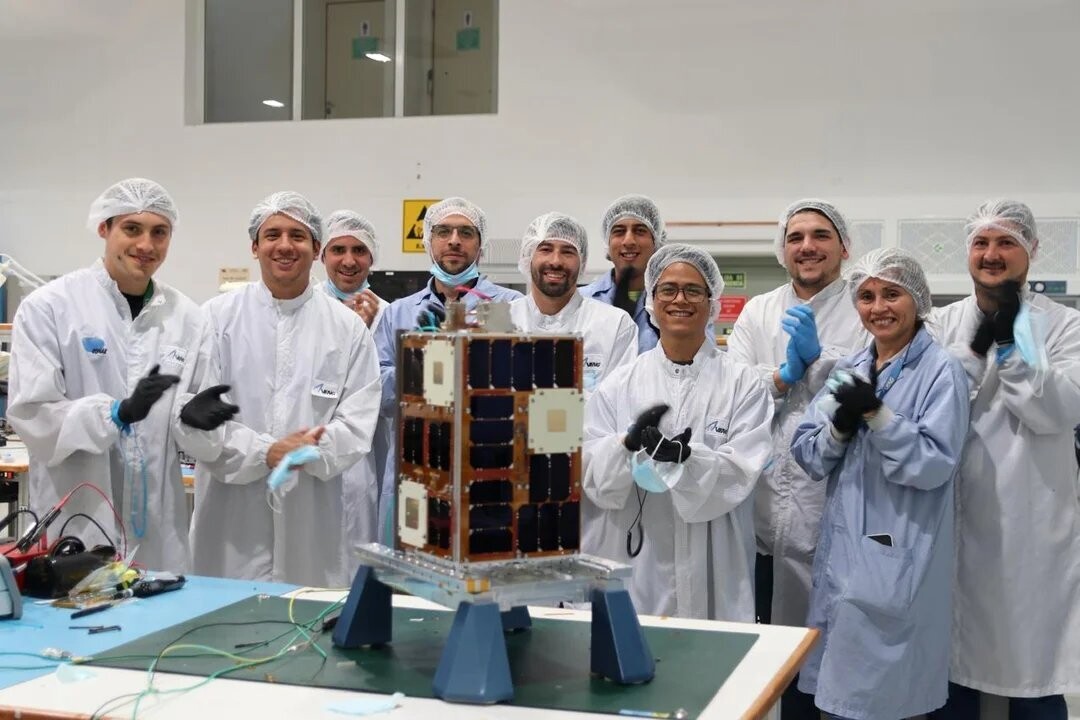
The National Commission for Space Activities (CONAE) reported that the mission of the Argentine microsatellite ATENEA has successfully concluded after completing the planned 20 hours of operation in deep space, having transmitted the programmed data to ground stations. The cubesat, which was part of the Artemis II mission as secondary cargo, managed to communicate with stations in Córdoba and Tierra del Fuego and send telemetry about its operation in extreme conditions. According to the Argentine News Agency, the first signal was received from over 40,000 kilometers away, while the satellite reached a distance of more than 70,000 kilometers from Earth, a record for Argentine space technology. During its operation, ATENEA validated electronic systems in high-radiation environments, tested long-range communication links, and analyzed navigation signals at altitudes higher than those of constellations like GPS, GLONASS, and Galileo. The collected data will be key for the development of future missions with greater technical complexity. The project, led by CONAE in conjunction with universities and scientific organizations, represented a milestone for national space activity by positioning the country in a highly demanding environment such as that of Artemis II. With the closure of the mission, the satellite left concrete results in terms of technological validation and operational experience in deep space.