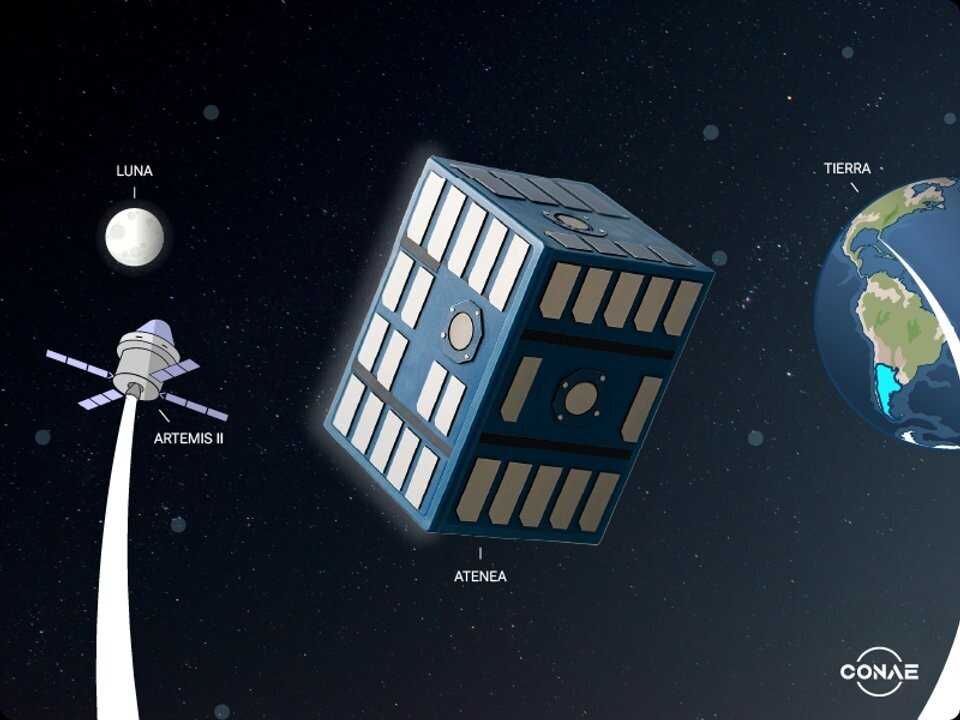
The Argentine microsatellite Athena has successfully completed its mission as part of NASA's 'Artemis II' program. The satellite operated for 20 hours, setting national records for distance and validating technology for deep space. The first signal from Athena was received from over 40,000 kilometers away, and the second surpassed 70,000 kilometers, setting a record for Argentina. The data collected by the satellite will be key for developing future, more technically complex missions. This success is the result of a paradigm shift towards global integration and excellence, driven by President Javier Milei. In this project, led by the National Commission for Space Activities (CONAE), several Argentine universities and national institutes also participated. This achievement strengthens Argentina's cooperation with the United States and the international community in space endeavors. 'Today the world chooses us for our reliability, security, and technological leadership,' the government stated. Notably, of the four satellites launched in the mission (one from Germany, one from Saudi Arabia, one from South Korea, and the Argentine one), only two were able to establish a proper communication link, and one of them was the Argentine satellite.