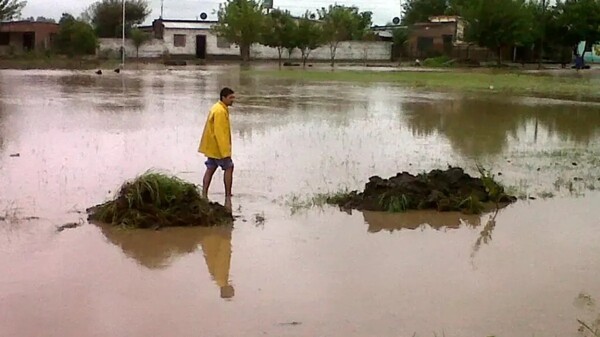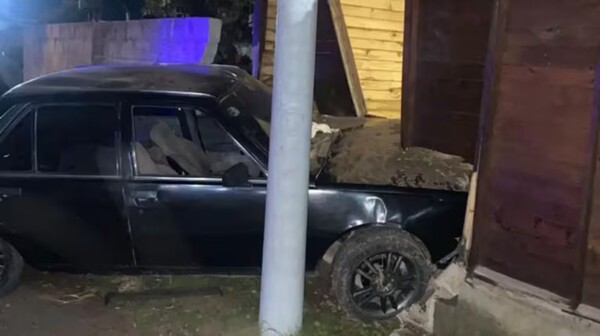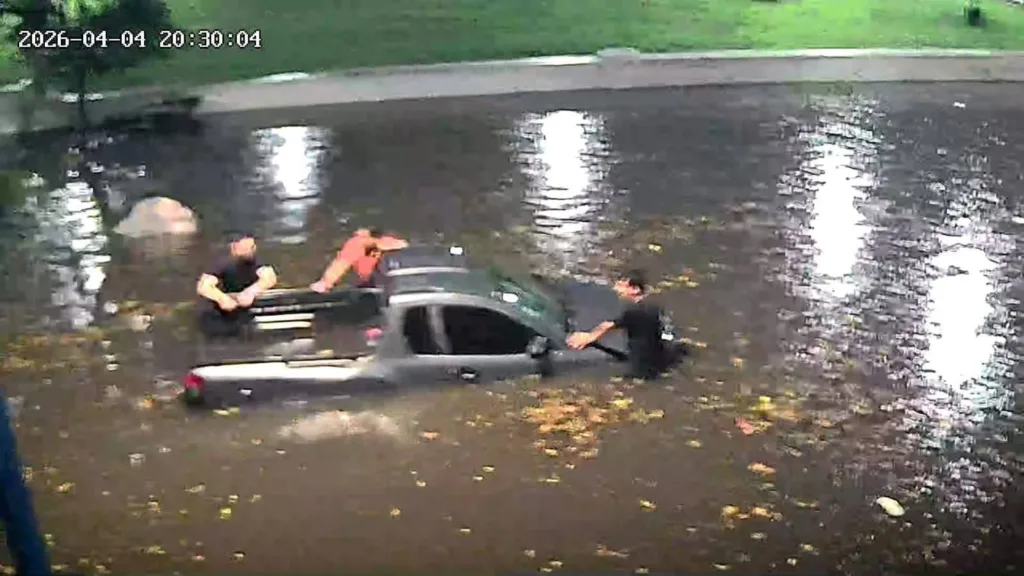
The severe storm that hit Tucumán hard over the weekend left a tragic toll of three dead, flooded neighborhoods, interrupted roads, families assisted in emergency situations, and a bitter feeling that repeats itself too often in northern Argentina: when the rain falls with violence, the state is once again left running behind the disaster. The magnitude of the event forced the evacuation of families, assistance to trapped neighbors, and the deployment of emergency operations throughout the early morning hours. In parallel, Córdoba also suffered the impact of the same storm front. In the Traslasierra region, especially in Villa Dolores and Las Tapias, the rising of the Los Sauces River forced the evacuation of at least 26 people and the rescue of 12 dogs, according to reports from local media. That a minor died by touching an electrified pole on a street turned into a lake cannot be read only as a meteorological fatality. Neighbors in the area recounted that there had been previous warnings about electrical risks in that sector. The tragedy did not end there. There were homes with over a meter of water inside, isolated residents, and preventive closures of fords and bridges. The water advanced over much of Tucumán's territory and hit the southern part of the province with particular severity. The most painful scene took place in Villa Angelina, in the Tucumán capital, where Lisandro, a 12-year-old boy, was electrocuted to death upon making contact with an electrified pole while returning from playing ball with friends in the accumulated water on the street. With these deaths, the storm went from being a severe climatic emergency to becoming a human catastrophe that once again exposed the fragility of infrastructure, services, and prevention in a province that every time it rains heavily seems to be on the brink of collapse. The phenomenon was not limited to the capital. It is also the crudest expression of a structural vulnerability that reappears every time the rain exceeds a certain threshold. The storm passed, but it left more than mud, stranded cars, and cut roads: it once again left the evidence that, in the face of increasingly violent storms, too many areas still lack sufficient protection and too many responses arrive when the damage is already done. There were floods in Aguilares, Alpachiri, La Calera, and other localities; the overflowing of the Chirimayo River compromised the main bridge of Alpachiri and completely interrupted National Route 65; in addition, Route 307 was affected by sediments and material dragged onto the roadway. Both were found inside their vehicle in the Nueva Italia area, about 400 meters from Route 9. In some points, such as Monteros, exceptional accumulations of up to 260 millimeters were reported in just four hours. Hours later, the Police confirmed the finding of the lifeless bodies of Mariano Robles, 28, and Solana Albornoz, 32, a couple who had been reported as missing after being trapped by the storm while returning from a wedding. The regional dimension of the storm confirms that it was not an isolated episode, but a severe system that strongly affected different provinces in the center and north of the country. In Tucumán, the shock over the child's electrocution once again put an old and intolerable problem under the spotlight: the lethal combination of urban flooding, exposed electrical installations, and insufficient prevention. They were parents of two young children.