Europe, deciding it wanted to be virtuous two decades ago, banned fracking, closed its nuclear plants, ignored its own oil and gas, covered its landscapes with windmills that can't guarantee a stable supply, bought the batteries it needs from China, left its citizens to die of heat in summer because electricity is too expensive to run the air conditioning, and lost its ability to build the digital infrastructure of the 21st century.
It committed energetic suicide just when energy stopped being an industrial resource to become the most important cognitive resource in history. All that was sacrificed.
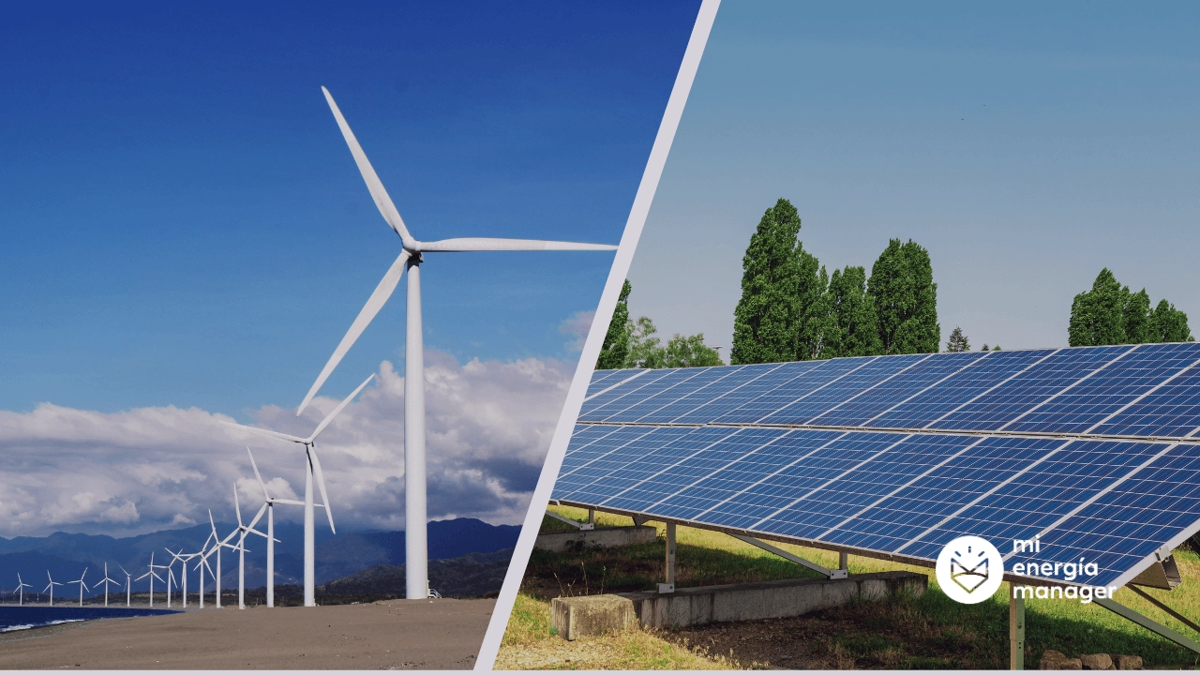
What Europe chose instead are windmills and solar parks. Europe built an expensive, intermittent, and ideologically conditioned energy system, and now its citizens are dying of heat in summer because they can't afford the technology that would protect them. It's hard to imagine a clearer demonstration of the failure of public policy.
But the more serious problem is not the present. It closed perfectly functioning nuclear plants. When that route became a war zone, gas prices on the European reference market shot up 55% in a single week.
Europe has two options to explain this gap. The first is that its citizens don't have air conditioning because they culturally reject it, convinced that enduring heat is more virtuous than consuming electricity. The second is that they can't afford it, because electricity in Europe costs two or three times more than in the United States, precisely as a consequence of the energy policy it chose. No one with access to data denies this.
"Temperatures are rising. Heatwaves are more frequent and intense. The consequence is direct and measurable: at equivalent temperatures, many more people die in Europe than in the United States," the report states.
In 2022, Europe recorded over 61,000 heat-related deaths. Spain alone registered 8,352 heat deaths that year, becoming the second European country with the highest absolute mortality from this cause. Meanwhile, the US Centers for Disease Control and Prevention (CDC) records about 700 annual heat deaths.
"The most effective solution against extreme heat is not a climate agreement or a solar park. It's air conditioning," the report states.
The difference is not the climate. It's air conditioning. In the United States, 90% of households have air conditioning. In Europe, penetration is minimal, especially in the north and center of the continent.
And then came the conflict with Iran. The confrontation in the Strait of Hormuz, through which 20% of the world's oil and 20% of the liquefied natural gas traded on the planet pass. When Russia invaded Ukraine in 2022, that tap was suddenly shut off. Gas prices on European markets multiplied by four in a matter of weeks. No one with access to data denies this.
Europe increased its energy dependence by closing nuclear plants, banning fracking, and ignoring its reserves in the North Sea. The most ironic thing is that the own resources existed. The North Sea has enough oil and gas to drastically reduce external dependence.
Europe's subsurface contains extractable gas via fracking, a technique Europe banned for environmental reasons while using it without a problem to import liquefied natural gas produced with those very same techniques in other countries.
Europe doesn't manufacture them. It buys them from China. And it filled its landscapes with windmills and solar panels that, according to the official narrative, were going to save it from climate change and energy dependence. The technical solution to intermittency is large-scale batteries. But Europe doesn't manufacture them. It buys them from China.
This intermittency destabilizes the electrical grids, creates frequency imbalances, and causes blackouts. Installations that generate intermittent energy: they only work when the wind blows or the sun shines, and they shut down when it doesn't.
And in those same horizons, wind and solar parks are now proliferating, facilities with a real and visible ecological footprint that no environmental impact study seems able to curb.
All of Europe has 6. As of 2023, 47,690. The United States has over 5,400 data centers in total, more than Germany, the United Kingdom, China, France, Australia, the Netherlands, Russia, Japan, and Brazil combined.
"The state of Virginia alone has more hyperscale data center capacity than the entire European continent," the report states. "When a European uses ChatGPT, the response is processed in Texas. When they use Claude, in Virginia or California. When they use DeepSeek, in Shanghai." That's the core problem.
Energy is artificial intelligence. We are in the era where energy is not just heating, transport, and industry. Energy is AI. Training a state-of-the-art AI model consumes as much electricity as thousands of homes for months. Processing each query that millions of people make daily to ChatGPT, Claude, or Gemini requires data centers running 24/7, consuming massive amounts of electricity.
According to McKinsey, inference, i.e., the processing of responses in real-time, will represent more than half of all AI computing and between 30% and 40% of the total demand for data centers by 2030.
Practically none of this computing happens in Europe. Europe consumes AI but doesn't host it, build it, or control it. The reason is straightforward: building AI data centers requires abundant, cheap, and reliable energy. In Europe, that combination is politically impossible in most countries.
The German industry, which had built its competitiveness on cheap and abundant energy, entered a structural crisis from which it has not emerged. Germany, Europe's largest economy, has been in recession for two years.
The German industry, which had built its competitiveness on cheap and abundant energy, entered a structural crisis from which it has not emerged.
Europe replaced Russian gas by buying liquefied natural gas on international markets, which is much more expensive and much more vulnerable to global conflicts.
The German industry, which had built its competitiveness on cheap and abundant energy, entered a structural crisis from which it has not emerged.
Europe is not a military power and doesn't want to be. During the Cold War, it spent about 3% of its GDP on defense. Today it spends an average of 1.9%, and countries like Spain have been failing to meet even the minimum 2% target agreed with NATO for decades.
A continent that cannot protect itself depends on others to protect it, and when those others have their own problems, Europe is left exposed. Two energy crises in four years, caused by military conflicts that Europe has neither the capacity to resolve nor to prevent. The dismantling of nuclear infrastructure and the banning of conventional methods increase Europe's vulnerability to global conflicts and limit its role in the new digital and AI economy.