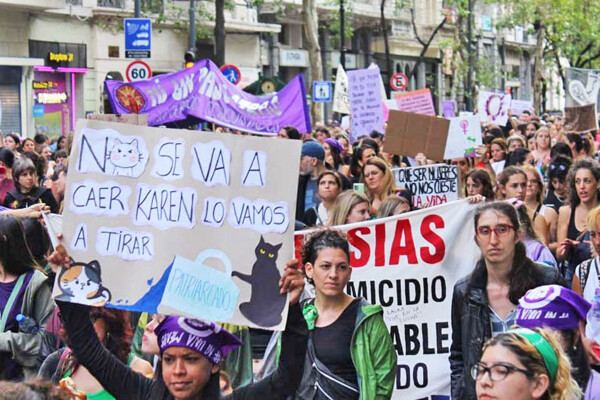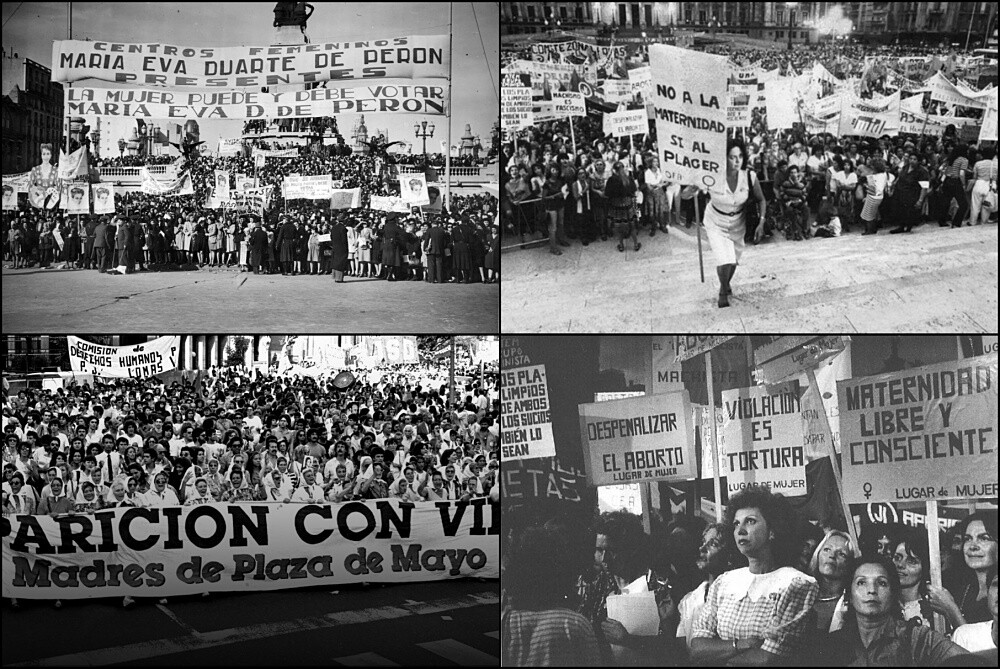
The history of Argentine women is inextricably linked to the struggle for social, economic, and political rights. From the moment of independence and in the social movements of the 19th and early 20th centuries, their contribution was significant, yet it did not result in substantial improvements to their condition. Moreover, their role has often gone unrecorded.
Women actively participated in key labor conflicts, such as the strike at the Río Santiago shipyards, among the miners of Río Turbio, at the Zanon factory, along the Paraná River, at the Brukman textile factory, and among teachers and state employees. During the Menem privatizations, when workers were expelled while profits accumulated, pickets and picketers emerged, often led by women. Their road blockades became a common feature in provincial landscapes.
In the early decades of the 20th century, women began to actively participate in the union movement. They were the organizers, mobilized the masses, and led protests. One of the most prominent figures was the anarchist Virginia Bolten, who spoke at rallies in cities such as San Nicolás de los Arroyos, Campana, Tandil, and Mendoza. In 1890, on the eve of the May Day demonstration, she was arrested for distributing anarchist propaganda among the workers of the Argentine Refinery.
One of the most important strikes in which women played a leading role was the 1907 tenant strike. In response to rising taxes and rent, residents of tenement houses (conventillos) in Buenos Aires and Rosario refused to pay. Women, who were responsible for organizing and defending their homes, became the face of this movement. Their solidarity was remarkable: around 80% of the conventillos in Buenos Aires and hundreds in Rosario joined the strike. The demands included a 30% reduction in rent, improvements in housing sanitation, and a guarantee against eviction for participating in the strike.
Women also fought for their political rights. In 1910, the First International Feminist Congress was held in Buenos Aires, where issues such as the economic condition of women, white slavery, the rights of married working women, and 'a single moral code for both sexes' were discussed. In 1947, Law 13.010 was passed, establishing equal political rights for men and women and universal suffrage in Argentina. Eva Perón played a key role in this process, and she also founded the Eva Perón Foundation, which provided enormous social support to the poorest strata of the population, including women who were the sole breadwinners in their families.
However, even after achieving voting rights and passing laws on equality, women in Argentina continued to face discrimination in the labor market. Statistics show that women earn 35% less than men for the same level of education and are more likely to work unofficially ('in black'). Women bear the primary responsibility for household chores and childcare, which limits their access to quality employment. Despite a significant increase in educational levels over recent decades, this has not led to corresponding changes in their overall working conditions.
In recent decades, during conflicts related to factory closures, wage delays, layoffs, and privatizations, Women's Committees were formed to support strikes. Their struggle continues to this day, demonstrating the resilience and determination of Argentine women in the fight for their rights and a decent life.