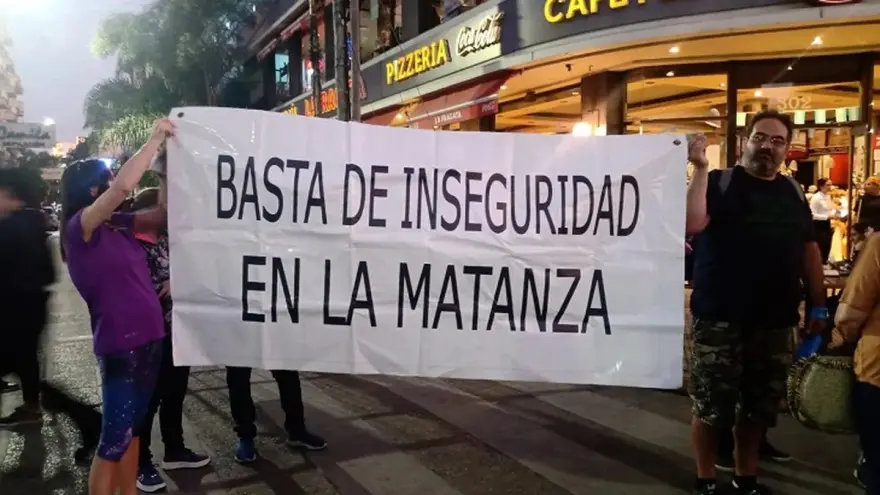
This is political opportunism aimed at seizing a vacant position to avoid discussing the core issue: the absolute failure of gun control in the black market. It's the pseudo-progressivism that dominates television studios, which prefers to demonize the citizen who has a home, pays taxes, and registered their firearm, because that citizen is traceable, and above all, is educated. They are pained that more useless names are not named in the security secretariat, but they find it 'natural' for five criminals to carry war-grade weapons on a dirt road. La Matanza continues to live up to its name while politics plays hide-and-seek and journalism gets lost in the labyrinth of its own emptiness. To be continued… (Because in Argentina's harsh reality, the next heist is already scripted). The setting, almost by mandate of destiny, is La Matanza. As if a decree signed in a desk in San Justo could stop the projectile already lying in the chamber of an illegal weapon. What the security professional—the civilian who complies with the ANMaC bureaucratic ritual—notes with the precision of a surgeon is the sepulchral silence of the media 'intelligentsia' about the instrument of sin: the criminal's weapon. For the citizen of law, you, dear reader who possesses your CLU, are the usual suspect. They demand the organizational chart, ask for the stamp, the position, the undersecretary of nothing itself. Two cars, five members of organized crime, and a deployment of iron that the 'morning' reporters prefer to treat as if it were part of the urban furniture. It is fascinating to observe the articulation of horror on the screen. By Nicolás J Portino González. Special for the observer who still retains the vice of thinking. We are today facing a new installment of the bloody Buenos Aires custom. The thug's weapon is treated by journalism as a meteorological phenomenon: 'It rained lead,' they say, with infinite imbecility, as if the bullets fell from the sky by divine will and not by the index finger of a madman who never set foot on a legal shooting range. What does this selective blindness respond to? He has undergone medical analysis, also psychological (to prove he is not a loose cannon), suitability for shooting, and scrutiny by the State. They count his bullets, measure the distance, and question the very air he breathes. For the crook, the weapon is an invisible accessory. They have a reverential fear for the armed criminal that they disguise as 'sociological analysis.' It is the dictatorship of political correctness applied to ballistics: the legal weapon is a danger, the illegal weapon is a social circumstance. You, the professional who went through the procedures, who passed the exam and knows the responsibility of the iron, feel like an idiot because the system is designed for the compliant person to be the scapegoat. No one asks where that 9mm with the erased serial number came from. They are scandalized, with a cardboard indignation, because the mayor—that baron of the conurbano who survives everything—has not had the delicacy to appoint officials in the security area after the last turnover. A territory where the name is no longer a geographical reference, but a fulfilled prophecy. The sequence is of a cruelty from a manual: a family leaves their home, prepares their van for the transfer of their daughter who awaits her treatment for a disability and then... the irruption of the horde. If you dare to defend yourself, journalism subjects you to an ethical autopsy. Do not look for high-level conspiracies; the explanation is more pedestrian. The panel journalism operates on the premise of superficial indignation.