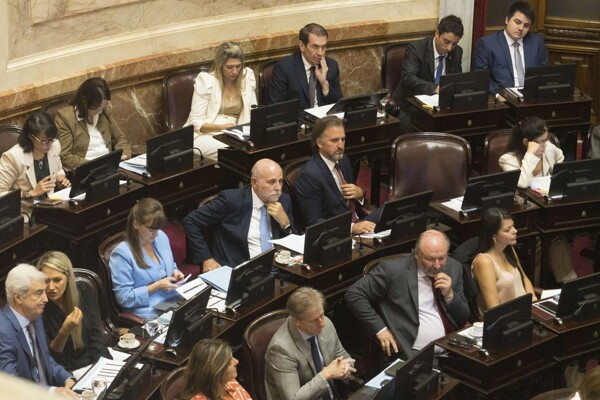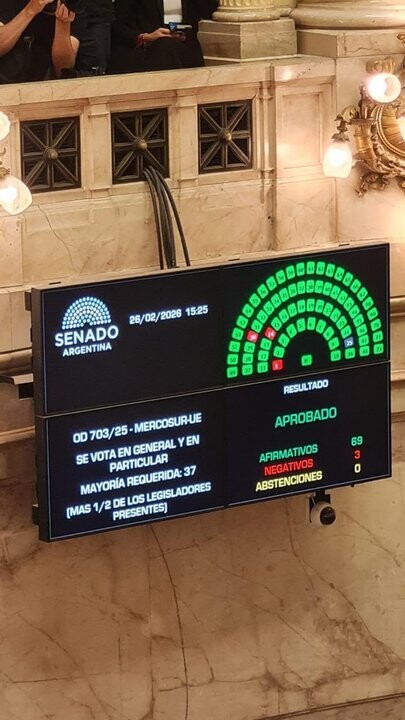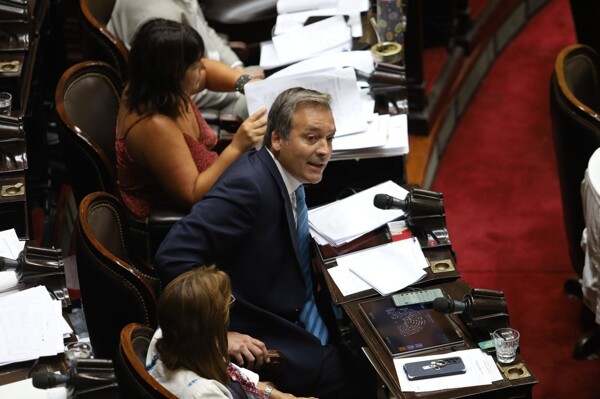
Following the presidential defeat of Daniel Scioli and, particularly, the fall of Aníbal Fernández in the province of Buenos Aires, a considerable portion of the Kirchnerist political apparatus has retreated to territories, municipalities, and structures with the resources to sustain cadres, activism, and management. La Matanza was the most cited example: with Verónica Magario newly in power at the municipal level, several former national and provincial officials found refuge in the district, in secondary-line roles but with real administrative capacity. At the center of this reordering is the situation of Cristina Fernández de Kirchner: with a confirmed conviction in the 'Vialidad' case, a disqualification from holding public office, and serving her sentence under house arrest, her margin of maneuver has been reduced to political leadership and the architecture of loyalties. For the first time in decades, Peronism appears without full control of the internal levers that previously guaranteed it discipline and blocking capacity. In parallel, the Buenos Aires political board shows a dispute that is more personal than doctrinal. Axel Kicillof consolidated his political autonomy and advanced towards the leadership of the Buenos Aires PJ, a move read within Kirchnerism as the displacement of the 'natural heir' and, in Kicillofism, as the necessary step to order the country's main territorial structure. Will it align with Kicillof's project to avoid greater marginalization? The breakaway of three senators from the Peronist inter-bloc—in a context of negotiations for special majorities and chamber posts—left Kirchnerism closer to its historical floor of representation and facilitated the ruling bloc in building targeted agreements to advance on sensitive initiatives, including Labor Reform. Or will it seek its own reconstruction, even with less legislative representation and less national power? In recent weeks, two movements have exposed this transition with stark clarity: Axel Kicillof's advance over the leadership of the Buenos Aires Justicialist Party (PJ) and the fracture of the Peronist inter-bloc in the National Senate, which weakened the main parliamentary dam that Kirchnerism had used to annoy the government of Javier Milei. The comparison with 2015 reappears, almost as a mirror. Will it try to condition it from within, as an uncomfortable partner, to not lose its identity or structure? In this context, the Campora strategy focuses on preserving areas of management and budgetary control in the province, while evaluating how to position itself before a potential national build-up led by the governor. This is where the concept of 'boxes' appears, repeated even in low voices by former members of the space. To this are added spaces of enormous social impact such as IOMA and the Social Security Institute (IPS), plus areas linked to state purchases and contracts, which are usually the administrative heart of any management. For the hard Kirchnerism, the discussion is no longer just ideological: it is existential. The Peronist opposition no longer discusses how to quickly return to power, but how to prevent an internal collapse from leaving it without levers of influence. Furthermore, that leadership no longer operates as an automatic unifier: the Peronism that used to align out of gravity today atomizes between pragmatic governors, legislators with provincial agendas, and leaders seeking a new electoral axis. The most visible sign of this weakening was seen in the Senate. Buenos Aires - February 27, 2026 - Total News Agency - TNA— Kirchnerism is going through its most defensive phase in years: with the leadership of the convicted Cristina Fernández de Kirchner conditioned by a firm judicial sentence and the political leadership of Máximo Kirchner in retreat, the core of the space seems to have moved from 'we're going for it all' to a logic of survival. The reading is simple: if electoral power shrinks and the legislative muscle fragments, daily support rests on the administration of resources, appointments, contracts, and territorial-reaching programs. That time, however, history had a 'back and forth': in 2019, Peronism returned to Casa Rosada and La Plata, reopening the cycle of posts and control of organisms. Today the picture is different. But the current climate suggests a stage of retreat: less epic, more administration; less offensive, more defensive; less 'movement' and more 'survival'. The loss is not just arithmetic: it is also symbolic. In Peronism, where equilibria change quickly, no one signs off on premature finals. Former Minister Débora Giorgi, former deputy and official Roberto Feletti, and former Buenos Aires ministers like Alejandro 'Topo' Rodríguez and Alejandro Collases have been recycled in key areas of the municipality. The relationship between Kicillof and Máximo Kirchner is sustained on an uncomfortable truce: they coexist because they need each other, but they distrust because they compete. In the provincial cabinet, La Cámpora retains relevant positions: the Ministry of Justice with Juan Martín Mena, the Ministry of Health with Nicolás Kreplak, the Ministry of Environment with Daniela Vilar, and the Cultural Institute with Florencia Saintout.