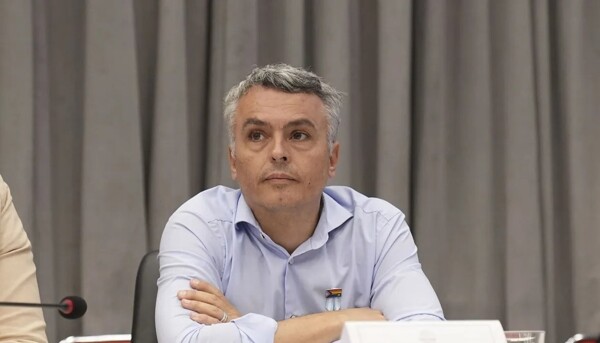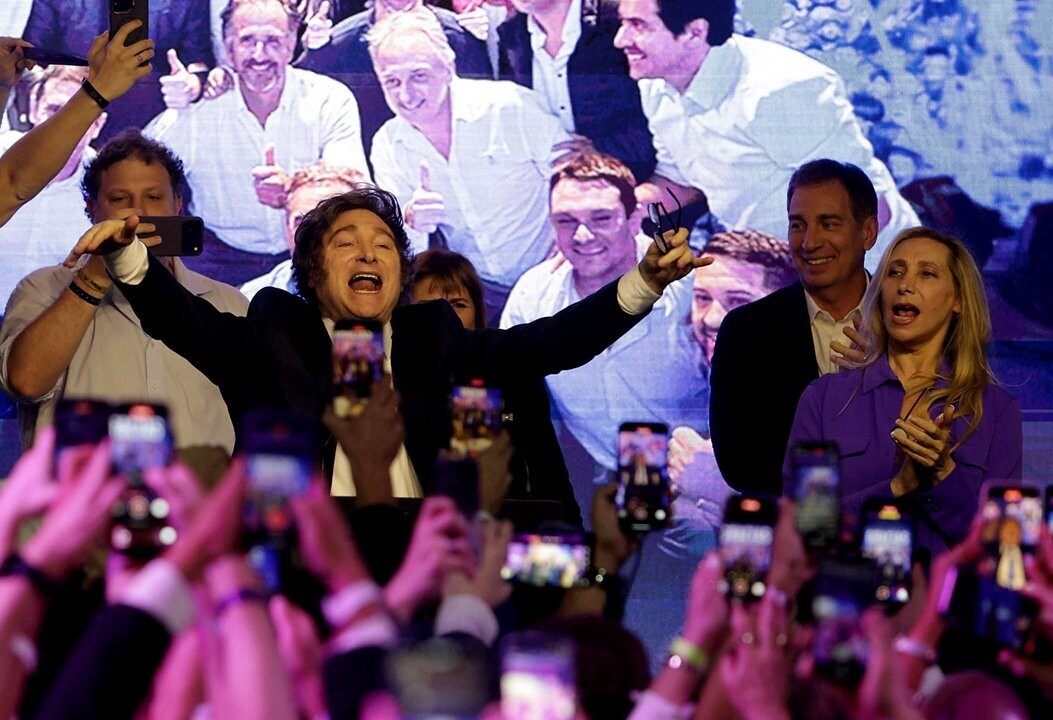
President Javier Milei made this statement a few hours ago, saying: "This Monday, a new Argentina began. Two-thirds of Argentines bet on embracing the ideas of freedom." He also noted: "There is room for dialogue and debate," in a clear message aimed at opposition sectors that have direct contact with the governors of the United Provinces. It was unthinkable until a few weeks ago that the head of state would speak with such clarity. What market leaders consulted by the Argentine News Agency highlight most is that this vague call came at the time of a victory beyond expectations. On Sunday night, several governors sent congratulatory messages to Milei. Argentines decided to get on the highway that will make the country great again. The response left no doubts: "Another stage begins and we will talk often," they heard. Guillermo Francos will be in charge of speeding up agendas, and Federico Sturzenegger the man in charge of monitoring compliance with the May Pact. Martín Llaryora (Córdoba), Maximiliano Pullaro (Santa Fe), Ignacio Torres (Chubut); Carlos Sadir (Jujuy), Gustavo Valdés (Corrientes) and Claudio Vidal (Santa Cruz), with the addition of former Córdoba governor Juan Schiaretti, will surely be key interlocutors. The markets are betting on a dialogue that allows for the advancement of laws and blocks any possibility of Kirchnerism endangering laws that favor the arrival of key investments in sectors such as energy, mining, and others. The great challenge for Argentina's economy, and therefore for the government, will be to keep financial variables in order, and for that to translate into economic recovery. That recovery should come sooner rather than later, because consumption and activity—as Milei himself recognizes—have completely cooled in recent months. At the same time, the country is going through a period of very low wages. The President attributes this paralysis to the fear of "kuka risk," but it remains to be seen if this simplification is enough to explain why economic activity is stalled, and if it is understood that much more political capital is needed to carry out the proposed reforms. The best example is that the government had to urgently turn to its best ally in these times, Donald Trump, because otherwise the dollar could have reached stratospheric levels by the time of the elections, and in that case the result would surely have been different. The market euphoria—with a Merval that rose more than 30% in dollars, its highest increase in three decades, a strong rise in bonds and ADRs, and a North American currency trading 55 pesos below Friday's level—reflects the very positive reading that the financial world made of the election results. To the point that the planets are aligning so well for the libertarian government that even soybeans, Argentina's star commodity, is in the USD 400 zone, the highest level of the year. But Milei should know better than anyone that the world of finance is the most volatile there is, and the support for his administration depends on ordinary people continuing to trust that he can get an economy that has not grown for 15 years back on track. Businessmen consider that the government has a golden opportunity to build the consensuses that allow it to "build governability," so that the Congress can advance with pending reforms, especially the labor and tax ones. And Milei will no longer have excuses not to do so, political analysts agree, and point out that the head of state is facing a unique opportunity to become a "statesman" if he bets on dialogue with "70 percent of Argentina that embraces the ideas of freedom," as he himself said, and starts delivering on the rhetoric that most of the time gives him more headaches than successes. "It will be important that with the more rational part of politics, we sit down and talk."