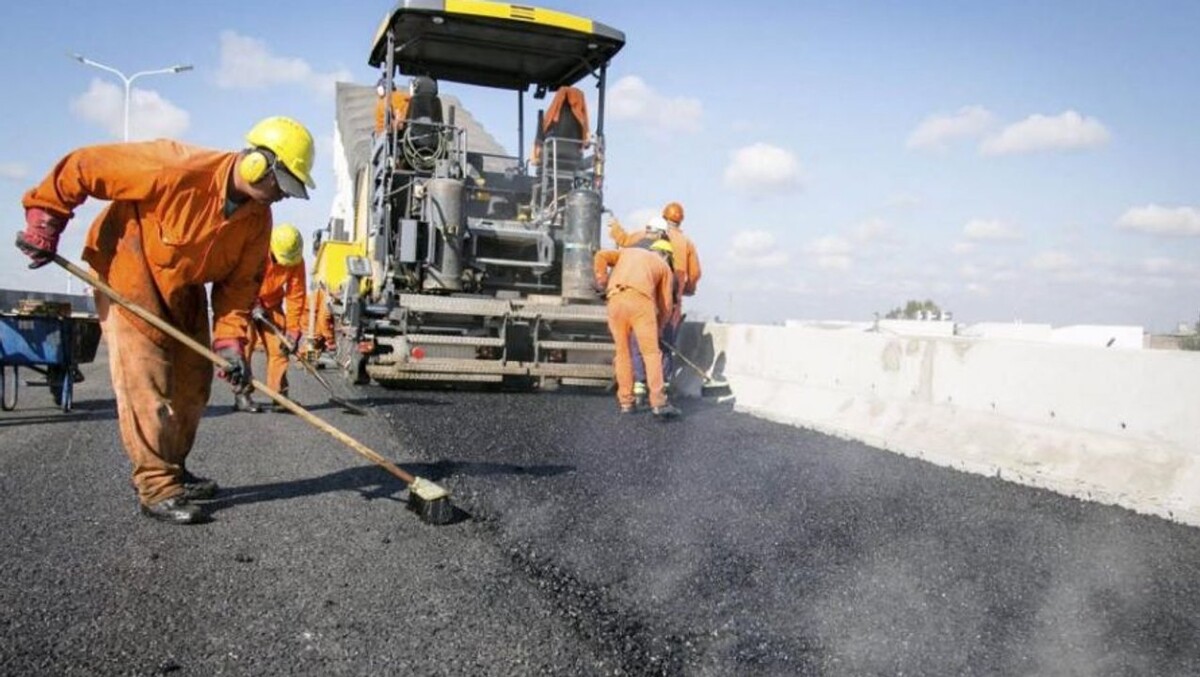
The Argentine government has just announced a fiscal surplus for the second consecutive year, and it is becoming increasingly clear that the burden of adjustment to achieve this goal has hit the pockets of the middle class and public works. Families owe much more than they earn, according to a report by the consulting firm EcoGo, which reveals that total household debt reached 140% of their monthly income. Economist Marina Dal Poggetto said that "the adjustment variable is the middle-class salary," as "it is not enough to cover health insurance or private schools." She also emphasized that "the government prioritizes the exchange rate anchor and disinflation over the interest rate and the level of economic activity." "Argentina is pendulous and we always discuss the same thing. For a long time, they were not concerned with the Argentine cost, which justified high prices for everyone," Dal Poggetto said in statements to Radio Rivadavia. 33% of households are already trapped in the loan system of virtual wallets and fintechs. This scenario is compounded by the fact that public investment executed during 2025 amounted to 2.1 trillion pesos, representing a real decrease of 27% compared to the execution of the 2024 fiscal year, according to a report from the Congressional Budget Office. Capital Transfers (TC) fell 48.6% compared to 2024. In comparative terms with the rest of the items that make up the primary expenditure of the National Administration, public investment was positioned as one of those that most influenced the total decrease, after subsidies, personnel expenses, and social programs. During 2025, public investment recorded real monthly decreases in 9 of the 12 months of the year. The most pronounced decline was recorded in January (84.9% year-on-year), while in December the highest growth was observed (24.1% year-on-year). The same behavior was repeated in the quarterly execution rate, with emphasis on the second half of the year and particularly in the last quarter. The acquisition of capital goods was mostly concentrated in ten organisms that represented 75% of the 0.4 trillion pesos accrued: the most relevant purchases were related to connectivity and school infrastructure, executed by the Secretariat of Education. The two main trust funds that in 2024 channeled a large part of public investment were dissolved: the Social Housing Fund and Pro.cre.ar.