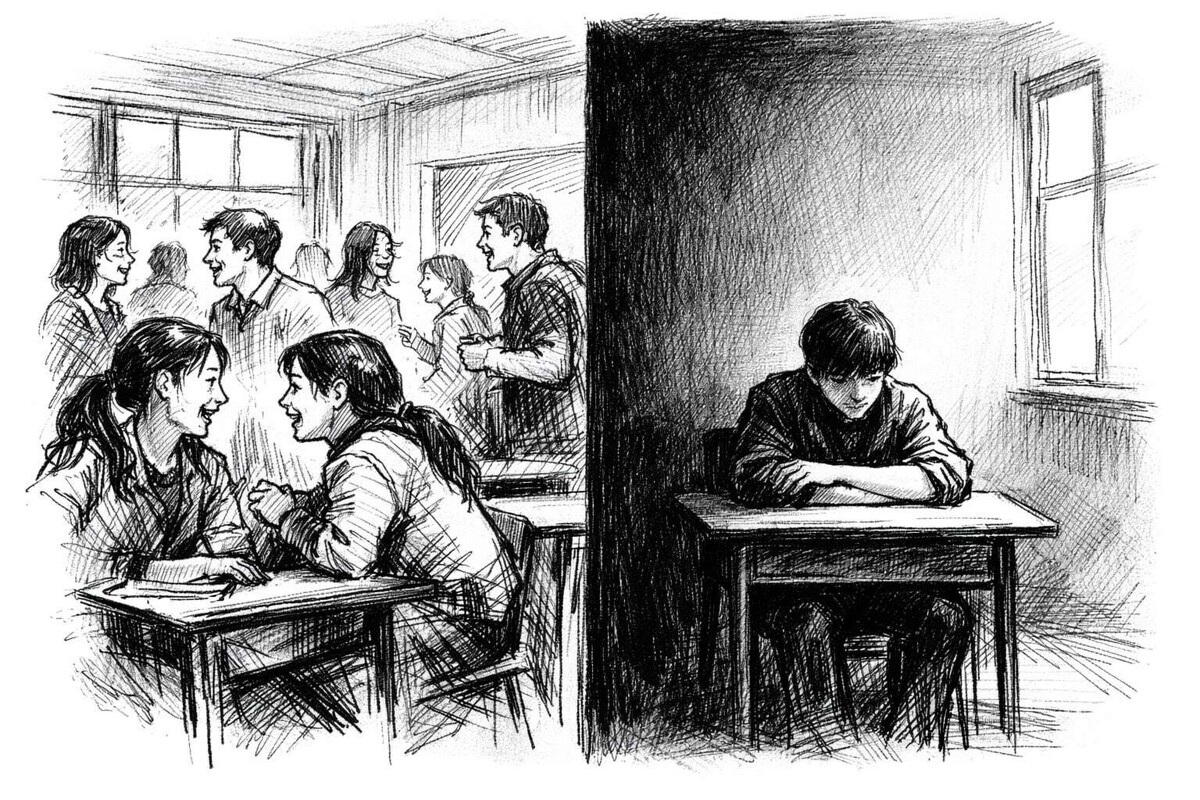
Two days ago, a teenager opened fire in the schoolyard of an Argentine school. A 13-year-old boy was killed, and seven others were injured. It took me time to process the news. Not because I'm not used to hearing about this kind of tragedy—headlines from the United States have been desensitizing us little by little without us noticing—but because this time was different. Argentina is the country where I grew up. It's the place where I had my first friends, my first fears, and my first dreams inside a classroom that, just two days ago, became a scene of horror. And today I have a daughter in elementary school in Panama. A daughter who could also be exposed to a similar tragedy. That changes everything. When we read these news stories, we tend to look for the monster, a single cause, an explanation that allows us to say, 'That could never happen to us.' But the truth is more uncomfortable: a young person who picks up a gun and fires it at their classmates almost never acts out of the blue. Perhaps they had easy access to a weapon. Perhaps they had an undiagnosed mental health issue. But what is almost certain is that that young person has suffered a great deal, and that at some point—perhaps at many points—they tried to ask for help. These are cries for help in the only language some teenagers know how to speak. It is a symptom of a system that has failed on multiple levels. This challenges all of us who work with adolescents. Our responsibility in these tragedies is rarely through action. Almost always, it is by omission. I say this because we are still in time to do something. I say this because we have been too busy. I say this because we have had opportunities to intervene in time and we let them pass. I am not saying this to blame. I say this because we have failed to ask questions. We want there to be a clear villain, a single cause, an explanation that allows us to say, 'That could never happen to us.' I say this because we have thought, 'That's just how they are at that age,' and we have moved on. To the parents, to the teachers, to the pediatricians, to the psychologists, to the coaches, to any adult who shares time with a young person. The warnings are always there. Ask how they are and then wait for a real answer. If they stop doing things that used to make them laugh. If they start spending hours locked in their room or glued to social media without wanting to go out. If they sleep poorly, eat poorly, respond with aggression, or, on the contrary, with a silence that feels different. If their academic performance drops without an apparent reason. If they talk—even indirectly—about feeling alone, that nothing matters, that everything would be better without them. These are not minor signs. Today, I invite you to pay attention if a teenager starts spending hours locked in their room or glued to social media without wanting to go out. Each of us, from the place we occupy—as a parent, as a teacher, as a doctor, as a neighbor, as a public servant—has the possibility to be that adult who did not look the other way. Tonight, look your children in the eyes. Ask a little more. Don't settle for a 'good.' Insist with love.