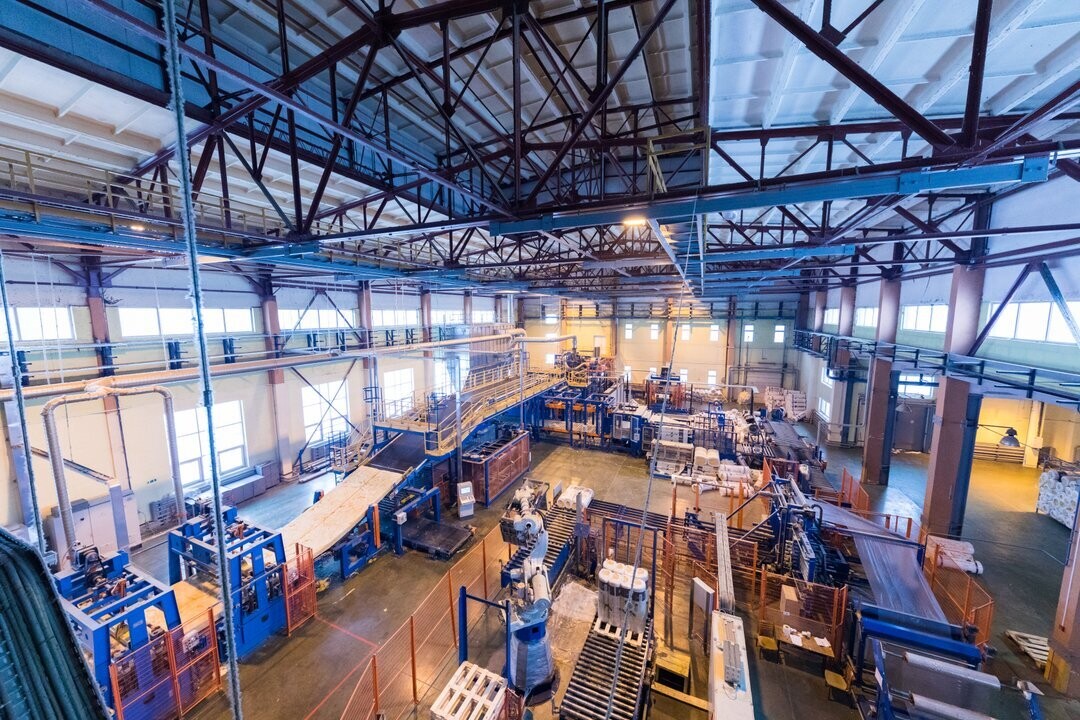
Argentina closed 2025 with a growth of 6.3%, and at the beginning of 2026, construction started with a 1.2% increase compared to January of the previous year. In parallel, industry continues to decline and cannot advance: in January, it fell by 3.2% year-on-year. The data comes from reports published by the National Institute of Statistics and Censuses (INDEC). Industry continues to lose ground and cannot recover, being one of the sectors most affected by the government's economic model. In contrast, construction, which began 2026 with a positive variation, is moving in the opposite direction.
Industry According to the Argentine News Agency, the manufacturing industrial production index (IPI) fell again in January (3.2%) compared to the same month last year, although it rose 3.1% compared to December. The cycle-trend index recorded a 0.8% monthly increase. This is the seventh consecutive decline for the sector, and it continues to struggle: July (-0.7%), August (-4.2%), September (-0.2%), October (-2.7%), November (-8.8%), December (-4%), and January (-3.2%). Regarding the divisions, ten of the sixteen subsectors closed with negative variations, worsening the sector's situation. One by one, the industry's numbers:
Machinery and equipment: -20.2%. Motor vehicles, bodies, trailers, and auto parts: -25.7%. Clothing, leather, and footwear: -20.6%. Other equipment, appliances, and instruments: -22.1%. Rubber and plastic products: -8%. Metal products: -8%. Textiles: -23.9%. Food and beverages: -0.7%. Furniture and mattresses, and other manufacturing industries: -5%. Other transport equipment: -8.4%. Substances and chemical products: -7.2%. Non-metallic mineral products: -4.3%. Petroleum refining, coke, and nuclear fuel: -2.2%. Tobacco products: 2.5%. Wood, paper, publishing, and printing: 0.2%. Basic metal industries: 0.2%.
Construction The synthetic indicator of construction activity (ISAC) showed a 1.2% year-on-year increase. Measured against December, the ISAC recorded a near-zero positive variation, and the cycle-trend index showed an advance of 0.8% from the previous month. Regarding inputs, five of the thirteen elements rose in January: 60.5% in other inputs (includes plumbing, seamless steel pipes, and construction glass); 16.9% in ready-mixed concrete; 15.8% in ceramic sanitary articles; 11.7% in plasterboards; and 10.5% in construction paints. While the remaining eight were down in the year-on-year measurement: -15% in lime; -14.9% in hollow bricks; -13.3% in granite and limestone mosaics; -10% in round iron and construction steels; -9.6% in ceramic floors and coverings; -9.3% in plaster; -5.3% in Portland cement; and -4.1% in asphalt. One by one, the input numbers:
Other inputs: 60.5%. Ready-mixed concrete: 16.9%. Ceramic sanitary articles: 15.8%. Plasterboards: 11.7%. Construction paints: 10.5%. Asphalt: -4.1%. Portland cement: -5.3%. Plaster: -9.3%. Ceramic floors and coverings: -9.6%. Round iron and construction steels: -10%. Granite and limestone mosaics: -13.3%. Hollow bricks: -14.9%. Lime: -15%.
The results obtained from the construction qualitative survey show favorable expectations regarding the activity level expected for the February-April 2026 period. Private works: 67.7% of companies expect the sector's activity level will not change in the next three months. 16.7% estimate it will increase. The remaining 15.6% estimate it will decrease. Public works: 63.4% believe the activity level will not change in the coming months. 19.5% think it will increase. The remaining 17.1% believe it will decrease.