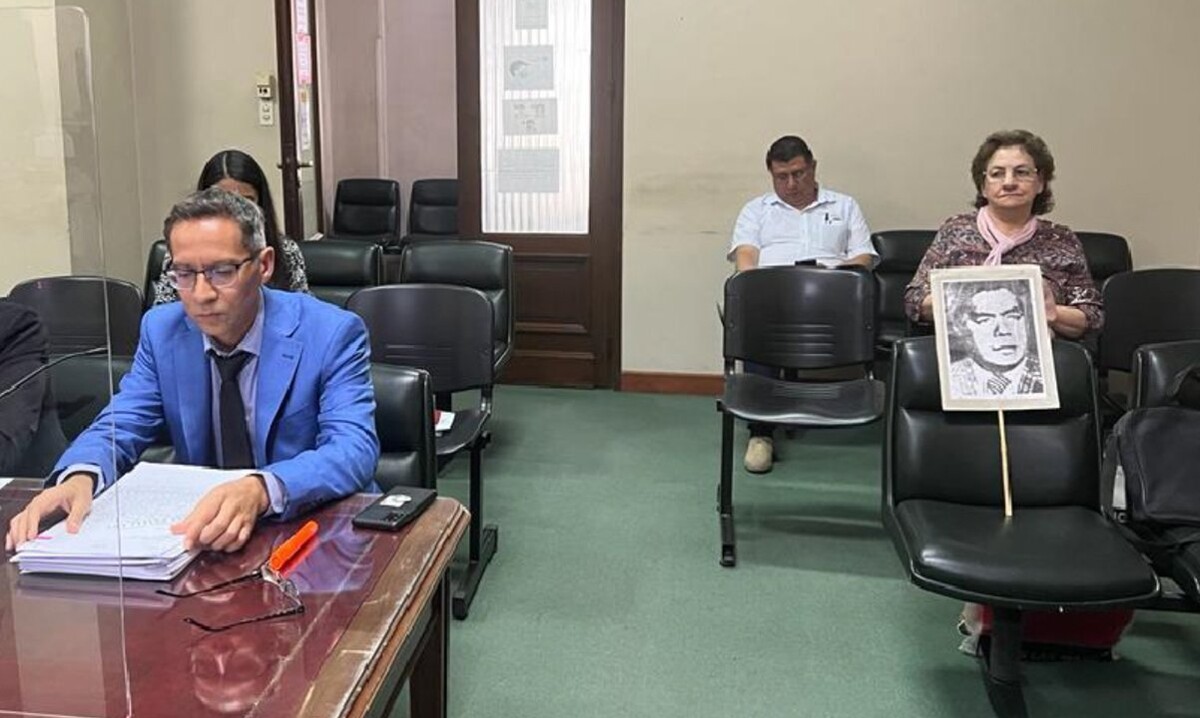
Buenos Aires, November 20 (NA) – The Federal Chamber of Criminal Cassation confirmed the responsibility of former federal police officer Juan Carlos Alzugaray for the kidnapping of Bolivian lawyer Gustavo Manuel Medina Ortiz, which occurred in Salta in October 1975, as part of the so-called 'Operation Condor.' By a majority vote, the country's highest criminal court rejected the appeal filed by the perpetrator's defense and upheld the conviction as an accomplice to the crime of unlawful deprivation of liberty, classified as a crime against humanity. From that moment on, nothing more was ever heard from the victim. Medina Ortiz, a lawyer and left-wing union activist, had fled Bolivia after being persecuted by the regime of Hugo Banzer and had settled in Argentina. According to the ruling, among the kidnappers was Alzugaray, then an inspector of the Federal Police, and a Bolivian agent. In this regard, it was emphasized that Alzugaray acted as part of a hierarchical structure designed to carry out a systematic plan of repression against political opponents. 'The delivery of detained persons to agents of a neighboring country, with the aim of ensuring their disappearance or elimination, constituted a habitual methodology,' warned Slokar, who recalled that Operation Condor involved the surveillance and elimination of dissenters beyond national borders. The case dates back to October 10, 1975, when Gustavo Medina Ortiz was kidnapped in the early hours of the morning from his home in the city of Salta, in front of his family, by a group of armed men, some of them in uniform. He recalled, among other evidence, the meeting held in 1976 between Henry Kissinger and the Argentine foreign minister of the dictatorship, César Guzzetti, in which the U.S. official approved the illegal repression. 'Terror and helplessness marked the lives of our peoples, who were deprived of their social, political, legal, and cultural rights,' recalled Slokar, citing Nobel Peace Prize laureate Adolfo Pérez Esquivel. With this ruling, the Chamber of Cassation reaffirmed the classification of the case as a crime against humanity, marking a new judicial advance in the prosecution of crimes committed during the regional repressive coordination known as 'Operation Condor.' His kidnapping was preceded by harassment and threats, including a raid and direct warnings from Alzugaray. Judge Slokar also cited investigations by Stella Calloni and Baltasar Garzón, and declassified documents from the United States, to point to the responsibility of the U.S. government in supporting the South American dictatorships. However, judges Angela Ledesma and Guillermo Yacobucci acquitted the accused of the crime of aggravated homicide, a vote to which magistrate Alejandro Slokar objected, who also proposed to maintain that conviction. The Supreme Court left the conviction of Romina Picolotti final. Ledesma highlighted the solidity of the evidence presented during the oral trial, including the testimonies of the victim's minor children, aged 11 and 12, who witnessed the kidnapping of their father by an armed group that included both Argentine and Bolivian agents. According to what the Argentine News Agency learned, Judge Slokar argued that the facts cannot be analyzed in isolation, but rather within the context of transnational repression orchestrated by various South American dictatorships with logistical and informational support from U.S. intelligence agencies.