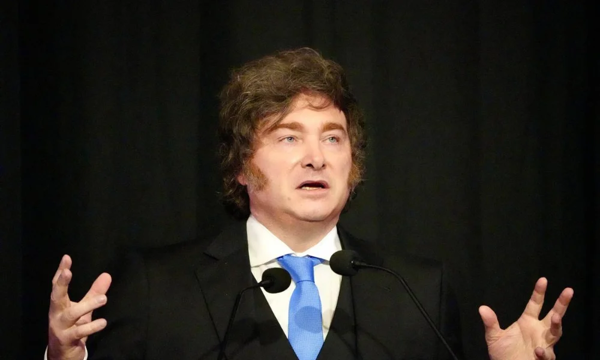
Fiscal solvency remains the central axis of the government's relationship with markets and the International Monetary Fund. Within the spending scheme, only three items showed increases: energy subsidies rose by 68%, the Universal Child Allowance by 11.3%, and pensions and retirement benefits by 1.8%. The primary surplus accumulated in the first two months of the year is equivalent to 0.4% of Gross Domestic Product (GDP). According to an economist Nadin Argañaraz report, the real fall in total revenues was 8.8%. The analysis details that the financial balance had a real decrease of 65% compared to February of the previous year. Argañaraz warned that “excluding privatizations, the financial surplus drops to $211,000 million, a real drop of 83%” when analyzing the accumulated of the first bimonthly period. President Javier Milei ratified the validity of his economic program during a speech at the Córdoba Stock Exchange. “We have already been in office for more than two years, the fiscal surplus remains standing and it will be so until I am in the Rivadavia chair,” emphasized the president. Buenos Aires, March 17 (NA) – The national government registered in February a financial surplus of $144,421 million, deepening the spending cut due to the fall in collection. This figure was reached after a primary surplus of $1,410,640 million and the payment of debt interest for $1,266,218 million. The administration advanced in the reduction of disbursements due to a real 9% drop in tax revenues, caused by the decrease in production and consumption. The cut in public spending affected 13 of the 16 main budget items, according to a report by economist Nadin Argañaraz received by Agencia Noticias Argentinas. The most significant decreases were in subsidies for 'other functions' with a 100% drop, social programs with a 62.2% drop, and current transfers to the provinces with a 47.7% drop. Spending on state salaries, which is equivalent to 14% of primary spending, also fell by a real 7.9% year-on-year.