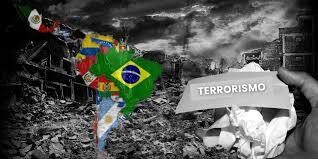
This is how strategic alliances between Iran and Cuba, Venezuela, Nicaragua, and Bolivia arise, as well as with indigenous movements, separatists, and organizations that share that visceral hatred for the United States and Israel, reported Dialogo-Americas. This “ideological marriage” is not just about words. There, important money laundering networks operate that finance the terrorist group, as demonstrated by the arrest of Assad Ahmad Barakat in Foz do Iguaçu. Friends, this is not a distant threat. It is a real, persistent, and growing threat in our hemisphere. Ottolenghi is clear: Latin American governments must act decisively. Formally recognizing Hezbollah as a terrorist organization — as Argentina, Paraguay, Colombia, and Honduras have already done — is a fundamental step. A detailed report by expert Emanuele Ottolenghi of the Foundation for Defense of Democracies reveals how Tehran uses the banner of its Islamic revolution to expand its influence and the armed wing of Hezbollah in Latin America. According to Ottolenghi, for the ayatollahs' regime, Latin America is fertile ground. It is time for the countries of the region, with the support of the United States, to close ranks and defend our security and freedom against this threat that knows no borders. The Iranian revolution did not come to bring peace. While many look the other way, the Iranian terrorism network continues to weave its threads on our continent. And in Latin America, it has been operating for far too long. This would allow freezing assets, prohibiting the income of suspects, canceling citizenships, and, above all, cutting off the propaganda of Hezbollah and Iran in Spanish and Portuguese that circulates freely today. Operation Trapiche demonstrated that Iran and Hezbollah have not slowed their pace. It serves to radicalize, mobilize, and, when necessary, support criminal and terrorist activities. In April 2024, Brazil banned his entry due to his ties to Hezbollah and the Revolutionary Guard, and he is listed in the FBI's databases. Through Shiite mosques financed by Iran, Hezbollah also recruits and indoctrinates young people through groups similar to the Lebanese “Boy Scouts.” Many of these young people then pass through Al-Mustafa and return to continue expanding the network. The Triple Border (Argentina-Brazil-Paraguay) remains one of the hottest spots. Sanctioned by the United States and Canada, it functions as a recruitment center for the Quds Force of the Islamic Revolutionary Guard. We have already experienced it firsthand in Argentina with the brutal attacks against the Israeli Embassy in 1992 and the AMIA in 1994, which left 114 dead. The radical left of the region sees the Iranian Revolution as a perfect anti-American and “anti-imperialist” model. The brain behind that network was the Iranian cleric Mohsen Rabbani, sent by Tehran in 1983 and today also sought by Interpol. Alberto Nisman, the brave prosecutor assassinated in 2015, described it clearly: a “clandestine intelligence network” to plan and carry out attacks. The Al-Mustafa University, with branches in Bogotá and Caracas, is one of the main tools of this expansion. They train children and teenagers with principles of radical Islam and military tactics. The most recent and concerning case was Operation Trapiche by the Federal Police of Brazil in November 2023, which dismantled a Hezbollah plot against targets of the Jewish community in that country. Of its 40,000 recent graduates, about 4,000 are Latin Americans trained directly under Rabbani's influence. The two main suspects, a Lebanese and a Lebanese-Syrian, are on Interpol's red list. It is not new. It came to export its hatred and violence. They return to their countries converted into multipliers of the Iranian revolutionary ideology. One of the key operators is the Argentine-Lebanese Edgardo Ruben Assad, alias Sheikh Suhail Assad, a supervisor of recruitment at this university.