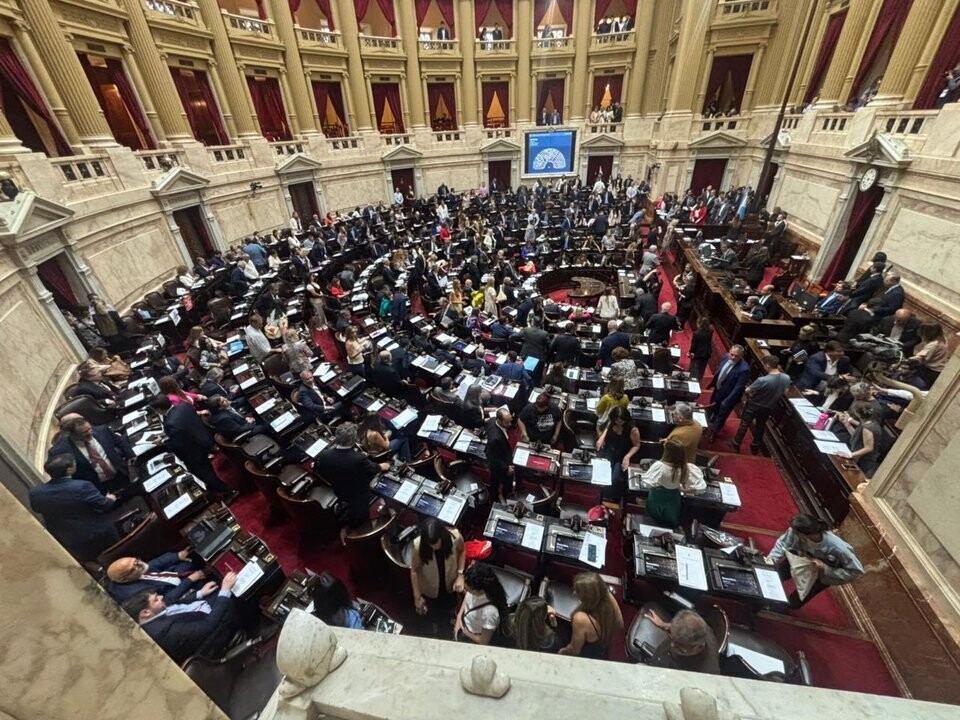
Political forces in Argentina, including the La Libertad Avanza bloc and dialogist factions, have called for a special session next Wednesday at 3:00 PM to debate a project to reform the Glaciers Law. This move is intended to fulfill the request of allied governors who seek to attract new mining investments through this legislation. The special session was requested by the presidents of the parliamentary blocs: Gabriel Bornoroni of LLA, Pamela Verasay of UCR, Gladys Medina of Independencia, José Luis Garrido of Por Santa Cruz, Nancy Picón Martínez of Producción y Trabajo, and Alberto Arrúa of Innovación Federal. The request is also signed by libertarians and committee chairs: José Peluc of Natural Resources, Nicolás Mayoraz of Constitutional Affairs, Giselle Castelnuovo of Petitions, Powers and Rules, LLA's parliamentary secretary Silvana Guidici, and the pro-macrista Javier Sánchez Wrba. The initiative was pushed by the government at the behest of allied governors to foster multi-million dollar mining investments in the northern provinces and the Cuyo region via the RIGI regime, included in the Bases Law passed in 2024. The law is championed by the governors of Catamarca, Raúl Jalil; San Juan, Marcelo Orrego; Salta, Gustavo Sáenz; and Mendoza, Alfredo Cornejo, whose province has the most developed mining industry. The leaders have already taken the first step with the reform's approval in the Senate by 40 votes to 31. However, to bring the project to the floor, the ruling coalition and its allies must secure a majority report this Tuesday in a joint session of the Natural Resources and Constitutional Affairs committees, set for 2:00 PM. To get a committee report, LLA and its allies need 18 signatures in Constitutional Affairs and 16 in Natural Resources, a support they have secured from their provincial allies, UCR, and PRO. First, there will be an informational meeting with presentations from invitees, including provincial governors, followed by the signing of the reports. The committee meeting will follow public hearings held on March 25-26, where some 200 speakers spoke in person and another 200 virtually out of 100,000 registrants, an event that drew condemnation from environmental organizations and opposition blocs. La Libertad Avanza is optimistic that they will gather the 129 deputies needed to open the session, enable debate, and secure at least 130-134 votes to pass the project, which was already approved by the Senate on February 26, according to LLA parliamentary sources. La Libertad Avanza has 94 votes—since the president of the Chamber of Deputies, Martín Menem, only votes in cases of qualified majorities or to break ties—and has the backing to pass this law from 11 deputies of Innovación Federal, 2 of Producción y Trabajo, about 21 of Fuerzas del Cambio (which include UCR, PRO, Por Santa Cruz), the 3 legislators of Independencia, and at least 2 deputies from Córdoba and the Buenos Aires provincial deputy Nicolás Massot, who will support the government's project.