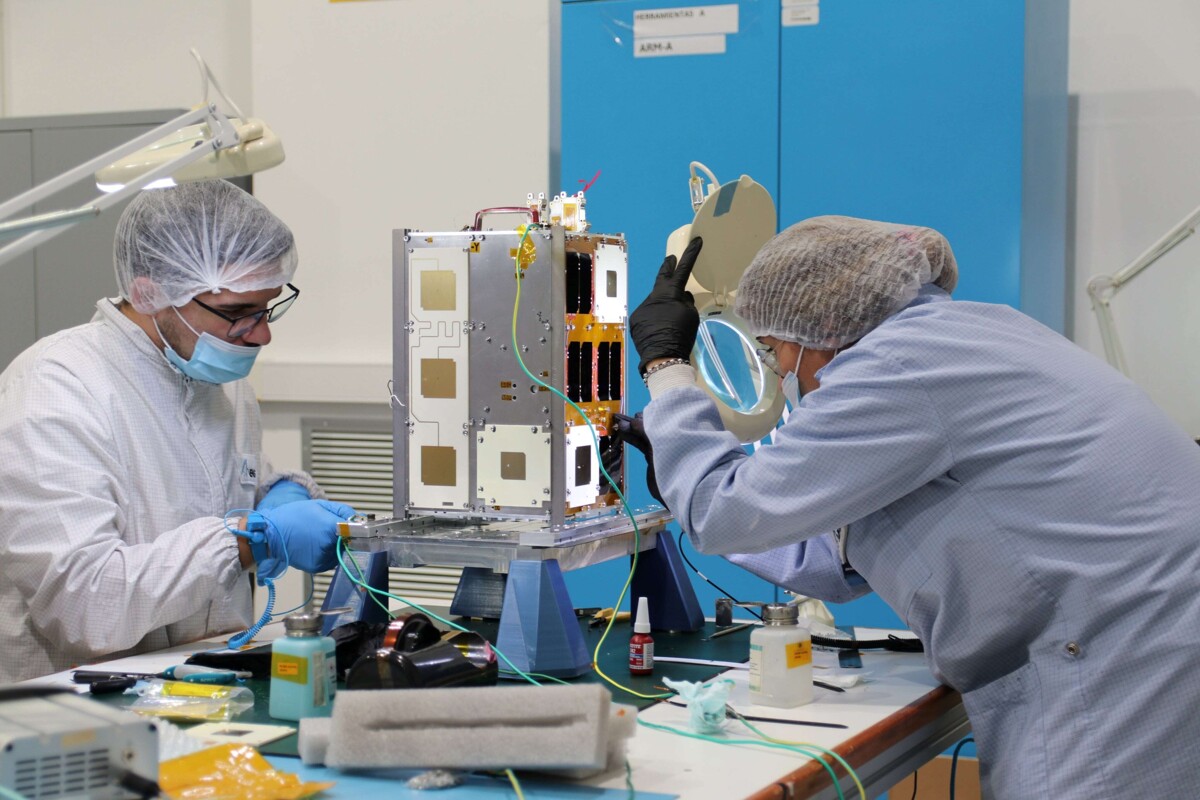
An Argentine microsatellite will be part of the Artemis II manned mission that NASA is preparing to send to the lunar environment, official sources reported this Monday. This is the microsatellite Athena, developed by Argentina's National Commission for Space Activities (CONAE), along with institutions in the South American country's scientific and technological system. 'We are proud that Argentina was the only country in Latin America invited by NASA to include a secondary payload on this mission, and one of the four countries selected globally, alongside Germany, Saudi Arabia, and South Korea,' said Darío Genua, Argentina's Secretary of Innovation, Science, and Technology. Athena, a 30 by 20 centimeter microsatellite, was entirely designed and built in Argentina to obtain data and communicate with CONAE's ground stations in the Argentine provinces of Tierra del Fuego (south) and Córdoba (center) from 70,000 kilometers away. According to Argentina's Secretariat of Innovation, Science, and Technology, the operation will involve testing tracking, reception, data processing, and remote management capabilities in a 'high technical complexity' scenario. 'Every engineering project strengthens our technological capabilities, trains highly qualified personnel, and makes us a reliable provider for the new space economy,' Genua highlighted. The launch of the Artemis II mission rocket, which will carry four astronauts around the Moon, is scheduled for next Wednesday from the Kennedy Space Center in the United States, a date subject to technical, operational, and weather conditions. This will be the second Artemis mission following the 2022 uncrewed flight and precedes the next ones, where it is planned for astronauts to set foot on the lunar surface again in 2028 and begin establishing a permanent presence on the natural satellite and constructing the orbital Gateway station.