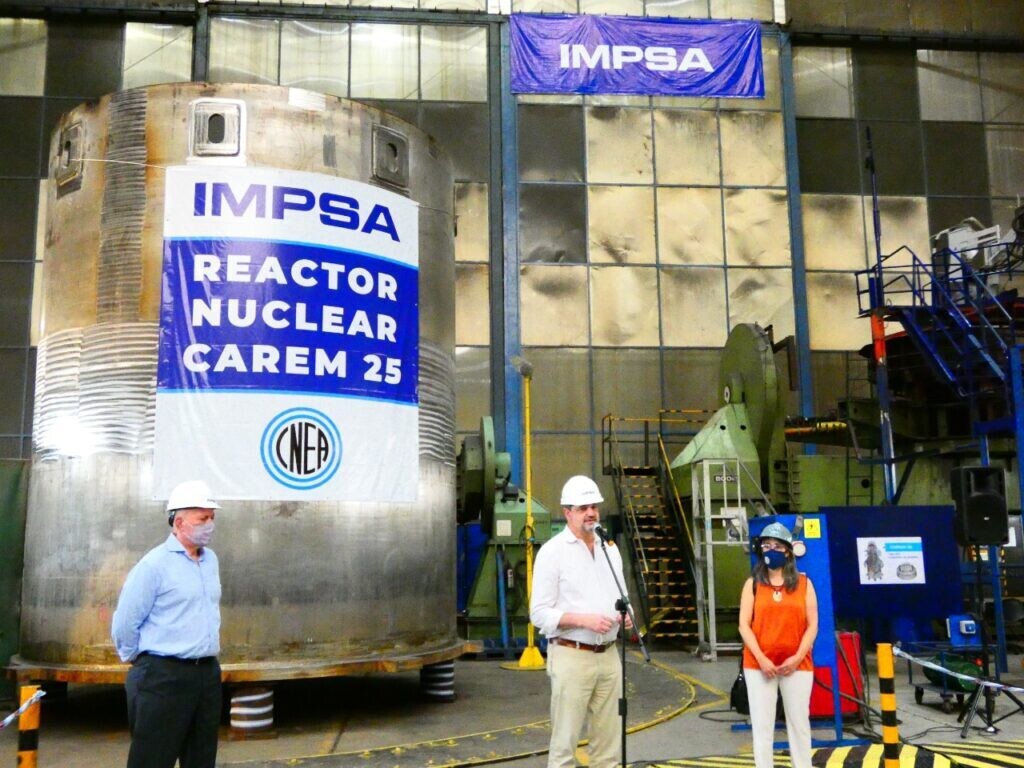
From a political perspective, this aspect is especially relevant as it expresses a shift in how energy security is conceived: the focus is no longer solely on large centralized infrastructures, but also on more distributed, flexible supply systems capable of sustaining supply during crises or network damage. From a geopolitical standpoint, this phenomenon takes on a decisive character. It more profoundly expresses a change in the international context where the energy issue returns to the center of the dispute for sovereignty, strategic autonomy, and the capacity of states to guarantee material conditions for economic reproduction, political stability, and technological projection. The destruction of ports, refineries, power plants, logistics corridors, and electricity supply systems is not secondary collateral damage, but a direct impact on the ability to sustain social order and exercise political authority. In an international order marked by fragmentation, competition, and material vulnerability, the energy issue regains centrality as a political and strategic problem: where critical resources are disputed, the architecture of power is redefined. In this context, energy reconstruction ceases to be a simple engineering matter and becomes an instance of strategic definition: what is rebuilt, with what technologies, under what financial dependency, and with what future margins of autonomy. In this scenario, the digital economy plays an increasingly decisive role. Energy no longer appears just as an input for growth or a variable in environmental policy, but as a material condition for global competition and the state's ability to sustain strategic functions in contexts of increasing uncertainty. From this perspective, small modular nuclear reactors emerge as a particularly significant technology. Their appeal lies not only in their reduced scale compared to traditional plants, but also in the promise of greater operational flexibility, shorter relative installation times, and the possibility of placement near urban, industrial, or high-demand digital nodes. Not because the market has stopped intervening, but because the magnitude of the challenges at stake—supply security, reconstruction of critical infrastructure, technological sovereignty, and geoeconomic competition—makes a purely mercantile reading of the problem insufficient. In this framework, small modular reactors acquire relevance not only for their technical attributes but also for the type of historical problem they seem to respond to. During recent decades, the energy debate was heavily influenced by the ecological transition and the need to reduce dependence on fossil fuels. Energy thus reappears as a strategic area where planning, state capacity, and long-term projection converge. Contemporary wars not only disrupt territories and displace populations; they also compromise essential material networks for economic life and state governance. In this sense, the discussion on small reactors is also part of the competition to control the material conditions that sustain mass data processing, advanced automation, and the production of technological advantages in the global economy. The current repositioning of this technology reveals the return of energy as a state issue in the strict sense. Increasing geopolitical instability, the destruction of critical infrastructure in war scenarios, and the expansion of data centers linked to artificial intelligence development have redefined the terms of the problem. Its reappearance refers to a scenario where energy, technology, critical infrastructure, and sovereignty are once again inscribed in the same plot. In this context, the interest in small reactors expresses less an isolated technological preference than the search for instruments capable of responding to a scenario marked by instability. In this sense, Argentina occupies a singular position within this debate. Argentina possesses a relevant scientific trajectory, accumulated technical capabilities, and significant precedents in nuclear development. However, this capital has not been accompanied by a sustained state policy capable of translating it into institutional continuity, strategic financing, and effective realization. The case of the CAREM reactor particularly clearly expresses this tension between available potential and insufficient realization. However, the current situation forces us to broaden this perspective.