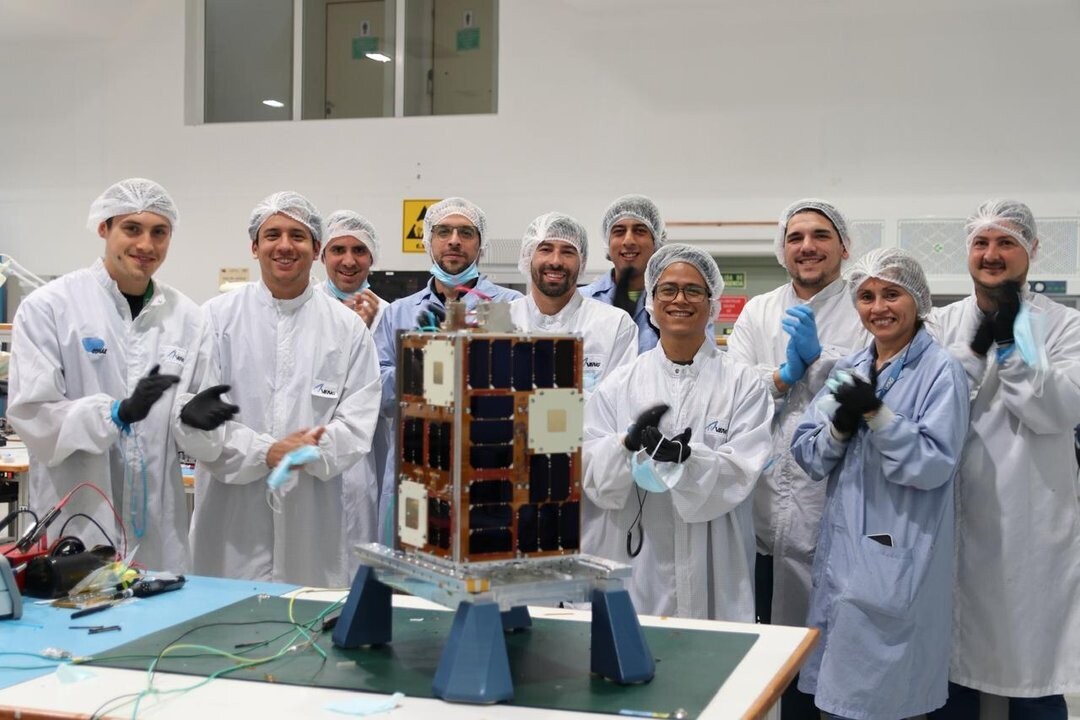
Argentina will be the protagonist this week of one of the most important space missions of the current time with the participation of the ATENEA microsatellite in Artemis II, the historic crewed flight to the lunar environment led by NASA. According to the Argentine News Agency, ATENEA is a microsatellite developed by the National Commission on Space Activities (CONAE) in conjunction with national scientific system institutions. It was selected as secondary payload for the mission, making the country the only representative from Latin America and one of the four chosen globally alongside Germany, Saudi Arabia, and South Korea. The satellite, a CubeSat 12U type with reduced dimensions (30x20x20 centimeters), will have the main challenge of operating at about 70,000 kilometers from Earth, which will position it as the Argentine microsatellite that will reach the greatest distance to date. Among its objectives are to measure radiation in deep space, evaluate the behavior of electronic components in extreme conditions, analyze GNSS signals beyond their usual orbits, and validate long-range communications. After its deployment, ATENEA will initiate an autonomous sequence of activation, stabilization, and data transmission to ground stations located in Tierra del Fuego and Córdoba. In this context, ATENEA not only represents a technological advance but also a strategic bet to position Argentina in the new space economy.