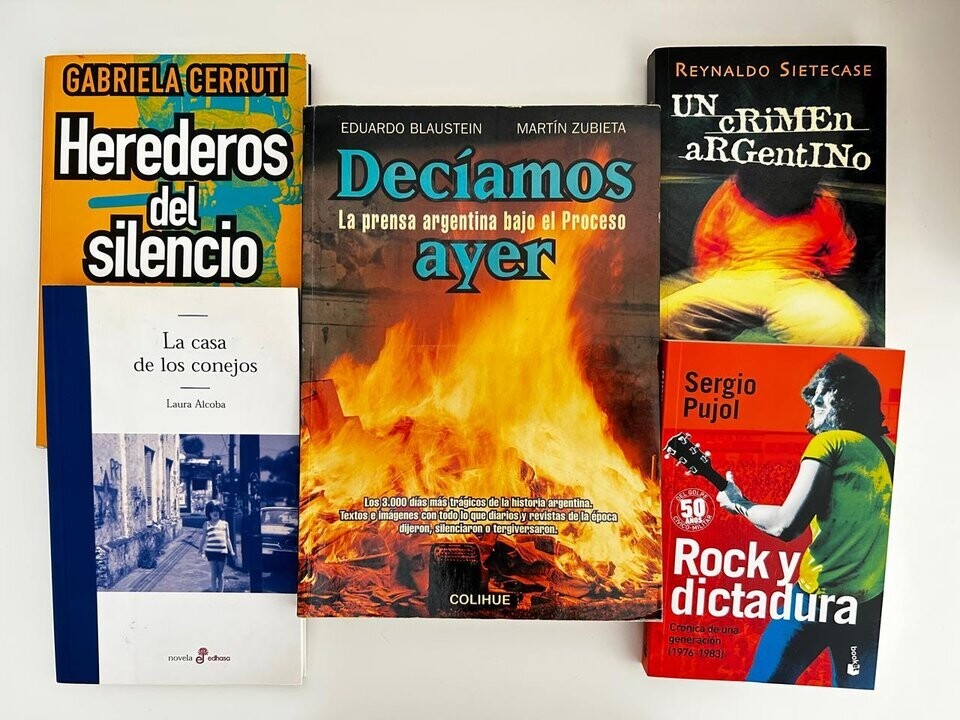
Fifty years after the coup that began Argentina's last civic-military dictatorship (1976-1983), memory is once again at the center of public debate. This article explores how literature, in its various forms, has become a key tool to reconstruct the events, question responsibilities, and account for the marks left by the horror. From journalistic research to the novel, different books allow us to revisit those years and think about how they are narrated today. In non-fiction, works like "La casa de los conejos" by Laura Alcoba and "Un crimen argentino" by Reynaldo Sietecase offer an intimate and moving reflection on collective guilt, questioning how much society knew and what degree of complicity or indifference made the terror possible. From another perspective, "Rock y dictadura" by Sergio Pujol explores how national rock functioned as a space for cultural resistance. Among the fundamental works is "Decíamos ayer". The article also mentions "Herederos del silencio" by Gabriela Cerruti, which proposes an uncomfortable reflection on the "generation in the middle": those who grew up during the regime without being direct victims or perpetrators.