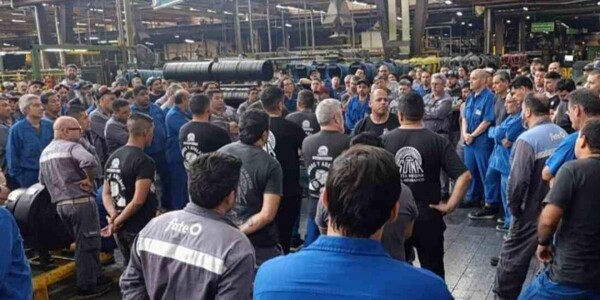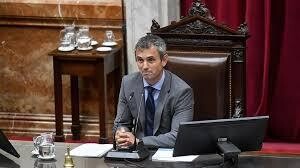
President of the Chamber of Deputies, Martín Menem, defended the labor reform bill promoted by President Javier Milei's government, asserting that critics are the architects of its failure. He insisted that the proposed scheme aims to unlock the stagnation in formal employment and reorder a relationship that, according to the ruling party, had been tied for years to rigidities and intermediation privileges. In an interview released this Monday, Menem expressed confidence that the bill will be on track for final approval soon and anticipated that the Executive Branch could promulgate it after the final legislative process. Recent discussions have revealed a sensitive point in the bill: articles related to leave and sickness or accident coverage, which generated resistance and forced changes, directly impacting parliamentary timelines and back-and-forth negotiations with the Senate. In its content, Menem especially defended greater flexibility for agreements between companies and workers, using tools like a 'time bank,' which allows compensating for longer workdays with time off or reduced hours on other days, within legal limits. The ruling party repeats that the key is to expand the scope for agreement between parties, while critics point to risks of asymmetric pressure in sectors with low individual bargaining capacity. Menem also insisted that the reform makes 'intermediaries lose' and redistributes power in labor relations, with a state that, in his description, 'cedes' resources and a union movement that now faces limits on certain funding mechanisms. In the libertarian environment, they argue that the reform is the core of the economic program and that, once approved, it will send a signal to investment, the labor market, and the external front. The argument, repeated by the ruling party, is that opening and reducing distortions can restore consumption and productivity; on the other side, industrial voices warn about the impact on local employment and value chains in a transition context. In closing, Menem linked the labor reform to a sequence of upcoming legislative goals: trade agreements, 'pending' reforms, and later, a tax cut conditioned by fiscal balance. On the contrary, he insisted that the sought-after effect would be the opposite: 'There will be more formal work and unions will have more members,' he stated, arguing that the union movement should read the reform as an opportunity to expand its base rather than as a battlefield. The political week ahead will give a central signal: if the ruling party manages to sustain its majority, the reform will be closer to becoming law; if it gets bogged down, the Government will again collide with the structural limit of its parliamentary representation. At the same time, he reiterated his rejection of forceful measures: 'I am absolutely against any strike,' he stated, and described that the economic impact of halting activities could amount to hundreds of millions of dollars, although he emphasized that, in his view, 'most of the people who could go to work, did so.' Regarding the legislative path, Menem explained that the ruling party chose a pragmatic strategy: advancing in parts, chapter by chapter, to not block the entire bill when points without consensus arose. He affirmed that the consumer ended up paying prices much higher than regional reference prices and defended greater competition as a mechanism to free up disposable income and 'reactivate other sectors.' In this framework, his message combined conviction and a request for time: he said that what was destroyed in decades cannot be rebuilt in two years, and that macroeconomic stabilization—with inflation falling, in his view—is the first step for the rest of the program to 'walk for better.' In line with this, various public analyses of the text highlighted limits on so-called 'solidarity quotas' and restrictions on certain contributions, a point that the Government exhibits as part of the rebalancing, while unions warn about a cut in institutional support tools. To exemplify his economic approach, Menem brought the debate to the FATE case and criticized what he defined as industries sustained by 'political protection.' In the final stretch of the Extraordinary Sessions, the president of the Chamber of Deputies, Martín Menem, came out emphatically to shield the 'Labor Modernization' project promoted by the government of Javier Milei, while at the same time marking a clear political line against union and opposition criticism. He presented it as a practical way to reconcile production needs with personal life: 'If you need a free weekend, you agree it with your employer and work some extra hours on other days,' he explained, seeking to put a daily face on a technical discussion. In this context, the head of the Lower Chamber said he sees 'unprecedented scope' in the magnitude of the change and emphasized that the goal is an economy with more registered employment and 'clearer' rules for hiring. One of the axes of Menem's message was to dismantle the argument that the package would weaken unions. This methodology, according to his reading, allowed preserving the core of the reform and absorbing corrections demanded by dialogist blocs.