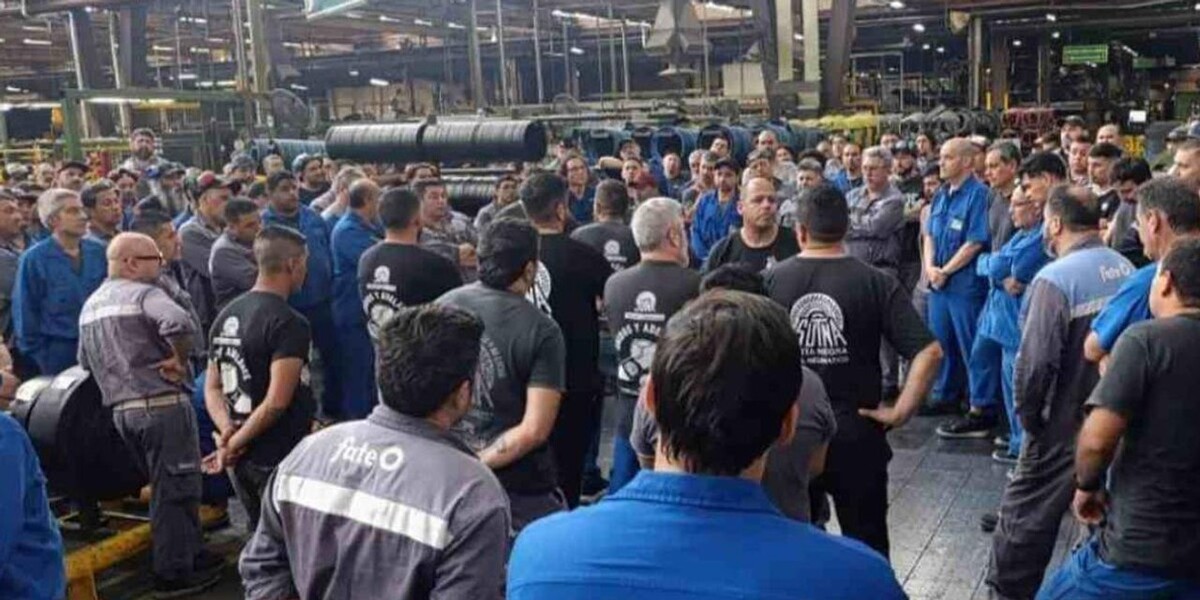
Argentina has experienced a significant increase in labor conflicts. According to the CEPA Center, at least 717 cases of labor disputes were registered between January 2024 and February 2026. In the first two years of Javier Milei's government, from November 2023 to October 2025, 272,607 formal jobs were lost. Industry was the hardest hit, accounting for 62.1% of all cases. The main causes of conflicts were layoffs (63.2%), company closures (12.3%), suspensions (10%), and business crises (7.8%). The sectors most affected by import liberalization policies include textiles, food, metallurgy, and steelmaking. The services sector, including recreation, hospitality, transportation, and media, made up 16.9% of the total conflicts. Small and medium-sized enterprises (SMEs) were the most affected, accounting for 39.1% of cases, followed by foreign conglomerates (27.3%), large companies (18.3%), economic groups (11.9%), and state-owned enterprises (3.5%). In 71.5% of the conflicts, companies of national capital were involved. The primary sector (9.5%), particularly oil and gas, fishing, and mining, and commerce (8.2%), where supermarkets were the most affected subsector, also suffered losses. The construction sector recorded 3.3% of cases, mainly private construction. Geographically, the central region of the country was the epicenter of the problem, accounting for 48% of all cases: Buenos Aires Province (25.8%), Santa Fe (10.5%), Córdoba (6%), the Autonomous City of Buenos Aires (5.7%), and Entre Ríos (3.3%). After the October 26, 2025 elections, the situation intensified: while an average of 24 conflicts were recorded per month before the elections, the figure rose to 42 afterward. Thus, 210 new cases were registered between October 2025 and February 2026.