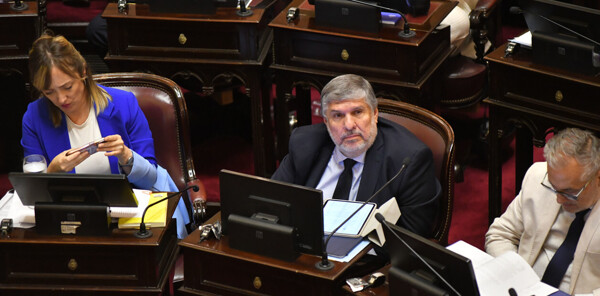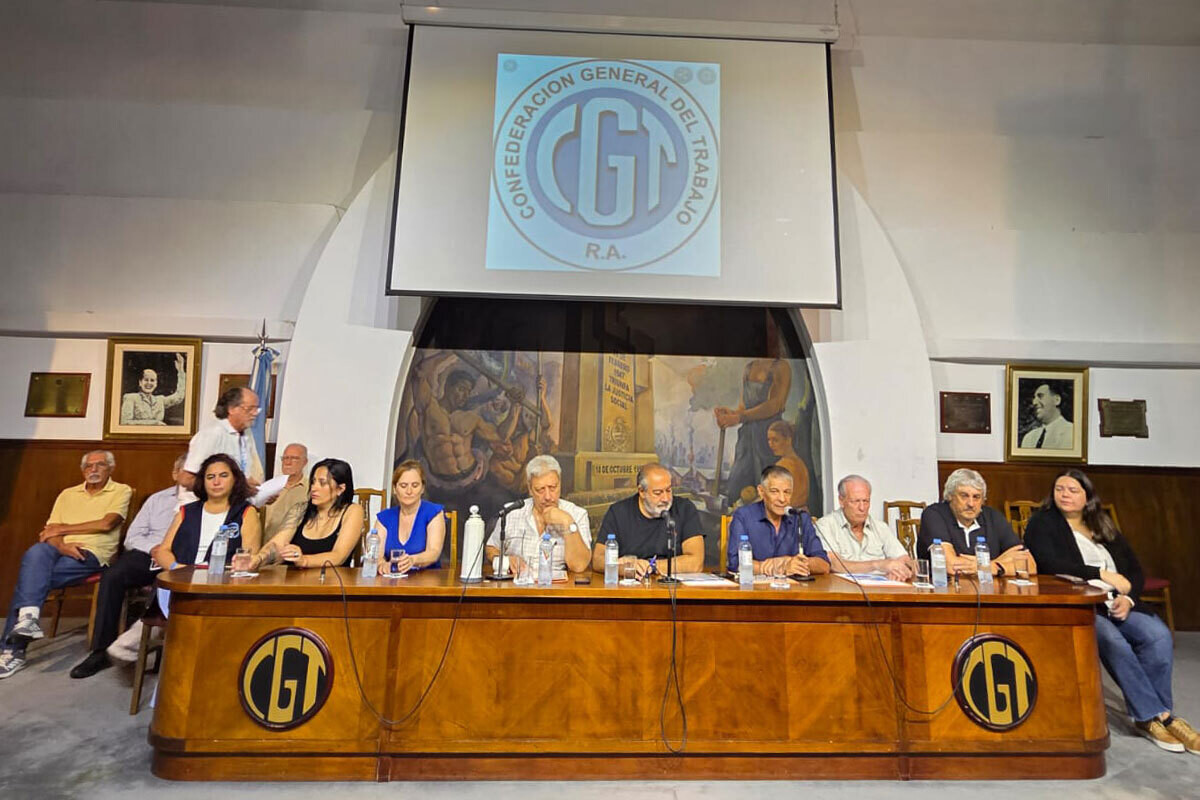
In the formal labor market, this financial architecture remains in place despite persistent widespread questions about the quality of care from numerous social services, with recurring complaints about delays, partial coverage, and insufficient benefits. The areas where union concessions were made were related to the dynamics of union activity within companies, a field where the project still contains controversial articles. There were private conversations with the ruling party, and according to parliamentary and union sources, the final text emerged with significant concessions in favor of the central labor union. Publicly, the government defended the reform as a key piece to reduce litigation, formalize employment, and modernize the current regime. In the CGT, they are already hinting that if they cannot soften these points in the Chamber of Deputies, the fight will move to the courts with unconstitutionality challenges. The discussion that now opens is twofold. Only after that period would it be possible to request the worker's consent to maintain the deduction. Also still under discussion is the expansion of activities considered “essential” – with minimum service requirements during strikes – and the end of the ultra-activity of collective agreements, a change that could push for company-level agreements and weaken sectoral agreements. In parallel, other sensitive parts of the package that the labor movement considers sensitive survive: voluntary hour bank schemes, flexibility in the vacation scheme, and a new indemnity calculation that excludes concepts like bonuses and vacations. With the current structure, adding the maximum 2% union/solidarity fee plus the 6% for social services, the approved framework consolidates that nearly 8% of the salary – and in practice, around 10% when other deductions and contributions provided for in agreements are considered – continues to be channeled to union organizations and their health systems. For example, the obligation to request permission to hold assemblies in the workplace and a cap of ten paid monthly hours for union delegates remain. The head of the La Libertad Avanza bloc of senators, Patricia Bullrich, admitted that there were underground dialogues with the CGT and that several of their observations were incorporated at the last minute. The central point of the agreement, and the one that explains the unions' subsequent enthusiasm, is that the reform did not touch the financial heart of the union system. The result of the Senate's passage confirms, for now, that the reform is advancing, but with limits: it touches on practices and rules of the game, while avoiding dismantling the contribution circuit that maintains the material power of the unions. Sources consulted: Agencia Noticias Argentinas, Infobae, La Nación, Clarín, Chequeado, Bae Negocios, El País, Elonce, Argentina.gob.ar, iProfesional. In practice, this is a partial defeat for the original idea of the ruling party, which sought to move to a more immediate voluntary scheme. The second decisive move was the maintenance of the employer contribution to union social services: it remained at 6% and was not lowered to 5% as contemplated in previous versions of the text. Privately, the ruling party accepted to “recept” union proposals to sustain the vote and order the passage to the Chamber of Deputies, where the project will face its most complex test. For the government of Javier Milei, the challenge will be to sustain the reformist core without losing support in Congress. In a system where much of the economic and territorial muscle of the unions is based on their service providers, preserving that point means sustaining the main flow of resources. The so-called solidarity fee – a mandatory deduction from salaries even for non-affiliated workers but covered by the agreement – will remain mandatory for two years, with a cap of 2% of the remuneration. Buenos Aires - February 15, 2026 - Total News Agency - TNA - The Senate's passage of the labor reform has exposed a political truth that has run through Argentina for decades: when discussing the real power of the unions, the negotiation concentrates less on the rhetoric of 'rights' and more on the preservation of the till. In the hours leading up to the debate, the leadership of the CGT managed to defuse a handful of changes in the bill that, in their view, diluted their capacity for intervention. For the unions, the priority is clear: yielding on operational margins – assemblies, union hours, frameworks – may be negotiable, but not on the revenue-generating mechanisms that feed their structures and social services.