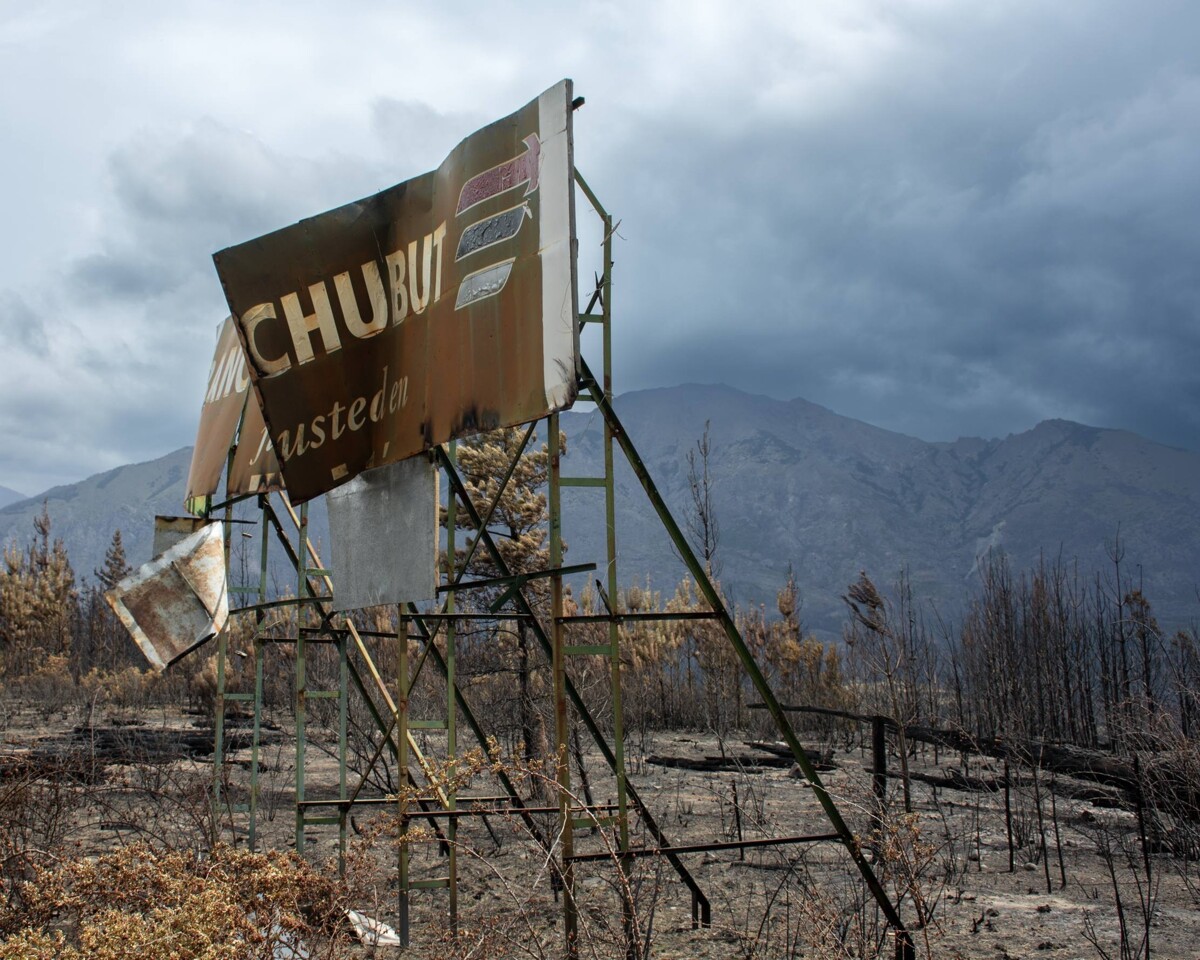
Fires are raging in the south of the country, and in public spaces and on social networks, the old theory of the 'Plan Andinia' has resurfaced, along with versions of a supposed invasion or occupation of Patagonia by Israeli Zionists. During the last dictatorship, this narrative was even used to justify the persecution, kidnapping, and disappearance of Jewish people. Those interested in spreading this theory deliberately omit its origin and use. The dominant model in our country is complex and made up of a diversity of local and foreign actors who, for decades, have disputed and appropriated common goods, advancing over labor, social, and political rights, determining dictatorships, and strongly influencing the different democratic governments. Simplifying this plot into a conspiracy theory is not only wrong: it weakens the capacity for analysis and action. On the other hand, the Zionist strategy is far from what the Plan Andinia (occupying Patagonia) proposes: Israel's goal has always been to occupy Palestinian territory, expand illegal settlements in that territory, annexing the West Bank and Gaza. In the face of this scenario, we must ask: what are the risks of spreading these theories? First, they divert the focus from concrete and verifiable responsibilities: in this specific case of the fires in Chubut, state inaction, extractivism, forestry monoculture, and the climate crisis. Second, they feed the victimization strategy with which Zionism usually shields itself from legitimate criticism, facilitating and promoting the judicialization and persecution of all critical voices, in solidarity with the Palestinian people. Finally, they enable the growth of right-wing, nationalist, xenophobic, and racist sectors, which have so far been marginal, and which find in these narratives a gateway to expand their influence over people who, in good faith, are concerned about sovereignty and the surrender of our common goods. Debate is necessary, and rigorous analysis is also necessary. However, while these concrete and verifiable elements explain much of the problem, on social networks, accusations are going viral that point to Israeli soldiers as responsible for the fires, without any evidence to support such claims, at least in the case of Chubut. These versions shift the axis of the debate. Omayra Rocha, a member of the 'Fuera Mekorot' campaign in Trevelín (Chubut), provides a necessary perspective on the multi-causality of the fires that still affect her province. She points, in the first place, to the existence of two major outbreaks: one in Puerto Patriada/Epuyén and another in Los Alerces National Park. The first was intentional, although Governor Torres blamed indigenous communities without proof. But contributing to confusion does not strengthen any just cause. Two major outbreaks. The second originated from a lightning strike, but was aggravated by the inaction of the National Parks authorities, who did not act with the necessary speed to contain it before it became uncontrollable. In both cases, the lack of prevention and adequate response by the national and provincial governments was evident: budget cuts and under-execution of funds from the National Fire Management Service, shortage of human and material resources, and withholding of funds earmarked for prevention and assistance to residents. A multi-causal problem. This is compounded by other structural factors: the advance of pine monoculture—a highly flammable species that displaces native forest and reproduces more easily after fires; the consequences of climate change, with rising temperatures, prolonged droughts, and rainfall below usual levels; and the growing pressure from the real estate business, especially visible in the Andean region. The Argentine Association of Environmental Lawyers published a report in January 2026 that develops in depth these multiple causes. Chilean authorities reported that Israeli visitors registered in 2024 and 2025 did not exceed 1% of the total annual. A video also circulated of a young man filming a supposedly Israeli couple starting a fire in a national park in Santa Cruz.