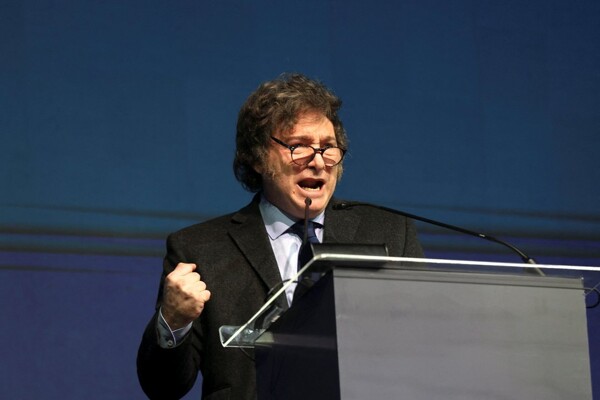
These last weeks of 2025 present a terrible political paradox: a President who managed to consolidate his electoral base at the polls, but who in reality continues to face roadblocks in the National Congress. La Libertad Avanza arrives at the end of the year as the largest minority bloc in the Chamber of Deputies, a milestone unthinkable just two years ago. However, this numerical expansion has not cleared the way for the aspirations that the Casa Rosada considers vital. President Javier Milei's power in Congress today is one of veto and resistance, more than one of construction. The narrative of a 'pure' Executive against an 'obstructionist' Legislature yields electoral dividends but reduces institutional efficiency. Towards 2026, Milei's challenge will be to translate his renewed political capital into a parliamentary dynamic that allows him to move beyond governing by decree and presidential vetoes. Today's governability is not measured by how many hands are raised in the chamber, but by the ability to prevent the opponent from paralyzing the State. The October electoral victory was a message from society, but the reality of December is a reminder that in the republican system, winning the election is just the prologue to the real battle for power. This article was first published in Mendoza Today. Despite having a reinforced bloc of 95 members, the officialism discovered that the 'caste' has perfected its obstructive strategy. In this context, 2025 has become the year with the lowest legislative productivity of the last decade, with only eleven laws passed. The opposition, divided in its leadership but united in its horror at the Milei government, has managed to articulate majorities to impose spending agendas that clash head-on with the zero-deficit dogma. This was seen with the university financing law and the disability provisions—issues of high social sensitivity that the opposition used to force the president to use his veto power, paying the consequent political cost. In this complex chessboard, the National Congress has ceased to be a forum for deliberation and has become a trench warfare battlefield, where each session is lived as a plebiscite on the legitimacy of the economic model. The opposition's obstacles are not only numerical but also procedural. The reform of the law regulating Decrees of Necessity and Urgency (DNU) has been the most precise thrust from an opposition seeking to cut off the Executive's main governing tool in the face of legislative paralysis. In this scenario, at the end of the year, projects considered crucial by the officialism remain in limbo in committees, not for lack of votes for debate, but for the inability to build minimum consensus with provincial blocs and the dialoguing wing of PRO, which now demands an increasingly high price for its support. The officialism, for its part, seems comfortable in this polarization.