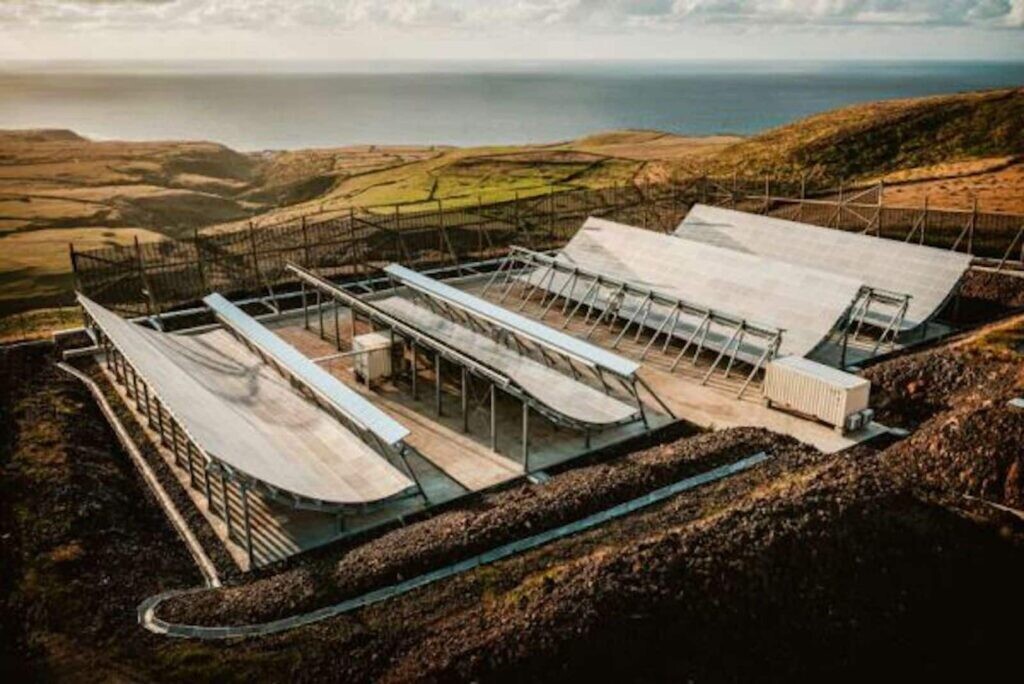
The US company LeoLabs Argentina SRL, majority-controlled from Dublin (95%) with a minority stake in London (5%), installed a radar near the city of Tolhuin in Tierra del Fuego province. It was originally presented exclusively as a scientific tool for tracking space debris. However, the recent revelation of a multimillion-dollar contract between its parent company in California and the US government confirms suspicions that the radar is being used for military espionage. This contract is to provide space surveillance data with the explicit capability to track spacecraft considered 'adversarial,' reviving doubts about its dual-use—civilian and military—on Argentine soil and deepening criticism of its impact on the country's security, sovereignty, and geopolitical independence.
The Tolhuin radar was the subject of a scathing technical report by Argentina's Ministry of Defense in August 2023, which led to the cancellation of its provisional operating permit. The report concluded that the station represented a violation of national security, as it could allow the monitoring of both civilian and military satellite activity without state control and with potential access for foreign intelligence services. The report also warned that the geographical location in Tierra del Fuego—close to the South Atlantic and the Antarctic corridor—gives the radar unique strategic relevance.
Despite the official cancellation of the permit, pressure from the United States and NATO allies to reactivate the radar has not ceased. For critical sectors, the absence of a national regulatory framework guaranteeing sovereign control over this type of technological infrastructure represents a permanent risk to the country's security and independence.
The publication by the specialized magazine SpaceNews on December 9, 2025, confirmed that LeoLabs obtained an interagency contract to feed the TraCSS (Traffic Coordination System for Space) platform with space surveillance data. This platform is used by joint units of the United States Space Force to assess threats and monitor adversarial spacecraft.
In September 2025, the head of the US Southern Command, Admiral Alvin Holsey, publicly requested its reopening as part of a strategy to consolidate the US military presence in the region and provide technical support to the Atlantic Alliance, fueling the debate over to what extent foreign technological investments can become instruments of military surveillance without a regulatory framework that prioritizes Argentine sovereignty.
Analysts and political sectors have pointed out that the current administration's diplomatic alignment with the United States could facilitate the resumption of operations at the Tolhuin radar, contravening warnings from defense experts and disregarding the demands of various actors who demand the definitive dismantling of the antenna field to preserve the country's technological autonomy in space and national security.