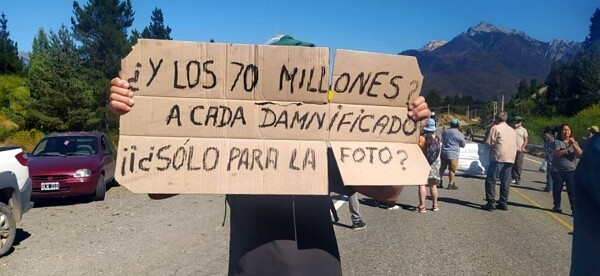
In Mendoza province, institutional and citizen support for mining exceeds 60%, contrasting with the decreasing intensity of street protests. Indeed, public demonstrations against mining have lost the massiveness that characterized peaks of rejection. The province's historic opposition, symbolized by massive marches from previous years (and suffered by former Governor Rodolfo Suárez), has ceded ground to greater citizen acceptance conditioned to strict controls, representing a paradigm shift for the productive activity. The San Jorge Cobre Mendocino project received majority support during public hearings held last September. Polls from firms like Cultura Interactiva explain this evolution. The Mendoza Senate becomes the epicenter of a crucial mining debate, with several strategic legislative bills on the agenda aimed at promoting exploration and potential resource exploitation, mainly copper. This move, backed by Vice Governor Hebe Casado in the Legislature and supported by sectors like UOCRA, aims to generate a 'new economic model' and new job opportunities in Malargüe, where important Environmental Impact Declarations (EIA) for exploration in up to 34 areas within the Western Mining District have already been approved. However, the progress is not without controversy: while the ruling party highlights compliance with Law 7722 and 'high safety and environmental care standards,' lawmakers from the Green Party and some Peronists maintain their rejection, accompanied by protests from environmentalists demanding water protection and warning about the 'hydrological emergency' in the province. This pulse between productive development and ecological caution will mark the week in the Legislature, where a vote with a broad majority in favor of consolidating Mendoza as a key player in the energy transition mining is expected. The concept of a 'social license' for mining development in Mendoza seems to be at an inflection point, as recent polls and reports show. In this new plane, the social license of Mendoza's residents towards mining has gained significant ground. The challenge for the government and companies is to capitalize on the new citizen trends, strengthening environmental controls and ensuring transparency in the exploitation of Mendoza's copper and other minerals. Success in this management will be the true key to consolidating the social license and clearing the path for responsible mining. While the 2019 mobilizations against the modification of Law 7722 managed to gather tens of thousands of people in the Capital and Greater Mendoza, current calls are far from that scale. Recent protests involve the participation of hundreds of people, reflecting that immediate social polarization has decreased and the 'imminent danger' perceived by the bulk of the population has been replaced by the expectation of a controlled and transparent management. This loss of massive street turnout reinforces the perception of an increase in the social license for the activity. The provincial legislative agenda accompanies this new debate atmosphere. Tyrants and the not-so-tyrants used to resort to photos and videos (many in black and white, still), front pages of newspapers, to demonstrate popular support for their personalities and proposals. Argentina was certainly no exception. And for Mendoza to grow again. This article was first published in Mendoza Today. Source Mendoza Today. This Tuesday, the Provincial Senate will debate in committee a package of mining laws that seek to regulate key aspects of the activity, including the creation of a Mining Development Fund and regulations for the responsible exploitation of minerals, with the aim of providing the province with a modern legal framework that guarantees controls and municipal participation. Mendoza is heading into a new stage of its productive development. Which does not mean a blank check, because in the answers words also appear like 'sustainable' and 'controlled,' among others that admit the need to 'diversify' or 'expand Mendoza's productive matrix,' but not at any cost. Better not to speak of the opposition politicians. The PSJ Cobre Mendocino project (formerly known as San Jorge), located in Uspallata, has become a case study. Specialist Federico Morales from Cultura Interactiva has pointed to this period as one of 'greatest acceptance' of mining in the province's recent history, as highlighted by the Agenda Industrial publication. This favorable trend is validated by national studies. Social networks began to occupy the place that public tribunes, energetic voices, and their corresponding cheers once held. Today, public opinion measurement is measured in social media repercussions, trends in major search engines for topics and news. It's that power used to be measured and exhibited categorically with the people in the streets. And the nuances would be infinite: choripanes, buses, extra payments to militants for attending, among others. But the world changed and the country too. A May 2025 report revealed that 61% of Mendoza residents agree with mining in the province, although the majority is subject to responsible environmental management. Specifically, 48.9% support the activity, but conditioned to greater environmental controls, while only 32% maintain a prohibitionist position. And, of course, in the polls. Historians, sociologists, political scientists, communicators, and other specialists and researchers agree in saying that the 20th century - the last century - as the time of the masses. The public hearings held last August registered a record of citizen participation, as highlighted by the provincial government. Mining, with real and digital support. The deliberative process, which included in-person participation in Uspallata and the virtual modality, culminated with a high percentage of support for the development of the project, according to official measurements. There are many who, either low-key or at coffee tables, have admitted all these years of debate the need for the province to take advantage of its subterranean riches, to generate jobs and mobilize an economy that has too much trouble starting. The worst is that when it comes to speaking in public or in the debate hall, they have expressed the opposite. So they reflected it in the headlines. In political analyses of different times, the strength of a candidate or leader (political, social, union, religious) was measured by their power of convocation. To not be 'stuck' to the Government. The Poliarquía consultancy, in October 2025, indicated that 64% of Mendoza residents believe that mining can generate employment and 53% associate it with economic growth, evidencing a 'benefit of the doubt' from society towards metallic development. This support is linked to the need to diversify the provincial productive matrix and take advantage of the boom in copper as a strategic mineral for the global energy transition. Support for specific ventures has been a key manifestation of this change. The examples could abound. 'Perón filled the Plaza de Mayo'. The virtual and digital universe became authentic reality (pardon the paradox). 'Alfonsín, in campaign, flooded the center of Mendoza'. 'A multitude in the CGT mobilization'.