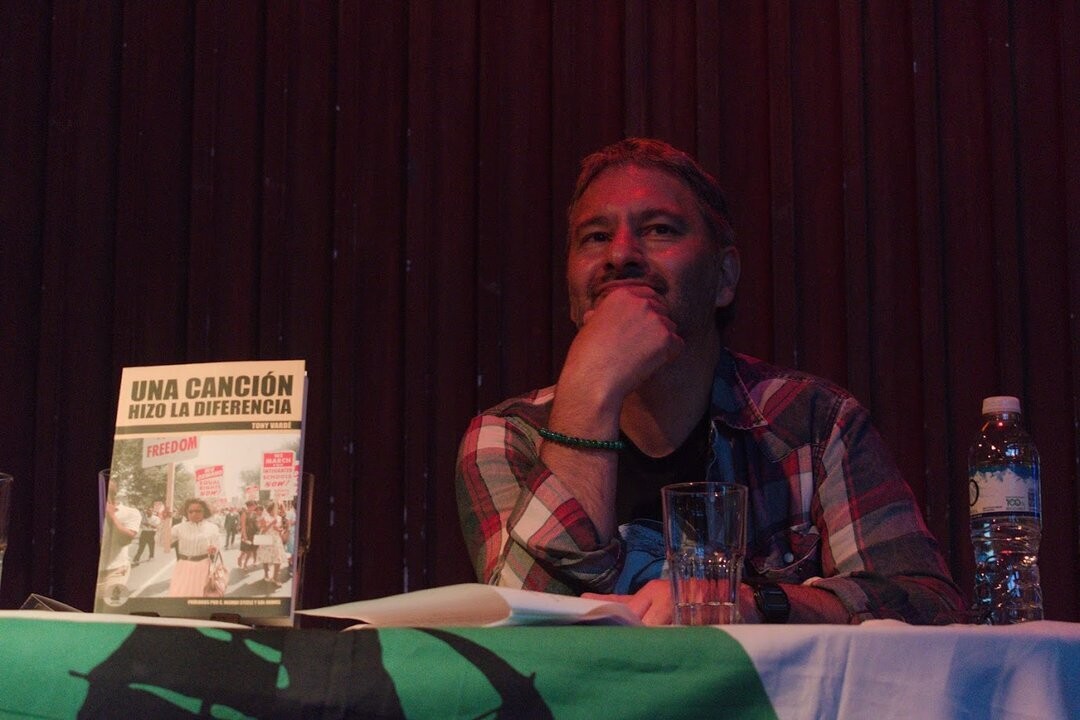
Argentinian writer and journalist Tony Vardé presents 'One Song Made the Difference,' a book published by Colectivo Flota Negra with prologues by C. Niamibi Steeley and Sol Ramos. In it, he reconstructs the historical link between Black American music and the struggles for civil rights. The project originated from an article Vardé wrote for the Basque fanzine Klask! about 'Strange Fruit,' the song performed by Billie Holiday that denounced racist violence in the southern United States. The author poses a central question: can a song change something or does it simply amplify a process already underway? Vardé argues that music amplifies existing transformations, but someone must give the struggle a voice. He traces the origins back to the hymns born from African American spirituals, which in the 1940s began to move out of churches and into strikes and labor protests. The author analyzes the political consciousness of the musicians. For example, he recalls that 'Strange Fruit' was born as a poem, which its author then set to music to make it more effective. Vardé also examines how artists like Nina Simone, Curtis Mayfield, Lauryn Hill, and Public Enemy openly embraced their role in the struggle, while others, like James Brown with 'Say It Loud (I'm Black and I'm Proud),' faced internal tensions and pressure from the industry. Despite the temptation to draw parallels with the present, the author warns that such comparisons are limited. One of the keys to the essay is the question of why music played such a central role in the movement, beyond the usual place of art in social life.