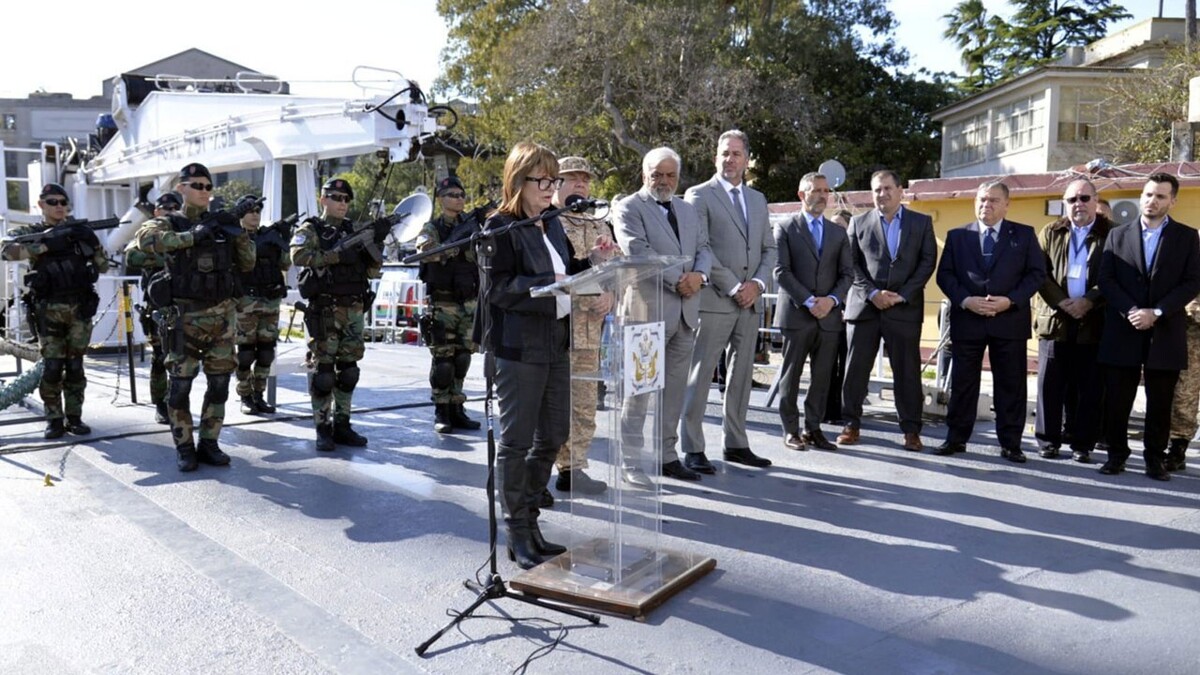
The National Government, through the Ministry of Security, has launched the Paraná Plan aimed at the prevention, detection, neutralization, and investigation of illicit activities on the Paraná-Paraguay Waterway. Through Resolution 1307/2025, published in the Official Gazette, to which the Argentine News Agency had access, it is highlighted that the Paraná-Paraguay Waterway “constitutes an international navigation route of vital strategic importance for the Argentine Republic, as it forms the longest axis of fluvial connection in South America and channels a significant volume of our country's and the region's foreign trade”. The document mentions that, in its section between the Port of Asunción and the Port of Buenos Aires, it concentrates an estimated daily traffic of up to 300 barges, “making it a logistics corridor of the highest relevance, but at the same time an area vulnerable to the commission of complex crimes and illicit activities”. In that section, transnational organized crime organizations take advantage of the geographical extension of the Waterway, the density of public and private ports, and the technological limitations of traditional controls to deploy operations linked to drug trafficking, human trafficking, smuggling of consumer goods, and money laundering. This action “constitutes a concrete threat to both national public security and the economic and social stability of the regions involved”. To achieve effectiveness, authorities point out the need to consolidate coordination with foreign bodies, in addition to the action of Federal Forces and competent administrative bodies with the National Judicial Power. The “Paraná Plan” will have the following specific objectives: Disassemble smuggling and organized crime networks in the northern river border (Provinces of Chaco, Formosa, Corrientes, and Misiones). Increase controls in public and private ports in the lower section of the Waterway (Provinces of Santa Fe, Entre Ríos, and Buenos Aires), with special attention to the prevention, detection, and prosecution of federal jurisdiction crimes. Strengthen national and international inter-agency cooperation, particularly with the European Union (EU), UNODC, DEA, and CICAD-OAS. Implement comprehensive real-time monitoring systems using drones, radars, scanners, and state-of-the-art surveillance technology. Intensify criminal and financial intelligence action aimed at dismantling transnational criminal organizations and combating money laundering. This plan will be developed in operational phases defined by territorial intervention polygons: First Polygon: between Puerto Bermejo (Chaco Province), the city of Corrientes (Corrientes Province), Resistencia (Chaco Province), and Itatí (Corrientes Province). Second Polygon: delimited by the jurisdictions of Corrientes (Corrientes Province), Resistencia (Chaco Province), and Bella Vista (Corrientes Province). Third Polygon: between Bella Vista (Corrientes Province) and La Paz (Entre Ríos Province). Fourth Polygon: between La Paz (Entre Ríos Province) and the city of Paraná (Entre Ríos Province). Fifth Polygon: between the city of Paraná (Entre Ríos Province) and San Nicolás (Buenos Aires Province). Sixth Polygon: between San Nicolás (Buenos Aires Province) and Paraná Guazú.