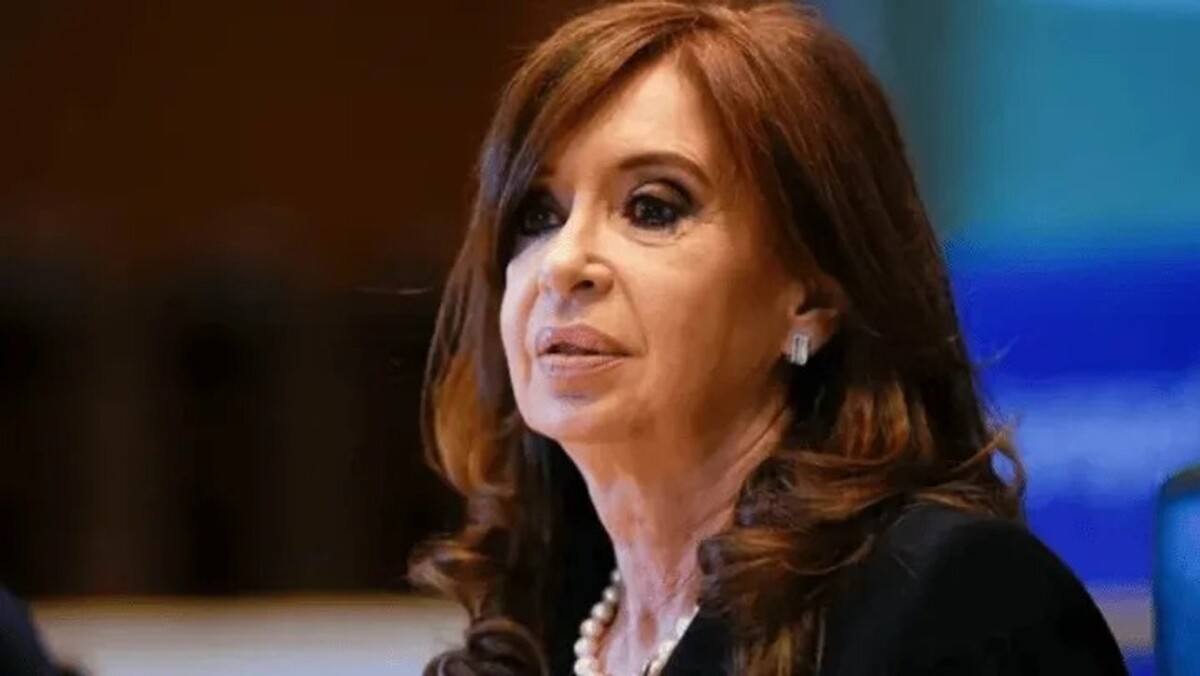
Former Argentine President Cristina Fernández de Kirchner has alleged that some of the defendants who turned state's evidence in the so-called 'Notebooks' case were 'extorted' and 'tortured,' directly accusing prosecutor Carlos Stornelli of using political persecution methods typical of dictatorships.
"As we've already said: in this judicial farce of the fake Notebooks, those called 'collaborators' should be called 'extorted ones,'" stated the former leader in an extensive post on social media. She emphasized that, according to recent testimonies, some detainees were subjected to what she defined as 'white torture.'
Cristina Kirchner cited statements from lawyer Roberto Herrera, defender of one of the defendants, who claimed his client was kept in isolation for nearly a month, under a 24-hour spotlight and under constant video surveillance.
Furthermore, she accused the judicial system of acting as a political persecution apparatus: "This is no longer lawfare; it is political persecution with methods typical of dictatorships."
In another part of her message, she targeted Stornelli, identifying him as "the one who wrote the script being read in this circus and reproduced in large headlines in Clarín and La Nación." She recalled that the prosecutor had been prosecuted in a case for extortion and illegal espionage, although he was later acquitted by the Supreme Court, which she referred to as "the Court of Three."
The former president also linked the reopening of the Notebooks case to an attempt to distract public attention from the economic crisis: "The accelerated reopening of the fake Notebooks has nothing to do with Justice... It is a judicial agenda for distraction: if there is no bread, let there be circus."
Finally, she criticized the economic model of President Javier Milei's government, pointing out that the 2.3% inflation index released yesterday by INDEC is on the rise and, annualized, reaches 27.6%.
Cristina Kirchner compared this figure with the one left by her government in 2015, stating that at that time "the salaries and pensions of Argentines were the highest in Latin America" and that "we did not owe a single dollar to the IMF." She also criticized the external debt, based on recent statements from American businessman Jay Bessent, who claimed that lending money to Argentina under the current administration was "a great business" for the United States.