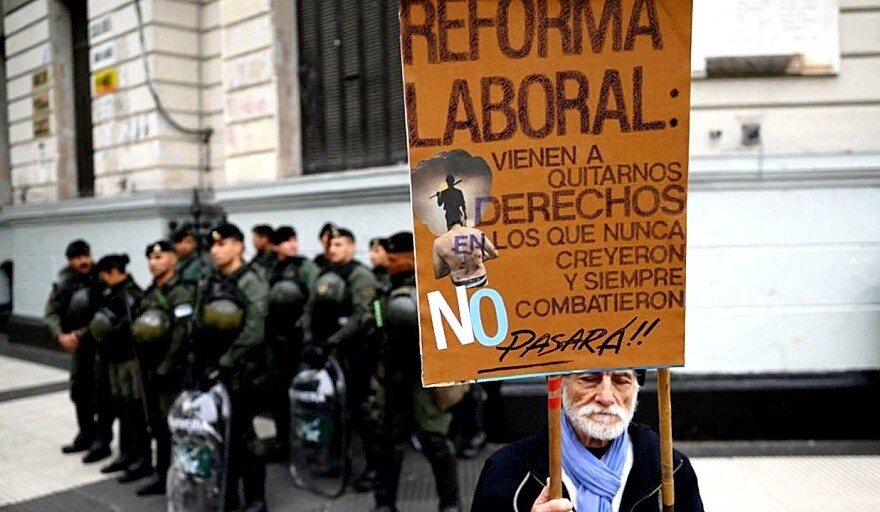
The Argentine government, empowered by a recent election victory, has gone on the offensive to push through a labor reform that meets the demands of the IMF. This reform, in essence, is a regression to pre-peronist labor conditions, aiming to maximize corporate profits by lowering the living standards of the working class.
Key proposals of the reform include the creation of a Severance Pay Fund (Fondo de Cese Laboral), financed by employers and workers, which would pay out compensation over up to 12 months, replacing the current system. It also proposes to invert the principle of favorability, allowing companies to negotiate lower wages. Another initiative is the introduction of a 'bank of hours,' where daily work hours would be set by employer needs, potentially extending the workday to 12 hours.
The reform also targets the weakening of collective action: limiting the right to strike in essential services and restricting assemblies to the workplace. This would weaken trade unions through the decentralization of negotiations and defunding by revising mandatory dues.
The reform's goal is not modernization or job creation, but to establish a lasting dominance of capital over labor. Under current conditions, the proposed project will not create jobs but will instead increase informality and precariousness. This anti-worker, anti-union reform must be flatly rejected.