**Lowest turnout in Argentina's history: political apathy and economic crisis**
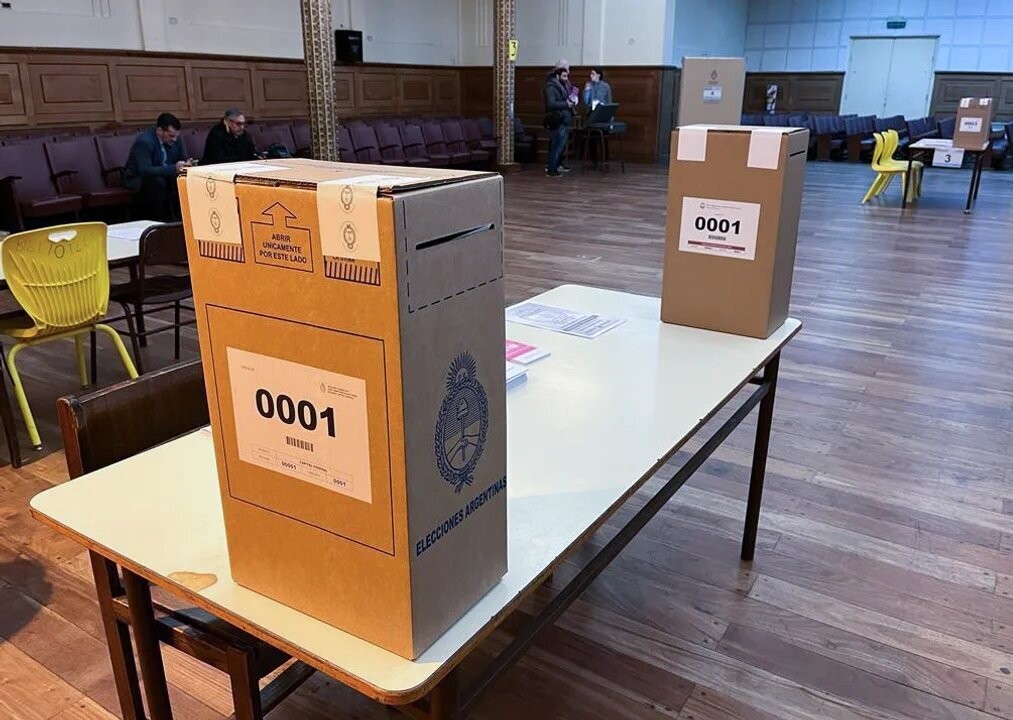
Voters in the National Congress in Argentina became the youngest in the history of democracy in 1983. According to the Central Electoral Board (CNE), only 67.85% of voters (24.1 million people) participated in the elections, which is 7.85 percentage points less than in the 2023 primaries. The average age of the participating categories was 16-35 years old and were mostly young people who supported the main coalitions in the past.
**Political spectrum: Before the PRO and Peronism** The "Liberal Avant-garde" (LAV) coalition secured its own position, receiving 40.66% of the vote (9.8 million) and 94 seats in the Chamber of Deputies. In the Buenos Aires province, traditionally a Peronist bastion, LAV supported the opposition candidate, surpassing the ruling coalition by 0.54% in a runoff with 65% of the vote. The other half of the political spectrum was made up of apoliticalists: about 11.5 million who did not vote, including 4.7 million LAV supporters in 2023.
"La Libertad Avanza" (LLA), which defends the rights of the majority, lost 34% of its electorate—from 11.6 million to 7.6 million. "We will eliminate 2.6-3 million of them from their apathy," said LLA's presidential candidate. The main reasons for the decline were the decline in support for Peronists, the rise of the Kirchner Cristina, and the strengthening of the libertarian movement in the new political landscape.
**Apologists: Economists and Scandals** Analysts name the main reason for the high apathy: the economic crisis. The main reasons cited were inflation (50% for the year), a spike in the dollar (3.5%), unemployment (12%), and the rising cost of living. "In 2023, we voted against the government, but without a concrete plan," said Carlos Fara, a political analyst from the Fara & Asociados consulting firm.
Scandals, linked to the budget ($LIBRA) and statements by presidential candidate José Luis Espert, also contributed to the decline in support for LAV. The average age of the young and middle-aged, for whom 55.65% supported LAV in 2023, became a catalyst for both major coalitions.
**The reaction of the population: "We are tired of all this"** In the process of Cordoba and other regions, the results of the economic crisis were reflected: the main state-owned enterprises lost up to 20% of their revenues, and the budget does not provide for "full subsidies." Residents of the provinces, who supported LAV, began to demand the main benefits, such as "unified trials" in Cordoba.
The interviewed voters, who voted for LAV or Peronists, mostly wanted to participate in the elections. The economists emphasize not only the need to reduce the deficit, but also an active investment policy, which was stimulated by the Kirchner Cristina. Maria, a housewife from the same region, added: "I voted for Peronism, but only because it was the lesser of two evils."
**Prognoses and political forecasts** Despite the defeat of LAV, its new leaders raise new questions. The economists point out not only the need to reduce the deficit, but also an active investment policy, which was stimulated by the Kirchner Cristina. Already in 2026, the IMF forecasts an annual inflation rate of 3%, which is not guaranteed without modernizing infrastructure and education.
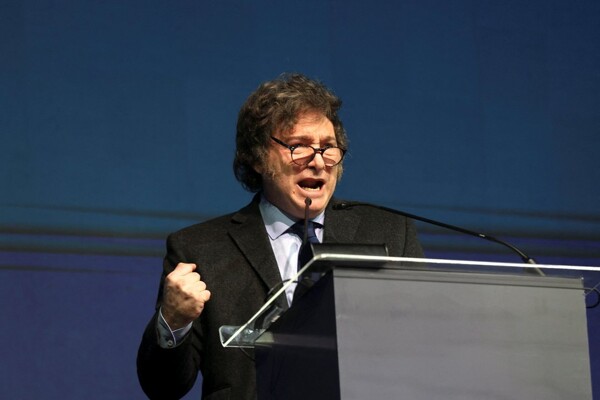
At a press conference after the primaries, LAV's presidential candidate Javier Milei stated: "We went through a turning point." One of the main goals of the presidential election, Celag, is to reduce support from 60% to 45%—the results of the election did not disappoint any of the coalitions.
**Conclusion: a general change, the need for reform** The new voters, who are not apathetic, political fragmentation, and scandals are forcing many to turn to the same old leaders. However, those who went with the political arena, not just the candidates, but for the sake of the Argentine community's future, could improve the quality of life and reform, which could improve the life of the country.
After the primary and before the general election, LAV's main task is to proceed to the policy and reforms, which could improve the life of the country, and not just the deficit. As one of the analysts put it: "They won from everyone, who needs to be saved for the sake of the community, that for the sake of the Argentine community's future."
The upcoming elections in 2027 will be crucial for the country, as new leaders could use the economic stabilization to restore the stability of the state, or the situation will remain the same, which will lead to political apathy and radicalization.