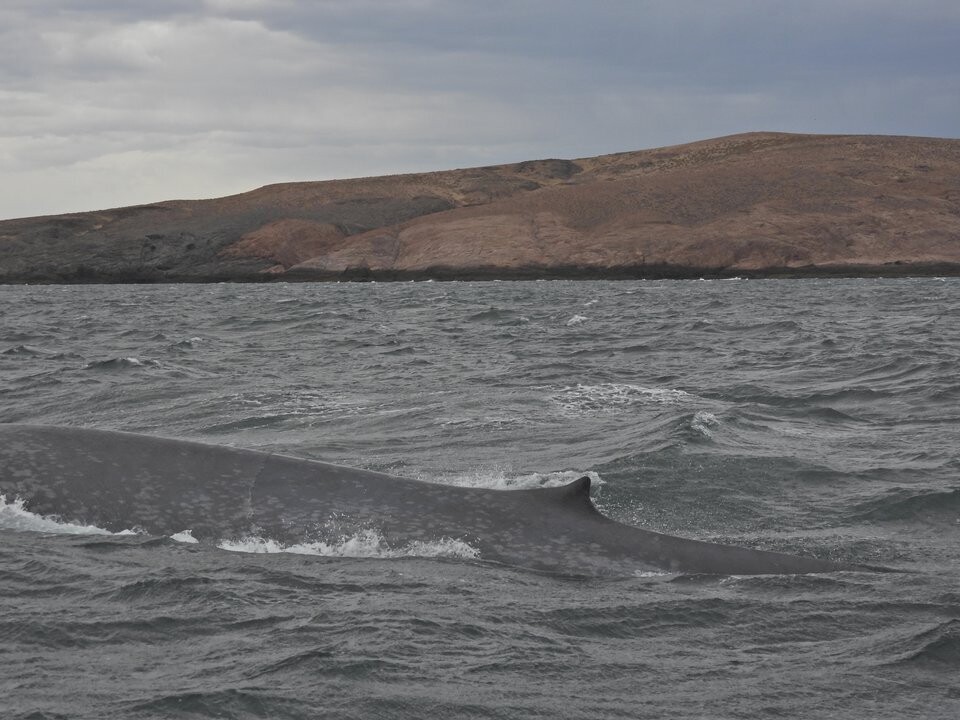
In Chubut, Argentina, the Parque Provincial Patagonia Azul has for the first time documented the presence of a blue whale, the largest animal on the planet. This event marks a milestone for the biodiversity of the protected area. The discovery was made during a technical monitoring outing by the Rewilding Argentina conservation team. The team was conducting photo-identification tasks when a blue whale appeared between the waves. Information on the presence of this species in the Cabo Dos Bahías sector did not exist until now. The endangered status of the blue whale adds weight to the discovery. During the monitoring of humpback whales, the team detected a silhouette that broke with the usual scale. "We came across this whale coming out of the water, but this one was different, it was giant, much larger than any we had ever seen," enthusiastically recounted biologist Tomás Tamagno, explaining that as they approached to attempt photo-identification, the evidence was undeniable: "We got a little closer, carefully, to see what it was, and we found a blue whale." Ensuring protected spaces is vital to offer safe zones for transit and feeding. In this sense, the extent and connectivity of these areas are decisive factors: the larger the protection network, the stronger the guarantees that this emblematic species can recover and continue to inhabit the sea. The technical outing aimed to survey the presence of humpback and sei whales, species frequent in this season. Commercial hunting in the last century reduced their populations to critical levels, with only 2% of the original population size surviving in the southern hemisphere. These specimens can reach 30 meters in length and weigh between 75 and 140 tons. This sighting holds incalculable scientific value for the region.