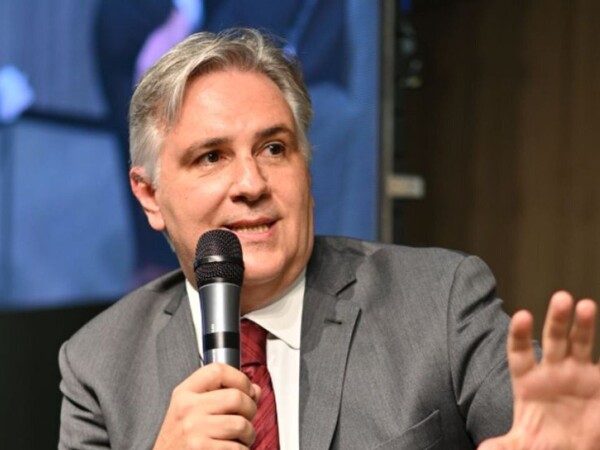
The Central Bank of the Argentine Republic (BCRA) projects an increase in the demand for money that will enable the acquisition of foreign currencies. Therefore, it is expected that the bank will intervene by purchasing reserves on most trading days. To ensure this does not affect the normal functioning of the foreign exchange market, the bank's participation is limited to 5%. BCRA President Santiago Bausili explained during a press conference on monetary policy changes that the monetary base could grow to 4.8% of GDP by December 2026. This growth could be supplied by purchasing 10 billion dollars, subject to the availability of balance of payments flows. Bausili also tempered expectations regarding the bank's participation, noting it will depend on market volume and conditions. Recalling that the monetary base has historically averaged 7.5% of GDP and currently stands at only 4.2%, he gave the example of the current day, when the Treasury acquired $320 million in a market with a volume of $300 million. He stated that without this intervention, market stability could have been compromised. Bausili clarified that the decision to accumulate reserves does not mean that the exchange rate 'must have an upward bias,' but is a response to economic agents demanding more pesos; without intervention, the peso would appreciate significantly. He also commented on the decision to adjust the floor and ceiling of the dollar rate based on past inflation, stating that 'the crawling peg system is the best regime' for the circumstances facing the Argentine economy. He explained that adjusting the peg based on the past price index (T-2) 'does not mean that inflation will be higher or lower, but that we do it to reduce uncertainty' regarding exchange rate volatility. For the BCRA president, the important thing is that the bank will make currency purchases in a 'context of economic growth and re-monetization of the economy'. The director of the entity, Federico Furiase, also participated in the event.

Argentine Central Bank Plans to Accumulate Currency Reserves
Argentina's Central Bank forecasts an increase in the money supply and plans to purchase currency to maintain market stability, limiting its participation to 5%. BCRA President Santiago Bausili explained that this will not lead to an appreciation of the dollar but is a response to higher demand for pesos.