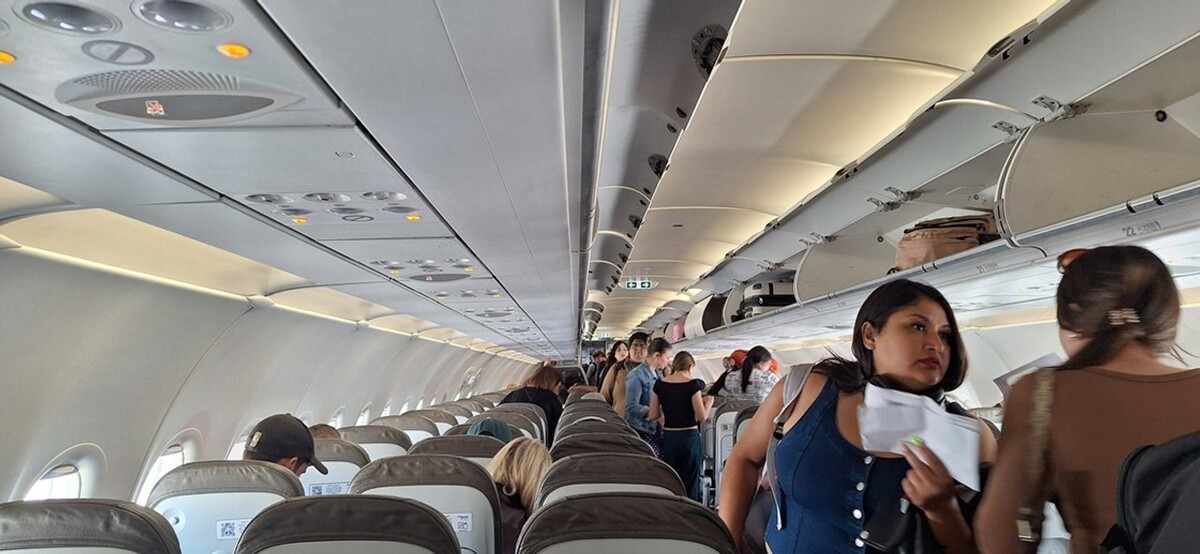
Argentina led the growth in passenger traffic in Latin America and the Caribbean region, increasing air traffic by 13.4% year-on-year, according to data collected by the Latin American and Caribbean Airline Association. As reported by the Argentine News Agency, growth in the domestic sector was 11.7%, while for international flights, the increase was 15.4%. Thus, September was the month with the highest traffic in history, exceeding September 2019 by 9%. In the other seven months, the Colombian domestic market showed declines, and for the January-September period, it decreased by 2% compared to 2024. In the same period, 6 of the 10 most important domestic routes recorded annual declines. In September 2025, Chile recorded its second negative result of the year in total passengers (–3.2% year-on-year). Domestic traffic, which represented 57% of the total, fell by 3.3%, while international traffic had its first negative result in 2025, falling by 3.1% year-on-year. “September's growth was concentrated in domestic markets and regional routes, with Brazil leading the increase. In contrast, traffic between Mexico and Canada, which represents 36% of the total passengers from Latin America and the Caribbean to Canada, grew by 13.1% after the slight contraction recorded in August. In Colombia, total traffic decreased by 0.4% year-on-year, accumulating two consecutive months of decline. Latin American aviation needs policies that promote competition and efficiency, not regulations that make the service more expensive and reduce the passenger's choice,” stated Peter Cerdá, CEO of ALTA. Panama and the Dominican Republic drive growth in Central America and the Caribbean. In Central America, traffic to and from the subregion grew 5.6% year-on-year, led by Panama (+9.3%, 1.72 million passengers). From January to September, Argentina accumulated 24.5 million passengers (+15% year-on-year). Meanwhile, at the regional level, in September 2025, total passenger traffic to, from, and within the region reached 35.8 million, 2.5% more than in September 2024, equivalent to 874,000 additional passengers. The increase was entirely concentrated in intra-regional traffic, driven by the domestic markets of Brazil and Argentina, which represented 87% of the net growth. The offer of flights increased by 0.7% year-on-year, while the total capacity (seats) increased by 1.8%, reflecting the use of larger aircraft, with an average of 160 seats per flight compared to 158 in September 2024. Summary of indicators. Capacity, measured in available seat-kilometers (ASK), grew by 3.4% year-on-year. Demand, in revenue passenger-kilometers transported (RPK), increased by 2.9% year-on-year. The average occupancy factor was 83.6%. In the accumulated January-September period, air traffic in Latin America and the Caribbean reached 354.2 million passengers, representing a growth of 3.8% vs. the same period of 2024. Brazil and Argentina led the growth in passengers. Brazil was the market that most contributed to regional growth in September, with 838,000 additional passengers (+8.4% year-on-year). The domestic market reached a record high for September (8.5 million passengers, +7.7% year-on-year), again being the domestic market with the highest growth among the six largest in the world, according to IATA. The international segment increased by 11.2%, driven by the arrival of more than 451,350 international tourists by air, 26.6% more than in the same month of the previous year. Moderate contraction in Mexico, Colombia, and Chile contrasts with the strength of Brazil and Argentina. The three markets, which occupy the 2nd, 3rd, and 6th places by passenger volume in the region, recorded a combined contraction of 0.7% year-on-year compared to September 2024, reducing the regional total by nearly 110,000 passengers. In Mexico, total traffic reached 8.5 million passengers (–0.2% year-on-year), with a marginal increase of 1.1% in the domestic market and a decrease of 1.9% in the international segment. Traffic with the United States, the third largest country pair in the region, decreased by 3.5% year-on-year, after the slight rebound seen in August. The number of flights operated to the United States increased by 10.4%, thus completing the fourth consecutive month of growth and being the second highest so far this year. Jamaica remained practically stable with 423,000 passengers, a marginal decrease of 0.3%. Followed by Costa Rica (+4%) and Guatemala (+2.9%). However, this momentum could slow down if measures that limit commercial freedom advance, such as Bill No. 5.041/2025.