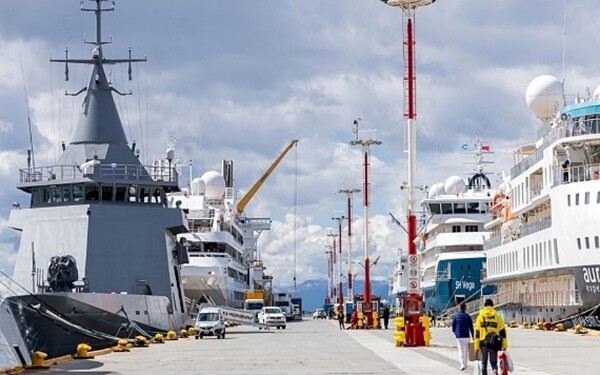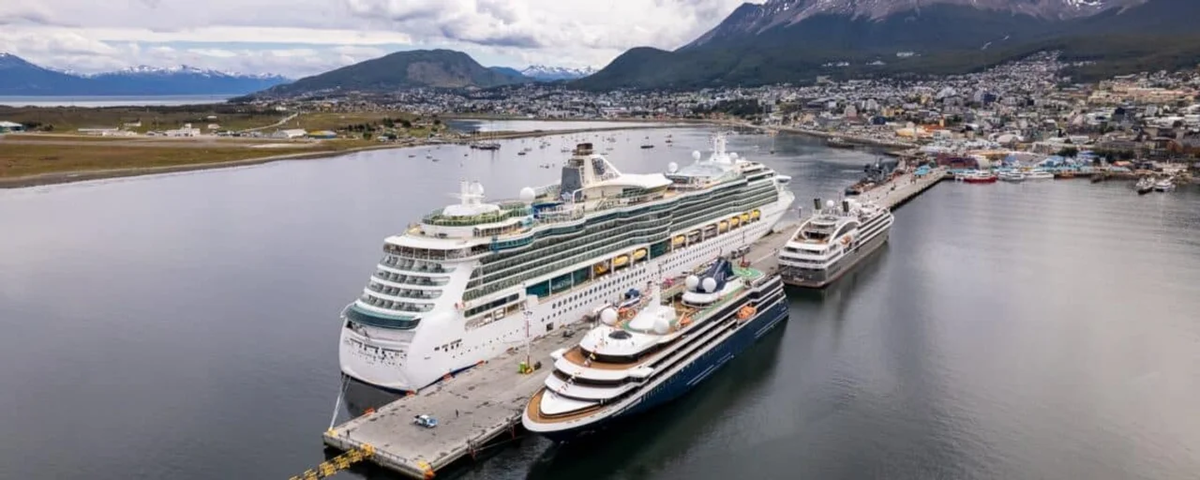
The national agency stated that the detected anomalies range from alleged misappropriation of funds to a significant deterioration in the operational conditions of the main port of Tierra del Fuego, directly impacting the region's maritime and logistics activity.
The resolution, signed by the executive director of the National Agency of Ports and Navigation, Iñaki Arreseygor, will be published this Thursday in the Official Gazette.
The evolution of the intervention and any potential administrative or criminal liabilities that may arise will now be at the center of the political and judicial scene.
Sources consulted: Argentine News Agency, National Agency of Ports and Navigation, official press releases, inspection technical reports, union and port sources.
However, inspections found that nearly 33% of the port's budget had been used to subsidize provincial administration expenses, while only 1.3% was allocated for works and services directly related to the port's operation.
As a result of the intervention, Avellaneda will take over the operational management of the terminal, under the supervision of directors and managers appointed by the National Agency of Ports and Navigation.
According to the agency, the province was ordered to implement a transparent registry of income, expenses, and purchases, but this task was outsourced to a company without a relevant track record in port activities, which increased suspicions about the control of public funds.
In this scenario, the intervention will be assisted by the Argentine Naval Prefecture, which will be responsible for operational security support and control of port tasks, with the aim of reducing risks and guaranteeing minimum operational standards.
The national government's decision opens a new front of institutional tension with the Fuegian administration and places the use of strategic resources in a key infrastructure for logistics, tourism, and Antarctic activity under scrutiny.
The decision includes harsh observations towards the provincial administration led by Governor Gustavo Melella, which is held responsible for the situation.
According to official information, the measure was taken after repeated inspections that did not yield satisfactory responses from the Fuegian government.
The stated objective is to normalize administration, make the flow of funds transparent, and ensure operational continuity in suitable conditions.
In parallel, technical reports prepared by the national agency revealed serious deficiencies in the port's infrastructure.
Among the critical points mentioned are the lack of piles at site 3 of the dock, fenders in an advanced state of wear, structural problems in the sheet piling, deterioration of the asphalt surface, and deficiencies in basic safety conditions for maritime operations.
Administrative and financial management irregularities were also detected.
The text justifies the intervention based on the "lack of concrete responses" to the observations made by the agency, the complaints of "asset stripping" filed by port workers, and the concern expressed by shipping companies that regularly operate at the southern terminal.
The formal origin of the conflict dates back to a union and sectoral complaint against Provincial Law No. 1596, which created a special fund to cover the deficit of the state social security fund OSEF using the surplus generated by the port of Ushuaia.
The proposal was promoted by the general secretary of the Railway Superior Personnel Union, Juan Avellaneda, who warned that this norm would violate the principle of specific allocation of port resources.
The national agency emphasized that current regulations state that port revenues must be exclusively destined for investments, maintenance, and improvements of the infrastructure itself.
Buenos Aires, January 21, 2026 - Total News Agency - TNA - The National Agency of Ports and Navigation has ordered the administrative intervention of the port of Ushuaia for a period of one year and suspended its operational license after detecting serious irregularities in fund management, infrastructure deficiencies, and security risks.