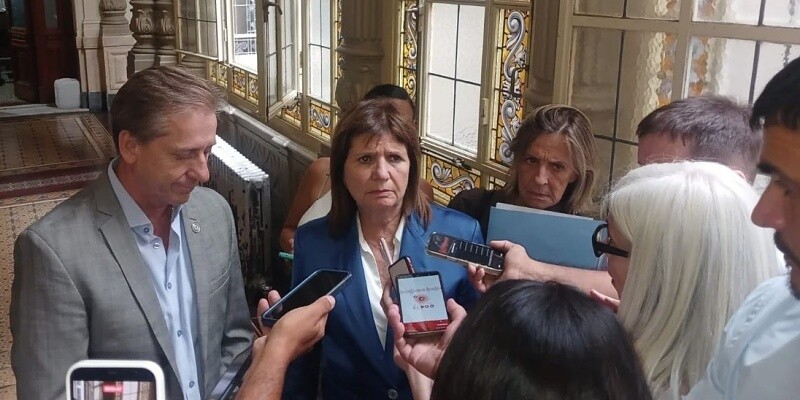
The far-right government of Javier Milei set a date for the treatment in the National Senate of the project they seek to use to sweep away the collective and individual rights of the Argentine working class. This Tuesday, Patricia Bullrich, in her current role as head of the far-right bloc in the National Senate, held a meeting with the heads of the collaborating blocs. We have accepted many proposals and many changes. But she then emphasized the secrecy with which they are negotiating the attack on the working class: The changes are under four locks, she said, and justified: We believe it is important to maintain the agreement among all, so we have decided that the changes will only be made known in the chamber. That is a debate that is taking place between the Minister of the Interior, the Minister of Economy, and the governors. Meanwhile, the union grouping that meets at the UOM headquarters is advancing with its struggle plan, which will begin this Thursday with a massive mobilization in the city of Córdoba and will continue with another one next Tuesday in Rosario. In addition, several of those union organizations, such as ATE and Aceiteros, as well as UOM itself, had already announced forceful measures for when the regressive project is dealt with in Congress. In that context, the two CTA held a plenary where they defined a national strike and mobilization to Congress for the day the labor reform is dealt with in the Senate, Wednesday, February 11. This was explained by the General Secretary of the CTA Autónoma, Hugo Godoy, at a press conference after the plenary of the two centrals: The two CTA and all the social organizations and unions that make them up have decided to reaffirm the commitment to fight to prevent the labor reform from being approved in the National Congress, to reaffirm the call for a state of mobilization that will manifest itself in the streets of Córdoba next Thursday and in the streets of Rosario next Tuesday. The leader explained that the mobilizations will be to also demand that the governors not validate this delivery of the right of workers to the right to work in Argentina and stressed that this state of mobilization will also manifest when there is a first treatment of this bill in Congress in the National Senate, calling for a strike and mobilization that day to repudiate this bill. We have the necessary numbers, we have a commitment, from now until Friday we are going to finish the final drafting and on Monday we will close the final opinion. Then, at a press conference he said: We have been reviewing article by article and we are going to reach a consolidated agreement among all the blocs regarding the law. The statements were made before Bullrich's announcement. The government's labor reform project enables the extension of the workday without payment for overtime and flexibilizes it to the extreme, reduces compensation for dismissal, allows vacations to be granted in installments according to the employer's convenience, limits and even prohibits the right to strike, imposes limits on union activity within companies, attacks existing collective agreements, and authorizes company agreements with fewer rights than the collective agreement of the activity, among many other regressive points. It also repeals the Statute of the Journalist to facilitate dismissal for ideological reasons and editorial persecution, reduces the income tax for companies, and eliminates taxes that allow the financing of cinema, theater, independent music, and community media.