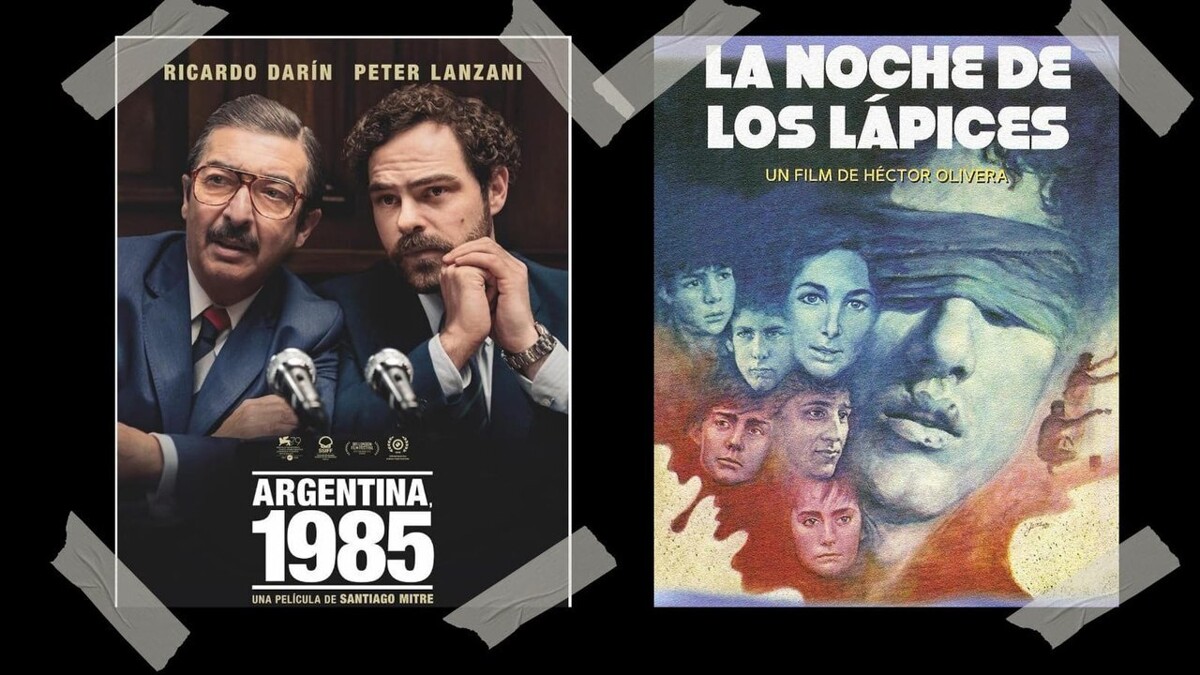
Every March 24, Argentina remembers the National Day of Memory, Truth, and Justice, a day that invites looking to the past and remembering what happened during the last civic-military dictatorship, while reaffirming the commitment to human rights 50 years after the coup. In this context, cinema becomes a key tool to approach the facts, its protagonists, and the consequences that still affect a society that does not forget its disappeared. According to the Argentine News Agency, art, films, and theater works bring that moment to our lives so that new generations understand what happened and so that the old do not repeat the same history. Among the most recent productions, 'Argentina, 1985' stands out, directed by Santiago Mitre and starring Ricardo Darín. This film is based on real events, as the story exposes how repression reached young militants and became one of the most representative accounts of that period. On the other hand, the documentary 'The Silence of Others' provides an international perspective: although it addresses the crimes of Francoism in Spain, it establishes a direct link with the Argentine experience in the search for Memory, Truth, and Justice. From another approach, 'Family Crimes,' with Cecilia Roth, does not directly address the dictatorship, but it allows thinking about social tensions and the functioning of justice today. In the journey through national cinema, fundamental works appear such as 'Time of Vengeance,' which reflects the climate of persecution and fear in those years. This film reconstructs the trial of the military Juntas and shows the work of prosecutor Julio Strassera and his team at a decisive moment for democracy; something that is common today, at that time it was an act of social and democratic justice. Another central title is 'The Night of the Pencils,' which tells the story of the kidnapping of high school students in 1976. Likewise, 'The Official Story' managed to give visibility to the story of those women who did not know the identity of their children and the awareness of the disappeared at an international level; it marked a milestone in Argentine cinema by being the first Argentine film to win an Oscar for 'best foreign film.' Also added is 'Juan, as if Nothing Had Happened,' which investigates a case of disappearance and exposes the contradictions of those responsible in a context of silence and impunity. The crudeness of the repressive system appears in 'Garage Olimpo,' which shows the functioning of a clandestine detention center, while 'The Blonds' proposes a personal look at memory and identity from the experience of a daughter of the disappeared. Finally, 'The Trial' recovers archival material from the trial of the military Juntas and builds a narrative that once again puts at the forefront one of the most important moments of Argentine democratic history. These films and documentaries allow addressing different dimensions of the dictatorship, such as terror, resistance, the search for justice, and the marks that still persist. For this reason, it is through cinema that March 24 becomes an active exercise of memory that seeks to keep 'Never Again' alive.