Folklore managed to channel demands and dreams, summarizing pains that seemed distant and turning them into collective song; as from its origins in the region's cultural heritage, it had learned to spell out the air its people breathed to turn it into song.
During the last Argentine civic-military dictatorship, art faced a dilemma: how to denounce horror without the aesthetic form diluting the political content. Many had to go into exile, others were threatened with death, and some resorted to pseudonyms or alternative strategies to continue producing. The dictatorship sought to transform folklore into a depoliticized expression that sought to discipline cultural content, eliminating any expression that could challenge the imposed order.
However, far from disappearing, popular music resisted the horror of those years. Songs circulated outside official media, at folk gatherings, informal meetings, and everyday spaces where memory was passed down from generation to generation.
Despite the blacklists, we leave you a list of some of the songs that were banned.
«Coplera del prisionero», by Horacio Guarany.
Folklore, as a cultural fact, is a traditional, anonymous, collective, functional, and empirical manifestation, current in a community, that becomes a vehicle of identity, memory, and collective consciousness, was one of the central targets of that genocidal offensive. This tension traversed artistic practices, which sought to maintain a balance between formal experimentation and commitment to social denunciation, » stated the researchers García, Silvia Susana and Belén, Paola Sabrina in their book «The representation of the unspeakable in Latin American popular art».
Other figures like Mercedes Sosa were banned and pushed into exile, while Jorge Cafrune suffered constant vetoes for his refusal to remain silent and his defense of censored artists.
Memory is active, because 'Never Again' also expresses itself before every attempt at a 'blackout' and emptying of popular culture.
For the regime, it was not just another genre in the field of music and dance, but a tool capable of influencing society, of constructing meaning, and of expressing social and political conflicts. In this framework and considering its disciplinary objectives, intelligence services created files and secret documents on artists, considering them 'key communicators'.
Memory is active, because 'Never Again' also expresses itself before every attempt at a 'blackout' and emptying of popular culture.
By ANRed
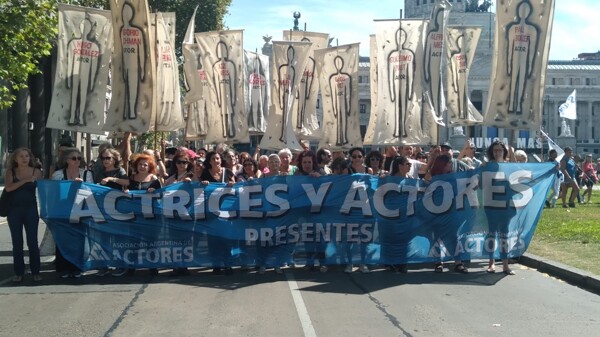
The last Argentine civic-military dictatorship deployed a repressive plan that was not only directed against political and social activists, but also against popular cultural expressions.
«Alcen la bandera», «Juana Azurduy» and «En Sudamérica mi voz» by Ariel Ramírez; «Agarrame el alazán», by Omar Moreno Palacios; «Triunfo agrario», by Armando Tejada Gómez and César Isella; «Hombres en el tiempo», by Isella; «Chacarera del expediente», by Gustavo «Cuchi» Leguizamón, among many others.
«Silence is health» said the dictator.
Against the phrase of Jorge Rafael Videla «silence is health», Argentine popular musicians risked their skin and did not remain silent, because they made their own flesh that 'if the singer falls silent, life falls silent'.
Today, 50 years after that era of terror, reflection on our present puts us to the task of understanding and making visible that although the context is different, the adjustment policies, the defunding of the cultural sector, universities, and the speeches that despise artists are also new forms of non-explicit censorship and social disciplining.
Culture is always a problem for power, as it tensions its limits because it has always been a powerful weapon of social and political transformation.
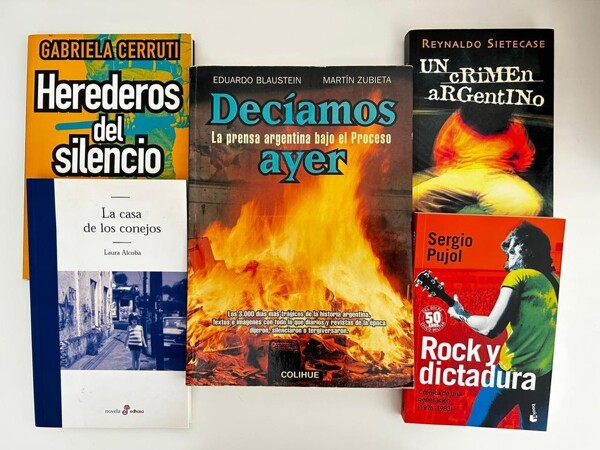
Remembering what happened during the dictatorship does not mean staying in the past, but thinking about it from the present.
The persecution of folklore during the last civic-military dictatorship was part of a systematic plan of censorship and cultural control that sought to discipline artists and empty popular music of critical content.
Folklore (as a cultural fact, a concept defined by folklorist Augusto Cortazar) is a vehicle of identity, memory, and collective consciousness, which during the times of State terrorism, was one of the central targets of that offensive. Blacklists were implemented, songs, records, and recitals were banned, and a systematic policy of censorship, persecution, and threats was deployed.
On these lists, censors banned a group of popular musicians of a folk root, among whom stand out the figures of Horacio Guarany, Ariel Petroccelli, César Isella, and Omar Moreno Palacios, the list goes on and is abundant and also varied.
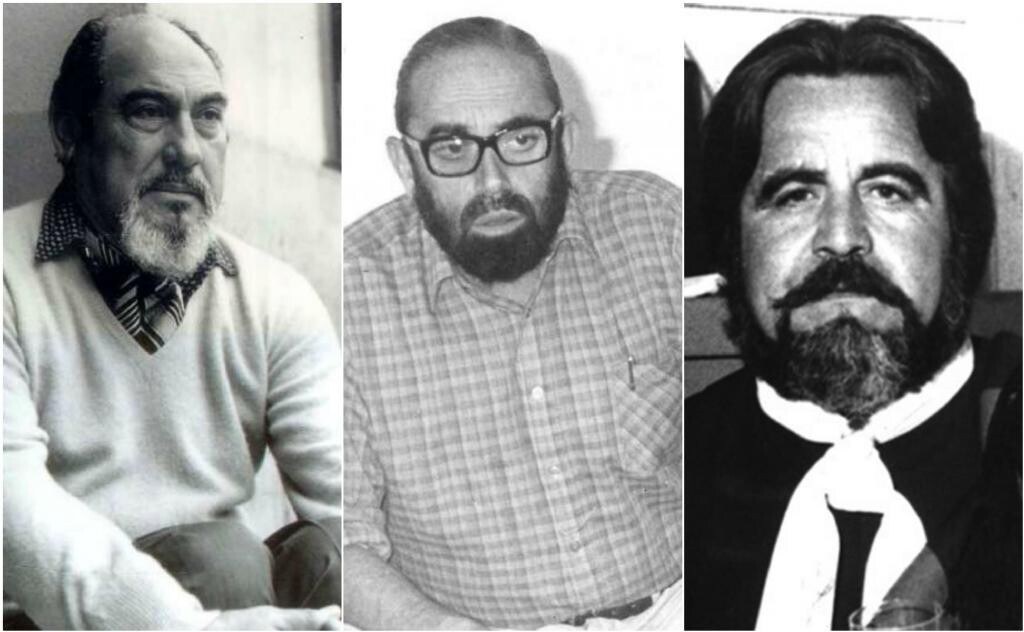
According to the researchers, folklore was, since Atahualpa Yupanqui clarified in 1944 whose cows they were and whose sorrows they were, a political genre. Víctor Heredia, César Isella, Piero, and Atahualpa Yupanqui were also persecuted, threatened, or forced to leave the country.
Remembering what happened during the dictatorship does not mean staying in the past, but thinking about it from the present.
Although it had a strong landscape root in the 50s and 60s, the loss of that descriptive innocence made it dangerous for the system.
(«We are prisoners, jailer / I of these clumsy bars, you of fear»); «No se por qué piensas tu», a poem by the Cuban Nicolás Guillén with music by Guarany; «Hasta la victoria», by the Uruguayan Aníbal Sampayo.