Among left-wing voters, 55% evaluate the opposition's performance favorably. This data reinforces the idea of an opposition that, besides being poorly evaluated, continues to show strong fragmentation.
The second alarm bell sounds when looking to the future. When QSocial asked if the opposition is prepared to govern in 2027, the result was again very harsh. The sum of critical opinions once again reaches 74 points, a number that highlights the opposition's difficulty in, for now, at least installing a reliable expectation of change.
The study also delves into a particularly sensitive point for any attempt at rebuilding: leadership. Because an opposition not only needs to consolidate its loyal voters, but also needs to project confidence, expand its base, and convince a portion of the electorate that it can manage power better.
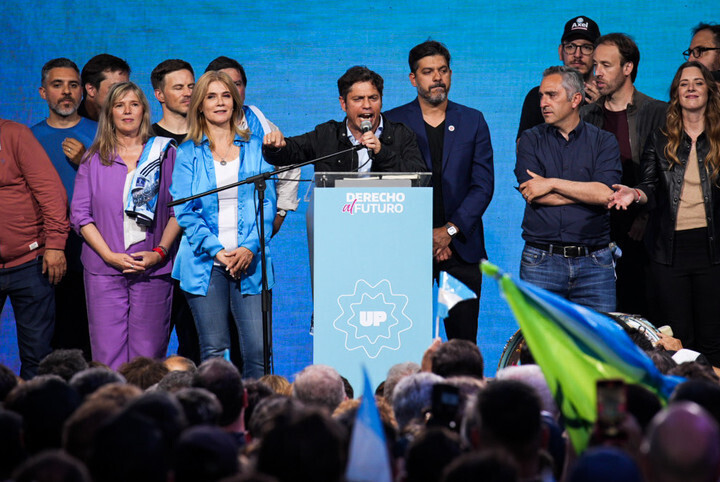
In this context, Axel Kicillof's relative advantage within the opposition universe is not enough by itself to order the general picture. The Buenos Aires governor appears first in the ranking, but coexists with a 24% of respondents who simply do not know who the main opposition leader is. That figure alone graphs the lack of centrality of a reference capable of uniting, synthesizing, and projecting power.
This is, in essence, the main conclusion left by a new national survey from QSocial, which shows two particularly severe data points for non-officialist spaces: a very high disapproval of their current behavior and a majority perception that they are not prepared to govern in 2027. The QSocial work, carried out between February 8 and 24 on 1,645 cases at the national level, with an online modality and an informed margin of error of 2.9%, deepens a sensation that is already appearing in other studies: the officialism may have lost some of the initial shine it had recovered after its October electoral victory, but on the other side, an alternative with volume, cohesion, or sufficient authority to capitalize on that situation is not emerging.